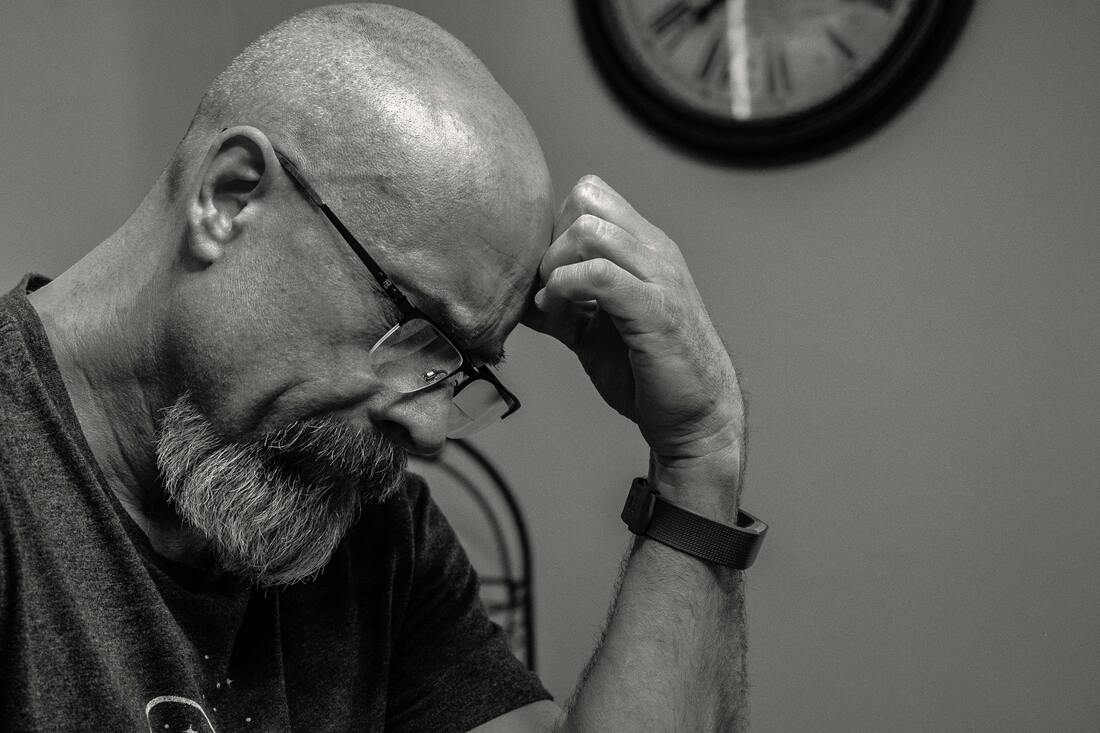
 ‘Curiosity killed the cat, but for a while I was the suspect.’ (Steven Wright) Action Learning facilitators sometimes feel anxious if there are prolonged periods of silence in a group, or if an individual is particularly quiet. They may assume, for instance, that the person is uninterested to engage with the group or the process. I had that experience once (online) where a participant sat throughout a round wearing headphones, nodding and swinging in his chair as if to music. When I asked if he had any questions, he clearly had no idea what the presenter had been talking about. I addressed this with him directly after the round, checked if there was anything he would need to be and feel more engaged, then agreed that he would leave the set. That said, there are a wide range of potential factors that may influence if and how a person engages in a set meeting and, at times, different reasons for the same participant during different rounds. I will list some of them here as possibilities: if a person has been sent to a set, rather than has chosen freely to join it; if there is formal or cultural hierarchy within the group; if there has been insufficient attention paid to agreeing ground-rules for psychological safety; if building relational understanding and trust has been neglected; if a person doesn’t like someone else in the group, or fears negative evaluation by others in the set; if a person lacks confidence. There are other possibilities too: if a person has an introverted preference and processes thoughts and feelings internally; if a person has a reflective personality and needs more time to think; if a person doesn’t feel competent with the language or jargon being used; if the person can’t think of a presenting issue or a question; if last time the person spoke up in a group meeting, it was a difficult experience or had negative consequences; if a person is preoccupied with issues or pressures outside of the meeting; if a person is distracted mentally or impacted emotionally by something that happened before the meeting, or is due to happen after it. So, what to do if a person is completely silent in a set? Here are some ideas, to be handled with sensitivity and, if appropriate, outside of the meeting: take a compassionate stance – there may be all kinds of reasons for the silence of which you are unaware; avoid making judgements – silence does not necessarily indicate disengagement; be curious – ask the person tentatively, without pressure, if any issues or questions are emerging for them; avoid making assumptions – ask the person what the silence means for them and if there’s anything they need; have an offline conversation with the person – if their silence persists for more than one meeting.
16 Comments
 ‘You don’t hire for skills, you hire for attitude. You can always teach skills.' (Simon Sinek)
Richard looked for spirit, talent and potential. Perhaps surprisingly, this wasn’t first and foremost about knowledge, skills and experience. It was about attitude, character and engagement. Get the right people on board, the right team in place, and almost anything becomes possible. This made interviews intriguing. One person would try hard to impress based on what they had done and achieved. Another would convey humility and courage: ‘I’ll do whatever it takes to succeed.’ If the spirit was genuine, the sentiment was real, the latter person could leave with a good job offer. It made performance conversations interesting too. Rather than ‘I’ve done this, or that’, it focused on spirit and contribution. ‘This is what I’ve made possible, including for others. This is what I’ve learned, including from others. This is how I aim to develop, and to enable others. These are the steps I’ll take, alongside others.’ People took ownership of their own performance, recognised their interdependence with and impact on others and proactively sought authentic feedback: ‘What do I do well? What would most improve my contribution in future? How can I do this better next time?’ This Richard took a chance on me too and invited me into his leadership team at a global Christian non-governmental organisation (NGO). He gave me a gift – Stephen Covey’s ‘The Speed of Trust’ – to signal his trust in me. That small gesture inspired me deeply and challenged me to reflect critically on my own spirit and practice. I created a simple grid with ‘can do/can’t do’ on one axis and ‘willing to do/not willing to do’ on the other, as a tool for honest conversations with myself, God and others. It reminds me to fan the flame of the Spirit within and not to become jaded, fearful or complacent. What part does ‘spirit’ play in your life and work? How to you spot, nurture and help sustain it in others?  It was an energising experience, facilitating a group of leaders this week who are keen to build a new high performing team. We pushed the boundaries of normal ways of working to stimulate innovative ideas in all aspects of the team’s work. We used photos to create an agenda and physically enacted people’s aspirations to avoid falling into conventional patterns of heady, rational conversation. It felt very different to meeting ‘because that’s what we do’. There was a different dynamic, energy and momentum. Participants leaned actively into the conversation, not leaning back in passivity or boredom. Yet it can be a real challenge to break free from tradition, from norms that trap a team in ways of doing things that feel familiar and safe but, deep down, lack inspiration or effectiveness. In our meetings, how often do we pause before diving into the agenda to ask, ‘What’s the most important thing we should be focusing on?’, ‘How are we feeling about this?’, ‘What is distracting us or holding our attention?’, ‘What could be the most creative and inspiring way to approach this?’, ‘What do we each need, here and now, to bring our best to this?’, ‘What would be a great result?’ So I presented a simple model to the team with four words: content (what), process (how) and relationship (who) encircled around goal (where). In all my experience of working with individuals and teams, whether in coaching, training or facilitation, whether in the UK or overseas, these four factors are key recurring themes that make a very real difference. They seem to be important factors that, if we get them right, make a positive impact. They lead to people feeling energised, more alive, more motivated and engaged. Conversely, if we get them wrong, they leave people frustrated, drained of energy, bored or disengaged. Worse still, if left unaddressed, they can lead to negative, destructive conflict that completely debilitates a team. We can use a simple appreciative inquiry to reflect on this.‘Think back to your best experience of working with another person or team. How did you feel at the time?’, ‘Think back to a specific example of when you felt like that with the person or team. Where were you at the time? What were you doing? What were they doing? What made the biggest positive difference for you?’ One of the things we notice when asking such questions is that different things motivate and energise different people. That is, of course, one of the tricky parts of leading any team. So a next question to pose could be something like, ‘What would it take for this team to feel more like that, more of the time for you?’ and to see what the wider team is willing to accommodate or negotiate. Now back to the model with some sample prompts to check out and navigate with a client, group or team. Notice how the different areas overlap and impact on each other. It’s about addressing all areas, not just to one or two in isolation. However, having explored each area in whatever way or level suits your situation, you are free to focus your efforts on those that need special attention. Goal: ‘What’s your vision for this?’, ‘Why this, why now?’, ‘What are you hoping for?’, ‘What would make a great outcome for you?’, ‘What would be the benefits of achieving it or the costs of not achieving it?’, ‘Who or what else is impacted by it and how?, ‘Where would you like to get to by the end of this conversation?’, ‘An hour from now, what would have made this worthwhile?’ Content: ‘What’s the most important issue to focus this time on?’, ‘What is the best use of our time together?’, ‘What is the issue from your perspective?’, ‘How clear are you about what this issue entails?’, ‘What feelings is this issue evoking for you?’, ‘What do we need to take into account as we work on this together?’, ‘Do we have the right information and expertise to do this?’ Process: ‘How would you like to do this?’, ‘What approach would you find most inspiring?’, ‘What might be the best way to approach this given the time available?’, ‘Which aspects to we need to address first before moving onto others?’, ‘What would be best to do now and what could be best done outside of this meeting?’, ‘Could we try a new way that would lift our energy levels?’ Relationship: ‘What’s important to you in this?’, ‘What underlying values does this touch on for you?’, ‘How are you impacted?’, ‘How are you feeling?’, ‘What are you noticing from your unique perspective?’, ‘What distinctive contribution could you bring?’, ‘What is working well in the team’s relationships?’, ‘What is creating tension?’, ‘How could we resolve conflicting differences?’ The versatility of the model is that it can be reapplied to coaching, training and other contexts too. In a training environment you could consider, for instance, ‘What are we here to learn?’ (goal), ‘What material should we cover?’ (content), ‘What methods will suit different learning styles?’ (process) and ‘How can we help people work together well in this environment?' (relationship). In a coaching context it could look something like, ‘How do you hope to develop through engaging in this coaching experience?’ (goal), ‘What issues, challenges or opportunities would you like to focus on?’ (content), ‘How would you like to approach this together?’ (process) and ‘What would build and sustain trust as we work on these things together?’ (relationship). I’d be interested to hear from you. Do the areas represented in this model resonate with your own experiences? Which factors have you noticed tend to be most attended to or ignored? Do you have any real-life, practical examples of how you have addressed these factors and what happened as a result? In your experience, what other factors make the biggest difference? I took my mountain bike for repairs last week after pretty much wrecking it off road. In the same week, I was invited to lead a session on ‘use of self’ in coaching. I was struck by the contrast in what makes a cycle mechanic effective and what makes the difference in coaching. The bike technician brings knowledge and skill and mechanical tools. When I act as coach I bring knowledge and skills too - but the principal tool is my self.
Who and how I am can have a profound impact on the client. This is because the relationship between the coach and client is a dynamically complex system. My values, mood, intuition, how I behave in the moment…can all influence the relationship and the other person. It works the other way too. I meet the client as a fellow human being and we affect each other. Noticing and working with with these effects and dynamics can be revealing and developmental. One way of thinking about a coaching relationship is as a process with four phases: encounter, awareness, hypothesis and intervention. These phases aren’t completely separate in practice and don’t necessarily take place in linear order. However, it can provide a simple and useful conceptual model to work from. I’ll explain each of the four phases below, along with key questions they aim to address, and offer some sample phrases. At the encounter phase, the coach and client meet and the key question is, ‘What is the quality of contact between us?’ The coach will focus on being mentally and emotionally present to the client…really being there. He or she will pay particular attention to empathy and rapport, listening and hearing the client and, possibly, mirroring the client’s posture, gestures and language. The coach will also engage in contracting, e.g. ‘What would you like us to focus on?’, ‘What would a great outcome look and feel like for you?’, ‘How would you like us to do this?’ (If you saw the BBC Horizon documentary on placebos last week, the notion of how a coach’s behaviour can impact on the client’s development or well-being will feel familiar. In the TV programme, a doctor prescribed the same ‘medication’ to two groups of patients experiencing the same physical condition. The group he behaved towards with warmth and kindness had a higher recovery rate than the group he treated with clinical detachment). At the awareness phase, the coach pays attention to observing what he or she is experiencing whilst encountering the client. The key question is, ‘What am I noticing?’ The coach will pay special attention to e.g. what he or she sees or hears, what he or she is thinking, what pictures come to mind, what he or she is feeling. The coach may then reflect it back as a simple observation, e.g. ‘I noticed the smile on your face and how animated you looked as you described it.’ ‘As you were speaking, I had an image of carrying a heavy weight…is that how it feels for you?’ ‘I can’t feel anything...do you (or others) know how you are feeling?’ (Some schools, e.g. Gestalt or person-centred, view this type of reflecting or mirroring as one of the most important coaching interventions. It can raise awareness in the client and precipitate action or change without the coach or client needing to engage in analysis or sense-making. There are resonances in solutions-focused coaching too where practitioners comment that a person doesn’t need to understand the cause of a problem to resolve it). At the hypothesis stage, the coach seeks to understand or make sense of what is happening. The key question is, ‘What could it mean?’ The coach will reflect on his or her own experience, the client’s experience and the dynamic between them. The coach will try to discern and distinguish between his or her own ‘stuff’ and that of the client, or what may be emerging as insight into the client’s wider system (e.g. family, team or organisation). The coach may pose tentative reflections, e.g. ‘I wonder if…’, ‘This pattern could indicate…’, ‘I am feeling confused because the situation itself is confusing.’ (Some schools, e.g. psychodynamic or transactional analysis, view this type of analysis or sense-making as one of the most important coaching interventions. According to these approaches, the coach brings expert value to the relationship by offering an explanation or interpretation of what’s going on in such a way that enables the client to better understand his or he own self or situation and, thereby, ways to deal with it). At the intervention phase, the coach will decide how to act in order to help the client move forward. Although the other three phases represent interventions in their own right, this phase is about taking deliberate actions that aim to make a significant shift in e.g. the client’s insight, perspective, motivation, decisions or behaviour. The interventions could take a number of forms, e.g. silence, reflecting back, summarising, role playing or experimentation. Throughout this four-phase process, the coach may use ‘self’ in a number of different ways. In the first phase, the coach tunes empathetically into the client’s hopes and concerns, establishing relationship. In the second, the coach observes the client and notices how interacting with the client impacts on him or herself. The coach may reflect this back to the client as an intervention, or hold it as a basis for his or her own hypothesising and sense-making. In the third, the client uses learned knowledge and expertise to create understanding. In the fourth, the coach presents silence, questions or comments that precipitate movement. In schools such as Gestalt, the coach may use him or herself physically, e.g. by mirroring the client’s physical posture or movement or acting out scenarios with the client to see what emerges. In all areas of coaching practice, the self is a gift to be used well and developed continually. ‘What is most important about any event is not what happened, but what it means. Events and meanings are loosely coupled: the same events can have very different meanings for different people because of differences in the schema that they use to interpret their experience.’ These illuminating words from Bolman & Deal in Reframing Organisations (1991) have stayed with me throughout my coaching and OD practice.
They have strong resonances with similar insights in rational emotive therapy and cognitive behavioural therapy. According to Ellis, what we feel in any specific situation or experience is governed (or at least influenced) by what significance we attribute to that situation or experience. One person could lose their job and feel a sense of release to do something new, another could face the same circumstances and feel distraught because of its financial implications. What significance we attribute to a situation or experience and how we may feel and act in response to it depends partly on our own personal preferences, beliefs, perspective and conscious or subconscious conclusions drawn from our previous experiences. It also depends on our cultural context and background, i.e. how we have learned to interpret and respond to situations as part of a wider cultural group with its own history, values, norms and expectations. A challenge and opportunity in coaching and OD is sometimes to help a client (whether individual or group) step back from an immediate experience and reflect on what the client (or others) are noticing and not noticing, what significance the client (or others) are attributing to it and how this is affecting emotional state, engagement, choices and behaviour. Exploring in this way can open the client to reframing, feeling differently and making positive choices. In his book, Into the Silent Land (2006), Laird makes similar observations. Although speaking about distractions in prayer and the challenges of learning stillness and silence, his illustrations provide great examples of how the conversations we hold in our heads and the significance we attribute to events often impact on us more than events themselves. He articulates this phenomenon so vividly that I will quote him directly below: ‘We are trying to sit in silence…and the people next door start blasting their music. Our mind is so heavy with its own noise that we actually hear very little of the music. We are mainly caught up on a reactive commentary: ‘Why do they have to have it so loud!’ ‘I’m going to phone the police!’ ‘I’m going to sue them!’ And along with this comes a whole string of emotional commentary, crackling irritation, and spasms of resolve to give them a piece of your mind when you next see them. The music was simply blasting, but we added a string of commentary to it. And we are completely caught up in this, unaware that we are doing much more than just hearing music. ‘Or we are sitting in prayer and someone whom we don’t especially like or perhaps fear enters the room. Immediately, we become embroiled with the object of fear, avoiding the fear itself, and we begin to strategise: perhaps an inconspicuous departure or protective act of aggression or perhaps a charm offensive, whereby we can control the situation by ingratiating ourselves with the enemy. The varieties of posturing are endless, but the point is that we are so wrapped up in our reaction, with all its commentary, that we hardly notice what is happening, although we feel the bondage.’ This type of emotional response can cloud a client’s thinking (cf ‘kicking up the dust’) and result in cognitive distortions, that is ways of perceiving a situation that are very different (e.g. more blinkered or extreme) than those of a more detached observer. In such situations, I may seek to help reduce the client’s emotional arousal (e.g. through catharsis, distraction or relaxation) so that he or she is able to think and see more clearly again. I may also help the client reflect on the narrative he or she is using to describe the situation (e.g. key words, loaded phrases, implied assumptions, underlying values). This can enable the client to be and act with greater awareness or to experiment with alternative interpretations and behaviours that could be more open and constructive. Finally, there are wider implications that stretch beyond work with individual clients. Those leading groups and organisations must pay special attention to the symbolic or representational significance that actions, events and experiences may hold, especially for those from different cultural backgrounds (whether social or professional) or who may have been through similar perceived experiences in the past. If in doubt, it’s wise ask others how they feel about a change, what it would signify for them and what they believe would be the best way forward.  What is real, what is true, how can we know? These are questions that have vexed philosophers for centuries. In more recent times, we have seen an increasing convergence between philosophy and psychology in fields such as social constructionism and existential therapy. How we experience and make sense of being, meaning and purpose is inextricably linked to how we behave, what we choose and what stance we take in the world. As a Christian and psychological coach, I’m intrigued by how these fundamental issues, perspectives and actions intertwine with my beliefs, spirituality and practice. Descartes once wrote, ‘If you would be a real seeker after truth, you must at least once in your life doubt, as far as possible, all things.’ It’s as if we must be prepared to suspend all assumptions about ‘what is’, to explore all possibilities and dare to think the unthinkable in order to grow and make our best contribution. Things are not always as they at first appear. There are sometimes multiple explanations for the same phenomenon, depending on the frame of reference we or others use to interpret it (see, for instance, Gareth Morgan’s seminal work, Images of Organisation, 1986). We are sometimes blinded to what’s in front of us by our prejudices, preconceptions, cultural constraints or rigid views of the world. It can be hard to maintain healthy scepticism without cynicism. I see it with clients, sometimes in myself too. A sense of being trapped by a fixed Gestalt, a cognitive distortion, an inherited or learned belief system. An inability to see, to recognise the box that we’re in, never mind to see or think outside of it. An avoidance of deep, difficult questions because of the discomfort, confusion or anxiety they may evoke. If we’re not careful, if we can’t find the right help when we need it, it may limit our lives and our learning. I think this is where coaching can play a very important role, helping pose and address some deep questions. Nick Bolton commented insightfully in Coaching Today that, ‘To explore a coaching issue existentially is to understand the relationship that the presenting problem has to the human condition to which it is a response, and to remain focused on enabling a change of perspective that allows the client to move past their current challenge.’ He also provided some helpful examples: ‘For instance, how is a client’s procrastination around something that seems to matter to her a failure to remember that life comes to an end? How is a client’s need to be unconditionally loved by his partner an attempt to deal with existential rather than interpersonal isolation? (And the solutions are very different things). How is someone’s lethargy simply a part of their fear of taking responsibility for their life?’ (July 2013, p17) A metaphysical, existential or theological dimension can shift the entire paradigm of the coaching conversation. The question of whether a client should apply for this or that job is influenced by her sense of purpose. If she is willing to consider that God may exist and have a plan for her life, the whole situational context will change. It can be a dizzying and exciting experience, yet it’s really a question of how courageous and radical we and the client are prepared to be. My boss had been reading John Ortberg’s ‘Everybody’s Normal Till You Get to Know Them’ and it was time for us to plan our annual leadership team retreat. Looking for a theme title, he suggested half-jokingly, ‘How about ‘Everybody’s Weird’?’ I laughed at first but then thought for a moment…what a great concept and idea. It felt inspired. How to blow away any sense of normality and conformity and to meet each other afresh as we really are. Our creativity lies in our unique weirdness and what a great way to explore our individual quirkyness and its potential for the team and organisation.
Every group, every team, develops its own normative behaviours. Some even prescribe them by developing explicit competency and behavioural frameworks. It provides a sense of identity, stability and predictability. It can also improve focus and how people work together by establishing a set of ground rules, how we can be at our best. The flip side of all of this is that a team can begin to feel too homogeneous, too bland. It can lose its creative spark, its innovative spirit. The challenge was how to rediscover our differences, our wonderful, exciting, diversity in all its weird complexity. We invited people to bring objects that represented something significant in their personal lives and to share their stories. We invited people to use psychometrics to explore their preferences to shared them in the group. We invited them to challenge the psychometric frames, not to allow themselves to be too categorised. We invited people to challenge stereotypes, to break the moulds they felt squeezed or squeezed themselves into, to look intently for what they didn’t normally notice in themselves and each other, to allow themselves to be surprised and inspired by what they discovered. It felt like an energetic release. People laughed more, some cried more, others prayed deeply together. The burden of leadership felt lighter as people connected and bonded in a new way. It felt easier to challenge and to encourage. By relaxing into each other and themselves, people became more vibrant, more colourful, less stressed. They saw fresh possibilities that lay hidden from sight before. They discovered more things they liked about each other, fresh points of common passion, interest and concern. They built new friendships that eased their ways of working. It felt more like team. What space do you and your organisation allow for weirdness? Do you actively seek, nurture and reward differences? Do your leadership style and culture bring out and celebrate individuals’ strange idiosyncracies, each person’s unique God-given gifts, talents and potential? Have you had experiences where a capacity for weirdness has enhanced your team or organisation’s creativity and innovation? Do you risk inadvertently squeezing out the best of weirdness by policies and practices that drive towards uniformity? Could a bit more weirdness be more inspiring and effective – and fun?! :) It stands around the corner from an authentic Thai restaurant in central London. On the face of it, it’s an elegant building. As you walk past, however, you realise with surprise that the frontage is a façade, an elaborate shield concealing a plain office building that lies behind it. It’s a striking metaphor, a symbol of sorts for an inauthentic life. It challenged me powerfully yet silently to consider the masks I wear, the images I project to disguise my real self.
Some years ago, John Powell published a popular, short self help book, ‘Why am I afraid to tell you who I am?’ He explored how we attempt to protect our fragile egos and avoid our fear rejection by acting out roles or playing games. These are defensive routines aimed at minimising social anxiety or negative evaluation. By putting on a front that we believe will impress others, we attempt to feel better about ourselves and to win others’ approval. At one level, these strategies can prove successful in life and work. It’s one reason why we pay attention to our physical appearance, the way we behave and conduct ourselves in public, the way we present ourselves at job interviews etc. From our earliest childhood experiences, we learn what wins love and affirmation from others within our key relationships, social environments and culture. We learn how to play the game. At another level, however, keeping up appearances can prove self-defeating. Over time we may feel alienated from ourselves, not sure how we really are, and alienated from others, not sure if we are really loved and accepted. We can feel lonely, frustrated and tired. It’s as if, paradoxically, the façades we create to develop and maintain relationships can have the opposite effect, preventing authentic and intimate contact with others. This presents us with a dilemma, an anxiety-provoking risk. What if I remove the mask, tell you what I’m really thinking, show you how I’m really feeling? Would you love and accept me for who I am or would you look at me with disappointment in your eyes? Will making myself vulnerable release you to be vulnerable too? Can we find a new way of connecting that feels more real, more authentic, less defended, less like a façade? It can feel like a breathtaking step. The possibility feels exciting and yet the potential feels daunting. I’m reminded of Jesus’ call in the gospels: ‘remove the mask and come into the light’. There is further New Testament teaching too: ‘perfect love casts out fear’. If God can love and accept me as I am, perhaps I can learn to love and accept myself and to love and accept others too. Perhaps that’s where it starts, feeling truly safe with God. So therein lies the challenge. As a leader and a coach, am I willing to make myself vulnerable so that others can be vulnerable too? Can I demonstrate unconditional love with such honesty that others feel safe to remove their masks, to take down their façades? Can I find new ways to relate to others with an increasing sense of trust and authenticity, creating ever-deeper levels of contact? It’s certainly a goal worth praying and striving for. You may have heard it said, the longest journey a person must take is the eighteen inches from the head to the heart. It’s as if we can grasp an idea rationally, conceptually and yet still not allow it to touch us, to move us, to motivate us into action. What is this journey from passive assent to active commitment? What does it take to engender and sustain genuine engagement? What could it entail, look and feel like in practice?
I did some work with a leadership team recently. In conversation beforehand, it was clear they believed that certain behaviour changes would enhance their effectiveness. They were convinced in principle about this but hadn’t yet tried it. At this stage, it felt like a proposition, a possibility. It was still at the head level, a compelling idea that made good sense rationally. We decided to experiment to see what would happen experientially. The team chose three principles to focus on and practice. ‘Let’s be aware of space and pace (ensuring the right time and speed for each topic); rationality and intuition (being sensitive to analysis and feeling or discernment); speaking and listening (saying honestly what we are think and feel and tuning in to hear each other).’ We invited each other to hold up a green card each time we saw these principles being modelled. It felt a bit clunky at first but the team members gave it a go and the effect was amazing. The conversation felt focused, deep and purposeful. The quality of contact between participants was enhanced and the work became more inspiring and effective. We paused to reflect on how well the team was modelling these principles at the end of each meeting and, over a short space of time, the impact was transformational. I facilitated another group recently on solutions-focused brief coaching. It was a 90-minute workshop, a new event designed to inspire and equip leaders with a fresh approach to relationships. I wanted participants to leave with an experience of the difference this approach could make, to feel the positive impact rather than simply to understand the principles and concept. The participants were enthusiastic and gave it a go. We opened the workshop by inviting each person to share a current issue with the person beside them. The other person’s role was simply to help them think it through. The conversation had a 7 minute time limit, at the end of which they would reverse roles and repeat. We ended that piece by asking participants to give and receive feedback on how they had experienced the conversation, what had helped etc. I then introduced the core principles and sample techniques of solutions-focused coaching, working interactively with the group to flesh them out. We looked at contracting, solutions-focused vs problem-solving questions and moving towards action and commitment. The group grasped the principles but I wanted to progress the workshop from idea to experience, from conceptual understanding to compelling determination to follow it though. So I invited the group to run a second 7 minute conversation with the person beside them, this time consciously practising this new approach. Again, after 7 minutes they reversed roles and repeated, followed by giving and receiving feedback. The shift in experience was extraordinary. The participants looked surprised and pleased at such a marked shift in their own skill and the positive impact on their partners. The pivotal moment in each of these examples, in the team meeting and the coaching workshop, was the shift from rational awareness through physical/emotional experience to genuine conviction. Conviction based on experience can have a remarkable and truly transformational effect. It has the potential to lead forward from belief-in-principle to positive engagement, sustainable effort and profound change. It was an amazing experience to stay in a log cabin on beautiful Saturna island, Canada, and to spend bright sunshine-filled days with change management experts from across the globe. At one point, we wondered how best to explore our own vision, passion and impact. I drew an eye, an ear and a heart on a flipchart pad and invited the team to split into small groups to consider 3 questions:
First, if we were the high performing team we aspired to be, what would others see us doing? What would they notice about our actions, our behaviours, our ways of doing things? Secondly, if we overheard someone we had worked with talking about us to a friend in a pub or cafe, what kind of things would we hear them saying? Thirdly, how would others feel as a result of encountering us? I then invited the small groups to think creatively about how to portray their responses to these questions to the wider group, e.g. using drama or role play. The energy in the room was electric, filled with energy, laughter and creative ideas. We paused after each depiction to reflect: what did we notice, what seemed to make the biggest positive difference, what feelings did it evoke for us? The team was able easily to identify the qualities and characteristics it would like to nurture, sustain and be known for. There was something about exploring our aspirations and potential impacts from others’ perspectives, putting ourselves into others’ shoes, using creative imagination and expression, that enabled us to think about added value in a way that felt genuinely illuminating and engaging. I’ve used this type of approach on a number of occasions since, with similar positive effects. I’ve learned that engendering and sharing vision, that motivating, focusing and mobilising action, can best be achieved through an interactive process that enables emotional, spiritual, physical and relational engagement as well as more conventional cognitive reflection and participation. Do you have similar experiences or ideas? If so, do share – I would love to hear from you! |
Nick WrightI'm a psychological coach, trainer and OD consultant. Curious to discover how can I help you? Get in touch! 
Like what you read? Simply enter your email address below to receive regular blog updates!


|
 RSS Feed