|
Participants are arriving at the training room. I’ve never met them before and one appears very loud and confrontational. I’m taken aback, wondering how I’m going to work with this person in the group. I mention this to my co-trainer and he responds calmly, ‘Everyone has their own way of dealing with anxiety’. This was many years ago now but his words still resonate when I’m facilitating training events.
I’m back in a training room again. This time, more recently. It’s a group of senior leaders from an organisation and one of the participants repeatedly questions the trainers’ credentials as if to imply: ‘I don’t know if you have what it takes to do this well.’ He avoids taking part in activities by discussing and debating them rather than doing them. His behaviour feels resistive, disruptive, difficult. ‘Everyone has their own way of dealing with anxiety…’ OK, let's hypothesise: this man is among peers, concerned about how his performance will be perceived and evaluated. His organisation is going through leadership changes and he feels vulnerable. A subconscious voice gnaws at him from within: ‘What if I don’t have what it takes to do this well?’ ‘What if this exposes how inadequate I am?' He projects his insecurity onto the trainer and avoids activities as a defence against anxiety. At the end of the day, the co-trainer and I leave feeling drained. It’s an unusual feeling and we wonder what we are carrying from the group. The group itself feels draining, drained. After all, it takes huge amounts of energy to hold up a front, to mask and subdue anxiety, to contain it. Perhaps the group’s behaviour opens a window into its wider organisational reality: ‘We don’t feel safe; this organisation doesn’t feel safe.’ I've found this psychodynamic perspective to be valuable for trainers, coaches and leaders alike. It poses questions such as: ‘What is really going on here?’, ‘What is what happens within the room telling us about what may be happening outside of the room?’, ‘What do participants in this group need to feel sufficiently safe to work together?’, ‘What do I need to recognise and work well with complex group dynamics?’ What is your experience of dealing with group anxiety? What have you noticed and experienced? How have you worked with it? I'll be interested to hear more!
49 Comments
When teams are under pressure, e.g. dealing with critical issues, sensitive topics or working to tight deadlines, tensions can emerge that lead to conversations getting stuck. Stuck-ness between two or more people most commonly occurs when at least one party’s underlying needs are not being met, or a goal that is important to them feels blocked.
The most obvious signs or stuck-ness are conversations that feel deadlocked, ping-pong back and forth without making progress or go round and round in circles. Both parties may state and restate their views or positions, wishing the other would really hear. If unresolved, responses may include anger/frustration (fight) or disengagement/withdrawal (flight). If such situations occur, a simple four step process can make a positive difference, releasing the stuck-ness to move things forward. It can feel hard to do in practice, however, if caught up in the drama and the tense feelings that ensue! I’ve found that jotting down questions as an aide memoire can help, especially if stuck-ness is a repeating pattern. 1. Observation. (‘What’s going on?’). This stage involves metaphorically (or literally) stepping back from the interaction to notice and comment non-judgementally on what’s happening. E.g. ‘We’re both stating our positions but seem a bit stuck’. ‘We seem to be talking at cross purposes.’ 2. Awareness. (‘What’s going on for me?’). This stage involves tuning into my own experience, owning and articulating it, without projecting onto the other person. E.g. ‘I feel frustrated’. ‘I’m starting to feel defensive.’ ‘I’m struggling to understand where you are coming from.’ ‘I’m feeling unheard.’ 3. Inquiry. (‘What’s going on for you?’). This stage involves inquiring of the other person in an open spirit, with a genuine, empathetic, desire to hear. E.g. ‘How are you feeling?’ ‘What are you wanting that you are not receiving?’ ‘What’s important to you in this?’ ‘What do you want me to hear?’ 4. Action. ('What will move us forward?’) This stage involves making requests or suggestions that will help move the conversation forward together. E.g. ‘This is where I would like to get to…’ ‘It would help me if you would be willing to…’. ‘What do you need from me?’ ‘How about if we try…’ Shifting the focus of a conversation from content to dynamics in this way can create opportunity to surface different felt priorities, perspectives or experiences that otherwise remain hidden. It can allow a breathing space, an opportunity to re-establish contact with each other. It can build understanding, develop trust and accelerate the process of achieving results. What are your favourite coaching questions? I often use 3 that I’ve found can create a remarkable shift in awareness, insight and practice, especially in team coaching. I’ve applied them using variations in language and adapted them to different client issues, opportunities and challenges. They draw on principles from psychodynamic, Gestalt and solutions-focused coaching and are particularly helpful when a client or team feels stuck, unable to find a way forward.
* ‘What’s your contribution to what you are experiencing?’ * ‘What do you need, to contribute your best?’ * ‘What would it take..?’ Client: ‘These meetings feel so boring! I always leave feeling drained rather than energised.’ Coach: ‘What’s your contribution to what you are experiencing?’ Client: ‘Excuse me?’ Coach: ‘What do you do when you feel bored?’ Client: ‘I drift away, look out of the window.’ Coach: ‘What might be the impact on the wider group when you drift away?’ Client: ‘I guess others may disengage too.’ Coach: ‘How does the meeting feel when people disengage?’ Client: 'Hmmm…boring!’ Coach: ‘What do you need to contribute your best?’ Client: ‘It would help certainly if we could negotiate and agree the agenda beforehand, rather than focus on things that feel irrelevant.’ Coach: ‘So you want to ensure the agenda feels relevant to you. What else?’ Client: ‘If we could meet off site and break for coffee from time to time, that would feel more energising.’ Coach: ‘So venue and breaks make a difference too. Anything else?’ Client: ‘No, that’s it.’ Client: ‘I don’t think I can influence where and how these meetings are held.’ Coach: ‘It sounds like you feel quite powerless. How would you rate your level of influence on a scale of 1-10?’ Client: ‘Around 3’. Coach: ‘What would it take to move it up to a 6 or 7?’ Client: ‘I guess if I showed more support in the meetings, the leader may be more open to my suggestions.’ Coach: ‘What else would it take?’ Client: ‘I could work on building my relationship with the leader outside of meetings too.’ These type of questions can help a client grow in awareness of the interplay between intrapersonal, interpersonal and group dynamics, his or her impact within a wider system, what he or she needs to perform well and how to influence the system itself. They can also shift a person or team from mental, emotional and physical passivity to active, optimistic engagement. What are your favourite coaching questions? How have you used them and what happened as a result?  It was an energising experience, facilitating a group of leaders this week who are keen to build a new high performing team. We pushed the boundaries of normal ways of working to stimulate innovative ideas in all aspects of the team’s work. We used photos to create an agenda and physically enacted people’s aspirations to avoid falling into conventional patterns of heady, rational conversation. It felt very different to meeting ‘because that’s what we do’. There was a different dynamic, energy and momentum. Participants leaned actively into the conversation, not leaning back in passivity or boredom. Yet it can be a real challenge to break free from tradition, from norms that trap a team in ways of doing things that feel familiar and safe but, deep down, lack inspiration or effectiveness. In our meetings, how often do we pause before diving into the agenda to ask, ‘What’s the most important thing we should be focusing on?’, ‘How are we feeling about this?’, ‘What is distracting us or holding our attention?’, ‘What could be the most creative and inspiring way to approach this?’, ‘What do we each need, here and now, to bring our best to this?’, ‘What would be a great result?’ So I presented a simple model to the team with four words: content (what), process (how) and relationship (who) encircled around goal (where). In all my experience of working with individuals and teams, whether in coaching, training or facilitation, whether in the UK or overseas, these four factors are key recurring themes that make a very real difference. They seem to be important factors that, if we get them right, make a positive impact. They lead to people feeling energised, more alive, more motivated and engaged. Conversely, if we get them wrong, they leave people frustrated, drained of energy, bored or disengaged. Worse still, if left unaddressed, they can lead to negative, destructive conflict that completely debilitates a team. We can use a simple appreciative inquiry to reflect on this.‘Think back to your best experience of working with another person or team. How did you feel at the time?’, ‘Think back to a specific example of when you felt like that with the person or team. Where were you at the time? What were you doing? What were they doing? What made the biggest positive difference for you?’ One of the things we notice when asking such questions is that different things motivate and energise different people. That is, of course, one of the tricky parts of leading any team. So a next question to pose could be something like, ‘What would it take for this team to feel more like that, more of the time for you?’ and to see what the wider team is willing to accommodate or negotiate. Now back to the model with some sample prompts to check out and navigate with a client, group or team. Notice how the different areas overlap and impact on each other. It’s about addressing all areas, not just to one or two in isolation. However, having explored each area in whatever way or level suits your situation, you are free to focus your efforts on those that need special attention. Goal: ‘What’s your vision for this?’, ‘Why this, why now?’, ‘What are you hoping for?’, ‘What would make a great outcome for you?’, ‘What would be the benefits of achieving it or the costs of not achieving it?’, ‘Who or what else is impacted by it and how?, ‘Where would you like to get to by the end of this conversation?’, ‘An hour from now, what would have made this worthwhile?’ Content: ‘What’s the most important issue to focus this time on?’, ‘What is the best use of our time together?’, ‘What is the issue from your perspective?’, ‘How clear are you about what this issue entails?’, ‘What feelings is this issue evoking for you?’, ‘What do we need to take into account as we work on this together?’, ‘Do we have the right information and expertise to do this?’ Process: ‘How would you like to do this?’, ‘What approach would you find most inspiring?’, ‘What might be the best way to approach this given the time available?’, ‘Which aspects to we need to address first before moving onto others?’, ‘What would be best to do now and what could be best done outside of this meeting?’, ‘Could we try a new way that would lift our energy levels?’ Relationship: ‘What’s important to you in this?’, ‘What underlying values does this touch on for you?’, ‘How are you impacted?’, ‘How are you feeling?’, ‘What are you noticing from your unique perspective?’, ‘What distinctive contribution could you bring?’, ‘What is working well in the team’s relationships?’, ‘What is creating tension?’, ‘How could we resolve conflicting differences?’ The versatility of the model is that it can be reapplied to coaching, training and other contexts too. In a training environment you could consider, for instance, ‘What are we here to learn?’ (goal), ‘What material should we cover?’ (content), ‘What methods will suit different learning styles?’ (process) and ‘How can we help people work together well in this environment?' (relationship). In a coaching context it could look something like, ‘How do you hope to develop through engaging in this coaching experience?’ (goal), ‘What issues, challenges or opportunities would you like to focus on?’ (content), ‘How would you like to approach this together?’ (process) and ‘What would build and sustain trust as we work on these things together?’ (relationship). I’d be interested to hear from you. Do the areas represented in this model resonate with your own experiences? Which factors have you noticed tend to be most attended to or ignored? Do you have any real-life, practical examples of how you have addressed these factors and what happened as a result? In your experience, what other factors make the biggest difference? ‘What is most important about any event is not what happened, but what it means. Events and meanings are loosely coupled: the same events can have very different meanings for different people because of differences in the schema that they use to interpret their experience.’ These illuminating words from Bolman & Deal in Reframing Organisations (1991) have stayed with me throughout my coaching and OD practice.
They have strong resonances with similar insights in rational emotive therapy and cognitive behavioural therapy. According to Ellis, what we feel in any specific situation or experience is governed (or at least influenced) by what significance we attribute to that situation or experience. One person could lose their job and feel a sense of release to do something new, another could face the same circumstances and feel distraught because of its financial implications. What significance we attribute to a situation or experience and how we may feel and act in response to it depends partly on our own personal preferences, beliefs, perspective and conscious or subconscious conclusions drawn from our previous experiences. It also depends on our cultural context and background, i.e. how we have learned to interpret and respond to situations as part of a wider cultural group with its own history, values, norms and expectations. A challenge and opportunity in coaching and OD is sometimes to help a client (whether individual or group) step back from an immediate experience and reflect on what the client (or others) are noticing and not noticing, what significance the client (or others) are attributing to it and how this is affecting emotional state, engagement, choices and behaviour. Exploring in this way can open the client to reframing, feeling differently and making positive choices. In his book, Into the Silent Land (2006), Laird makes similar observations. Although speaking about distractions in prayer and the challenges of learning stillness and silence, his illustrations provide great examples of how the conversations we hold in our heads and the significance we attribute to events often impact on us more than events themselves. He articulates this phenomenon so vividly that I will quote him directly below: ‘We are trying to sit in silence…and the people next door start blasting their music. Our mind is so heavy with its own noise that we actually hear very little of the music. We are mainly caught up on a reactive commentary: ‘Why do they have to have it so loud!’ ‘I’m going to phone the police!’ ‘I’m going to sue them!’ And along with this comes a whole string of emotional commentary, crackling irritation, and spasms of resolve to give them a piece of your mind when you next see them. The music was simply blasting, but we added a string of commentary to it. And we are completely caught up in this, unaware that we are doing much more than just hearing music. ‘Or we are sitting in prayer and someone whom we don’t especially like or perhaps fear enters the room. Immediately, we become embroiled with the object of fear, avoiding the fear itself, and we begin to strategise: perhaps an inconspicuous departure or protective act of aggression or perhaps a charm offensive, whereby we can control the situation by ingratiating ourselves with the enemy. The varieties of posturing are endless, but the point is that we are so wrapped up in our reaction, with all its commentary, that we hardly notice what is happening, although we feel the bondage.’ This type of emotional response can cloud a client’s thinking (cf ‘kicking up the dust’) and result in cognitive distortions, that is ways of perceiving a situation that are very different (e.g. more blinkered or extreme) than those of a more detached observer. In such situations, I may seek to help reduce the client’s emotional arousal (e.g. through catharsis, distraction or relaxation) so that he or she is able to think and see more clearly again. I may also help the client reflect on the narrative he or she is using to describe the situation (e.g. key words, loaded phrases, implied assumptions, underlying values). This can enable the client to be and act with greater awareness or to experiment with alternative interpretations and behaviours that could be more open and constructive. Finally, there are wider implications that stretch beyond work with individual clients. Those leading groups and organisations must pay special attention to the symbolic or representational significance that actions, events and experiences may hold, especially for those from different cultural backgrounds (whether social or professional) or who may have been through similar perceived experiences in the past. If in doubt, it’s wise ask others how they feel about a change, what it would signify for them and what they believe would be the best way forward. My boss had been reading John Ortberg’s ‘Everybody’s Normal Till You Get to Know Them’ and it was time for us to plan our annual leadership team retreat. Looking for a theme title, he suggested half-jokingly, ‘How about ‘Everybody’s Weird’?’ I laughed at first but then thought for a moment…what a great concept and idea. It felt inspired. How to blow away any sense of normality and conformity and to meet each other afresh as we really are. Our creativity lies in our unique weirdness and what a great way to explore our individual quirkyness and its potential for the team and organisation.
Every group, every team, develops its own normative behaviours. Some even prescribe them by developing explicit competency and behavioural frameworks. It provides a sense of identity, stability and predictability. It can also improve focus and how people work together by establishing a set of ground rules, how we can be at our best. The flip side of all of this is that a team can begin to feel too homogeneous, too bland. It can lose its creative spark, its innovative spirit. The challenge was how to rediscover our differences, our wonderful, exciting, diversity in all its weird complexity. We invited people to bring objects that represented something significant in their personal lives and to share their stories. We invited people to use psychometrics to explore their preferences to shared them in the group. We invited them to challenge the psychometric frames, not to allow themselves to be too categorised. We invited people to challenge stereotypes, to break the moulds they felt squeezed or squeezed themselves into, to look intently for what they didn’t normally notice in themselves and each other, to allow themselves to be surprised and inspired by what they discovered. It felt like an energetic release. People laughed more, some cried more, others prayed deeply together. The burden of leadership felt lighter as people connected and bonded in a new way. It felt easier to challenge and to encourage. By relaxing into each other and themselves, people became more vibrant, more colourful, less stressed. They saw fresh possibilities that lay hidden from sight before. They discovered more things they liked about each other, fresh points of common passion, interest and concern. They built new friendships that eased their ways of working. It felt more like team. What space do you and your organisation allow for weirdness? Do you actively seek, nurture and reward differences? Do your leadership style and culture bring out and celebrate individuals’ strange idiosyncracies, each person’s unique God-given gifts, talents and potential? Have you had experiences where a capacity for weirdness has enhanced your team or organisation’s creativity and innovation? Do you risk inadvertently squeezing out the best of weirdness by policies and practices that drive towards uniformity? Could a bit more weirdness be more inspiring and effective – and fun?! :) 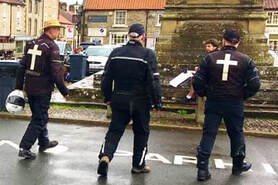 I met with a group of Christian bikers yesterday who were discussing the Paris to Dakar rally. During the course of the conversation, the group leader spoke about the incredible teamwork and logistics involved in achieving success in such a gruelling event. He compared it by analogy to supporting each other as friends and fellow bikers on an exciting yet demanding journey of faith. He mentioned how we sometimes talk about the ideal team as a ‘well-oiled machine’. It was certainly a metaphor that appealed to the group. He went on, however, to challenge the metaphor. ‘A team isn’t a machine. It’s people. People like us. People like you and me. People who are different to each other, each with their own personality, talents – and quirky habits.’ He went on. ‘It’s that kind of team that I want to be part of. A team of friends who care deeply about each other, look out for each other, support each other, laugh together, cry together, pull together. A machine does none of those things. It’s cold, efficient, impersonal, inhuman. The machine metaphor is all about performance. The team I’m talking about is all about relationships.’ One bloke piped up with a playful glint in his eye. ‘This group is nothing like a well-oiled machine. It’s more like a buckled wheel – and I love it!’ As I looked around the room at these leather clad men, each with his own mixed life story of brokenness and success, I could see what he meant. There’s something about this team that's intensely human, personal and real. I reflected more as I rode home. I thought back to teambuilding events I’ve been involved with, team coaching experiences, team models and technical scientific psychometrics. This man wasn’t simply advocating a different team model to the norm, a different team focus or approach. He was advocating a radically different existential–spiritual paradigm to that we find in many Western organisations today. He was challenging an over-emphasis on performance and efficiency that loses sight of humanity and meaning. I was taken back to a conversation with an African colleague who once commented, ‘I know Western organisations are preoccupied with targets and metrics. Our invitation, however, is to meet with us as people and to walk together.’ Is this hopelessly naïve, idealistic and unrealistic? What about all the pressures organisations face in increasingly competitive markets? What about increasing demands from boards, employees and shareholders for greater accountability, productivity and profits? What about organisational cultures that foster internal competition too? I agree, it’s a real challenge. It calls for visionary, courageous leadership, a radical step back to consider deep questions of identity, meaning and purpose at organisational and wider stakeholder levels. It begs profound questions, e.g.‘What is influencing our beliefs about what is most important to us?’ ‘What is driving our behaviour?’, ‘How can we be more human?’, ‘What legacy do we want to leave in the world?’ I’ve had the privilege of working with some leadership teams that have taken this challenge seriously. Admittedly, it felt counter-intuitive at the time, especially at first. How to build in a more explicit spiritual-humanising dimension to the organisation’s thinking, practice and culture in the midst of intense organisational busyness, pressures and deadlines? Wouldn’t it take more time than was available, slow things down? I could feel the understandable tension alongside the aspiration. One team decided to bite the bullet. Its 2hr meetings had constantly packed agendas. It struggled to work through everything and the pressure felt relentless. Some felt tired and wondered in conversations offline about their team’s sustainability and their own ability to cope. We discussed how it would feel to check in with each other and with God at the start of each meeting - and they were open to experiment. We decided to allow 20 mins of each 2 hour meeting so that people could arrive and breathe before diving into business. As they settled in, they shared stories of how they were feeling, what was happening in their worlds at the moment, what was preoccupying them. They practised active listening, being genuinely present to each other. Sometimes they prayed. At the end of the 20 mins, they felt more relaxed and focused with a stronger sense of team spirit. They used the next 5 minutes to revisit the agenda: ‘What now stands out as most important to us?’ ‘How shall we do this?’, ‘What do we need to do this well?’ The team commented after practising this for a few months on how it had transformed their relationships and meetings. Their times together felt more focused, inspiring, energising, open, honest, human, and productive. They achieved higher quality and faster results. They began to identify ways of working that served them well (e.g. speak up; hear well; challenge; support) and used bright green cards light-heartedly to signal and affirm when anyone in the team modelled those behaviours. When others joined them for their meetings, they explained their new team culture and invited them to join in too. The effect was electric. It modelled inspiring team values and effective ways of working that extended beyond the team into the wider organisation. So, some questions for reflection. What difference do you, your team and organisation want to be and to make in the world? How far and how often do teams you are part of feel and act like a human place? What are your best and worst experiences of team? What made the biggest difference? What kind of person, team or organisation do you aspire to be and become? What kind of personal, team and organisational leadership will it call for to succeed? What will 'success' look and feel like for those involved and impacted by it? What values, practices and culture will others notice characterise your team? What place, if any, do God, spirituality and prayer take in your thinking and practice as a team? I would love to hear from you! I spent this week with a Christian social worker friend in South Germany. At one point, we visited a project for older people who want to learn how to use new technologies. The project is led by a group of volunteers from a similar age group who act as trainers, mentors and advisers. This friend who manages the initiative entered the room, smiled and said hello to the group, introduced me then walked around the room, purposefully shaking hands and greeting every person individually with genuine warmth.
The thing that struck me most was his profoundly-felt presence in the room. He has an unusual talent for standing, moving and gazing in such a way that demonstrates he is really here and really now. It communicates a deep sense of being and being-with that extends beyond words. The act of shaking hands, of physical contact, felt more than a cultural ritual and created a profound sense of emotional and relational contact with the group. I felt spell bound by this person, this quiet charisma, this dynamic he evoked. It’s a sharp contrast with an approach to leadership, coaching or training that relies purely on professional competence or expertise. It’s so easy to lose contact with ourselves, God and others in the midst of the business of the day. We can become so preoccupied with a task that we lose sight of what really matters at a deeper human-spiritual level. As I watched this friend and felt his presence, I was reminded of words from the Bible: if I’m clever, competent and successful but do not love, I am nothing. (my paraphrase) So my challenge as I return to England is to reflect more on my presence; to have a clearer and more focused sense of my deepest beliefs and values; to take a more intentional and resolute stance in relation to others that demonstrates love, warmth, care and authenticity. I want to be more aware of when I behave in professional mode but lose sight of a person or group; when I allow myself to get so busy, so task-focused that I lose sight of my own and others’ humanity. In short, I want to be more like Jesus. ‘Live and let live’ sounds great until someone crosses the line or invades your borders. The man sitting next to me on the train this morning was an example, his feet spreading over into my foot space. I could feel myself tense up with irritation, ‘How could he be so annoying?’ In fact, I really dislike it when anyone crosses into my physical, psychological or emotional space uninvited.
It’s not that I’m an intensely private person. It’s something about protecting my freedom and control. I get stressed when someone plays their music or TV too loud, when kids kick the football against my house wall, when someone tries to manipulate or force me to do something. It’s as if these things feel like infringements on my freedom, my choices, my sense of autonomy. Khalil Gibran in The Prophet emphasises the value of space as essential for healthy human relationships. Psychologically, it’s about relating independently from a secure base in order to avoid unhealthy co-dependence or confluence. We could compare it recognising the necessary value of spaces between words and musical notes, enabling us to hear the lyrics and melody. In a work environment it could be about enabling space for people to express their own values, their own creativity, to innovate. It could be about ensuring people have their own desk space or time in their diaries to think. It could be about checking that roles and responsibilities are clearly defined and delineated to avoid confusion. It could be about avoiding risks of micromanagement. I’m reminded of a group dynamics workshop I co-facilitated with Brian Watts (www.karis.biz). Brian invited participants to stand opposite each other at a distance then slowly to walk towards each other until they felt they wanted to stop. It was fascinating to notice patterns in behaviour, how people felt as they moved towards, where they chose to stop in order to safeguard space. Typically in that group, women would stop at a greater distance to men than men would to women. In fact, a man would often continue walking towards a woman even after she had stopped, causing her to instinctively step back. Men stopped at a greater distance from other men and women stood closer to other women than they stood to men, or men stood to men. Personal space is also influenced by culture as well as gender and individual preference. Some cultures view such space as more important than others and people within cultures learn where to move, where to stop, where to place and uphold unspoken boundaries. It can create awkward tensions when people from different cultures navigate the spaces between them. My own spacial preferences reflect my personal disposition, my personality traits. The cultural dimension suggests that my ideas, experiences and feelings about space are socially constructed too. If I had grown up in a different cultural environment, I may well have learned to experience and negotiate space and boundaries very differently. Once conditioned, it’s hard to change. I guess the real challenge lies in how to enter and navigate space in a world where people with different values and preferences coexist and continually interact with each other physically or virtually, occupying the same or adjacent spaces. Perhaps it’s about how to create and safeguard the space we need without isolating ourselves, infringing on others’ boundaries or overriding others’ needs. What are your experiences of space? What are the anxieties and pressures that cause us to avoid or squeeze out space? How can we create space for ourselves and others in our lives, relationships and organisations? What are the psycho-social and spiritual costs of inadequate space? How do we balance space with pace? How can we learn to breathe? ‘Could you be more direct?’ I took part in a 2-day workshop recently, a Gestalt approach to conflict, challenge and confrontation in groups. There were 12 in the group, mostly therapists of one kind or another, and we started by introducing ourselves in 2s. ‘This is my life’ in 5 minutes. Next, after each had spoken, we commented on what we had noticed. ‘We’re the same in that…’ and ‘We’re different in that…’ It drew our attention to what we notice in first encounters and how we tend to deal with sameness and difference in groups.
There’s something about sameness that can provide a sense of comfort, of security, of being part of something bigger than ourselves. When we feel insecure, we may seek out points of sameness in order to build rapport, establish connection and thereby reduce our anxiety. Safety in numbers. In this context, difference can feel distancing, even threatening. If we continue to focus on sameness, an awareness of group identity emerges, a feeling of belonging, a sense of differentiation between the ‘us’ and the ‘not us’. This is an important principle in group and inter-group dynamics. The inclusive dynamic that creates a sense of group within a group is the same dynamic that can exclude others. If we focus exclusively on sameness within our group and on difference between our own group and other perceived groups, we create boundaries between us. If difference emerges within our group, we may ignore or resist it because it doesn’t fit the group norm, the norm we have subscribed to in order to feel secure. This can lead to collusion and group think. A way to break through unhelpful group and inter-group barriers is to acknowledge what the group provides for us, its functional value at a social psychological level, and yet also to draw our attention to the differences between us within the group and the similarities between us (or at least some of us) and those (or at least some of those) in other groups. This has the effect of raising fresh awareness, reconfiguring group identities, enabling us to see different patterns of sameness and difference and thereby fresh possibilities. A later activity in this workshop was to practice immediacy. We split into two groups. One group sat in a circle in the middle of the room, the others around the outside observing those in the inside circle. The inside group was invited and encouraged to practise speaking very honestly, clearly and directly with one another. The conversation started.‘I would like to facilitate the group.’ ‘I’m happy for you to facilitate.’ ‘I feel anxious.’ ‘What do you feel anxious about?’ ‘I feel anxious in case those on the outside judge my performance.’ It continued. ‘If I lose interest, I will check out.’ ‘What will checking out look like, what will we see?’ ‘I will gaze out of the window’.‘What do you want us to do if we see you gazing out of the window?’ ‘Call it.’ ‘I don’t know what you are thinking or feeling and I want to know.’ ‘Why is that so important to you?’ ‘Because I don’t feel a connection with you, I feel distant from you.’ Our task was to focus on what was happening within and between us here and now and to articulate it openly and courageously, even if it risked evoking conflict. Asking, ‘What is happening here and now?’ is such a powerful question. It draws attention of a group away from a topic, issue or abstraction into the immediate moment. ‘I’m thinking…’, ‘I’m feeling…’. The impact in the workshop group felt both profound and electric. To ask, ‘What is going on for me now?’ is a great way of establishing contact with myself. To articulate what I am thinking and feeling in a group or to hear others do the same invites others to be open too and, thereby, builds the quality of relational contact within the group. This can prove tricky cross-culturally, especially where it could be considered inappropriate, disrespectful or even offensive to speak out in a group. In other situations, it may simply feel too risky to acknowledge openly what I’m thinking or feeling. The challenge in this workshop was to experiment with being more open, less constrained, than we would normally behave. ‘If I asked you on a scale of 10 how honest and up-front you are in groups, what would you say? What would really happen if you were to ratchet it up a notch?’ |
Nick WrightI'm a psychological coach, trainer and OD consultant. Curious to discover how can I help you? Get in touch! 
Like what you read? Simply enter your email address below to receive regular blog updates!


|
 RSS Feed