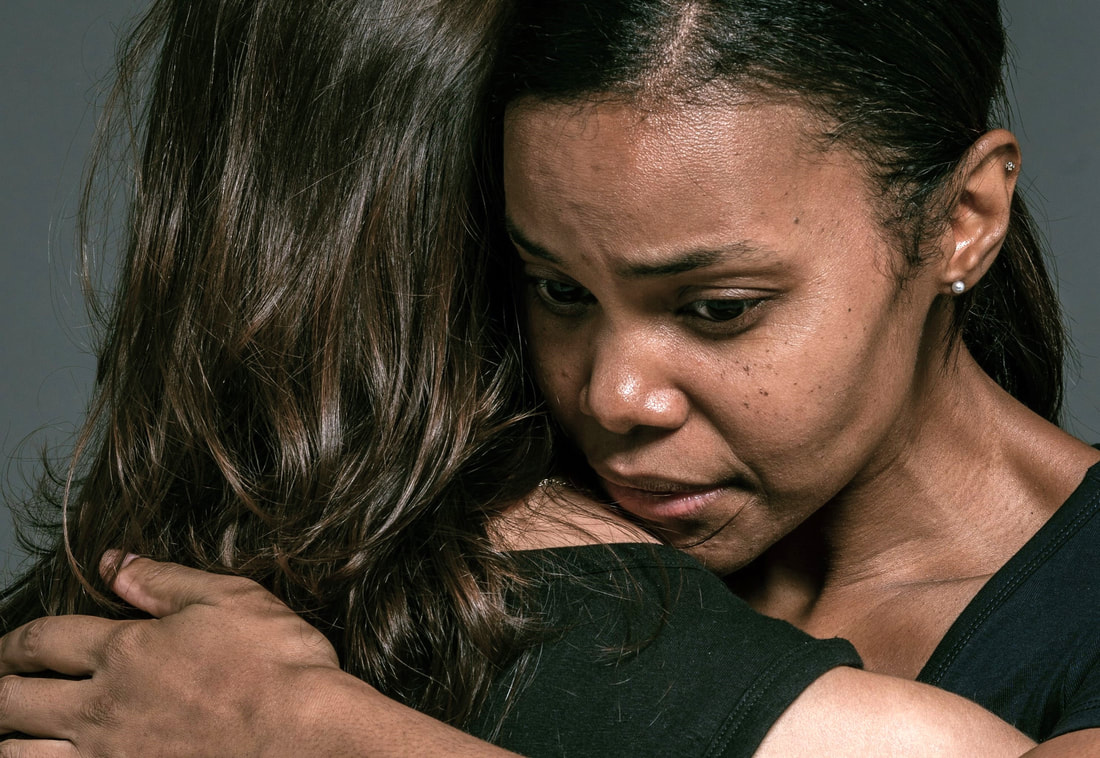
 ‘Empathy is the starting point for creating a community and taking action.’ (Max Carver) I had a long conversation with a Kurdish-Iranian man recently about his experience as a refugee in the UK and the ongoing wait for news that his wife will be allowed to join him here. With a warm smile of anticipated relief, he shared his hopes of building a new life in this country where he and his wife can finally feel safe and free. Yet then he touched his heart with his hand and his face shifted to a pained expression. He shared his sadness that he can never feel truly happy and at peace, knowing the oppression that his family, friends and neighbours are still living under in his home country. I was moved by his empathy and, at the same time, impressed by his stance that under such difficult and protracted life circumstances, he had not become so focused on his own situation that he had lost sight of others. It is, after all, a human risk that, when faced with challenges such as high anxiety and stress, our survival instinct can take over and turn us in on ourselves, absorbing us with our own needs and interests – a bit like when the body reacts to an external shock or threat by diverting its resources inwards to protect its vital organs. It’s a form of defensive flight to save ourselves first. How do you hold onto empathy...to love...when natural instinct may push or pull you to withdraw?
14 Comments
 ‘We don’t have a plane crash scheduled for today, but I thought I’d take you through the emergency procedures just in case.’ (KLM Air Hostess) I love the difference that a sense of humour can make. The air hostess (above) made everyone laugh during the passenger safety briefing on a return flight from the Netherlands today. The airline’s own plane had experienced maintenance problems so it had had to borrow one from another airline. One hostess complained, with a glint in her eye, that the green décor didn't match the blue colour of her uniform. The passengers all laughed when another hostess made an announcement too, aiming to draw our attention to an apparent information light on the plane…only to correct herself moments later with, ‘Oh – this plane doesn’t have one!’ Brilliant. It took the terror out of the turbulence. On a more serious note, I had been in the Netherlands to work with a diverse NGO leadership team, to support its desire to enhance its international teamwork. I referenced briefly a couple of places in the Bible where the writer comments on the amazing potential of human diversity – where the Divine whole is seen, known and experienced to be more than the sum of its parts – yet also hints at the corresponding dark risks of undervaluing, fragmentation and conflict if not. Strikingly, the writer moves on in both places to emphasise a deep need for authentic love as the critical success factor. This insight set a spiritual-existential tone for the day, as we reflected on team-as-relationships. Returning to the plane – but this time as a metaphor, a participant from South Africa asked, ‘How many separate parts is a Boeing 747 aircraft made up of?’ Apparently, the answer is about 6,000,000. ‘And what do these diverse components all have in common?’ Puzzled faces all round now. ‘None of them can fly.’ I thought this was genius. What a great way to dispel the myth of the all-sufficient self in the face of the dynamic complexities of teams, organisations and wider world. We worked through an Appreciative Inquiry next, drawing on positives of the past and aspirations of the present to co-create shared trust and vision for the future. Set the trajectory. Fasten seatbelts. Enjoy the flight.  ‘You could start a fight in an empty room, mate.’ (Allan Jones) I’ve never sought conflict. Far from it. I much prefer harmony and peace. That said, however, I can’t escape a similar calling to that which Martin Luther King once heard: ‘Stand up for righteousness! Stand up for justice! Stand up for truth!’ It’s a call that burns deeply inside of me and has done, as far as I can remember it, for my entire life. I’m pained to admit that I haven’t always followed that voice anywhere near as courageously as MLK. I haven’t always handled it with his astonishing humility and love. I’ve stayed silent when I should have spoken up or spoken up when I should have stayed silent. My words have stumbled out clumsily. I’ve caused pain where I meant to bring healing and hope. Yet, at times, this vocational stance has proved authentic, valuable and worthwhile. In my 30s, I worked for a large UK charity in the health and social care sector. As an idealistic young radical, I challenged the leadership team on numerous occasions when I believed we were compromising our values. I tried to do this with prayer and humility and out of a genuine desire to build relationship and trust. On one occasion, the leadership team decided, in view of limited budget, to increase only senior leadership salaries until it had secured sufficient funding to increase frontline staff salaries too. I argued vociferously that we should do the exact opposite – and to freeze my own salary as a first step. On another occasion, the leadership team decided to reserve all spaces in its small head office car park for executives only, given that they didn’t have time to drive around to look for parking places elsewhere. I advocated passionately that, especially in the winter months, the spaces should be reserved for female and other vulnerable staff or visitors so that they wouldn’t have to walk along dark city streets at night to their cars. On yet another occasion, the leadership team recruited a ‘hatchet man’ on temporary contract to implement a tough restructure with associated redundancies. I protested that this blunt way of approaching the change would damage relationships, engagement and trust. At times, I imagined my challenges and counter-proposals were met with deafening silence or heavy sighs – especially as I wasn’t a senior leader at the time. Nevertheless, when a serious crisis broke out between the leadership team and entire middle management, both sides to the conflict invited me to mediate as ‘the only person they could trust’. The chief executive, a man of remarkable humility, took me into his confidence and treated me like a respected thought-partner. When I moved on, the company secretary wrote to me to say he had never encountered such integrity. Even the dreaded ‘hatchet man’ wrote that he wouldn’t hesitate to employ me alongside him in any future role. Pray with humility – take a stance – speak the truth in love.  ‘Tomorrow is the first blank page of a 365-page book. Write a good one.’ (Brad Paisley) It was my first time at a Greenbelt Festival in the UK and I remember wearing simple sandals made from recycled car tyres and a leather headband to keep my hair out of my face. I painted a cross on my forehead, carried a bamboo flute (which I couldn’t play) and walked with friends amidst the crowds towards the centre stage. Radical social activist, Jim Wallis, was the keynote and he spoke passionately about a place in the Bible where Jesus reveals who and what matters to him in this world. I felt spellbound. It resonated deeply with my own spiritual convictions – nothing to do with religious moralising and everything to do with a vision, an ethic, a possibility, a relationship. ‘I was hungry and you gave me something to eat, I was thirsty and you gave me something to drink, I was a stranger and you invited me in, I needed clothes and you clothed me, I was sick and you looked after me, I was in prison and you came to visit me.’ In this narrative, those to whom Jesus is speaking were puzzled and asked when they had done this. ‘Whatever you did for one of the least of these brothers and sisters of mine, you did for me.’ Jesus was sharing with astonishing clarity the lens through which he views our priorities and relationships. The way we treat others in need – the poor, the outsider, the sick, the oppressed – is the way that Jesus considers we reflect and treat him. Please God, as we enter this new year: shine your light of love, truth and hope through my life with ever-increasing brightness. 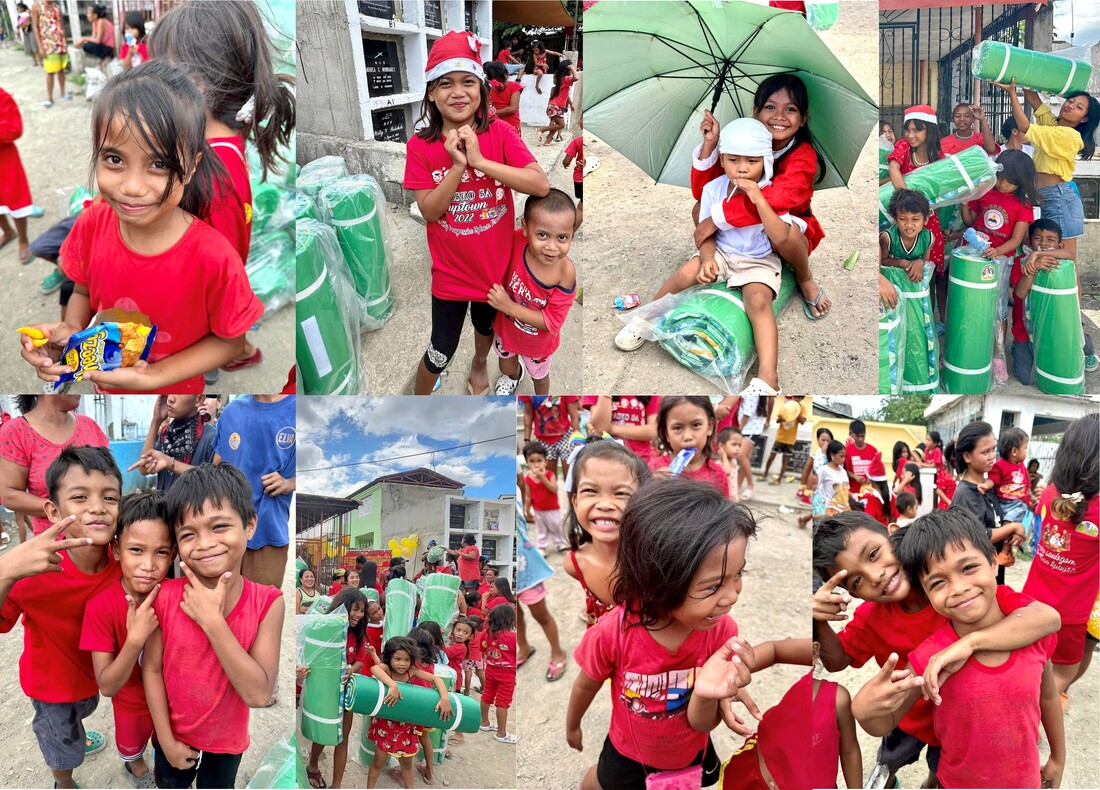 'The supreme happiness of life is the conviction that we are loved.' (Victor Hugo) Bursting with excitement would be an understatement. These poor Filipino children today know that something very special is about to happen, but neither they nor their families know what it will be. Living in a very poor community that exists at subsistence level in a cemetery, they don’t normally expect to be seen, let alone be treated to gifts. When Jasmin, her daughter and her small team of helpers appear, the whole community goes wild. Supported by friends in the UK and Germany, every one of the 127 children receives a mattress to sleep on. Christmas gifts and food parcels are distributed too. With wide smiles of joy, the whole community springs spontaneously into song and dance. God is amazing. Love in action. We can be hope.  Today is a dark day. The wind and rain outside reflect the deep, dark feeling inside. One of the women who featured in small things, the video, in July…has died. She didn’t die from an accident or a serious illness. She died because she is poor. She loved to help others and brought joy to the lives of those who live on the far edge of hope. That is her tribute – her simple, beautiful legacy. With no shoes to wear, she got a small cut on her foot. Not wanting to burden her family with the cost of help that they too could ill afford, she hid it from them and didn't say anything. She wrapped a makeshift bandage around it, but couldn’t keep it clean. With untreated diabetes, no sanitation and being too poor to access doctors, hospitals or medication, the wound festered and killed her. I hate that the poor are so vulnerable. And I’m trying to remind myself: we can be hope. 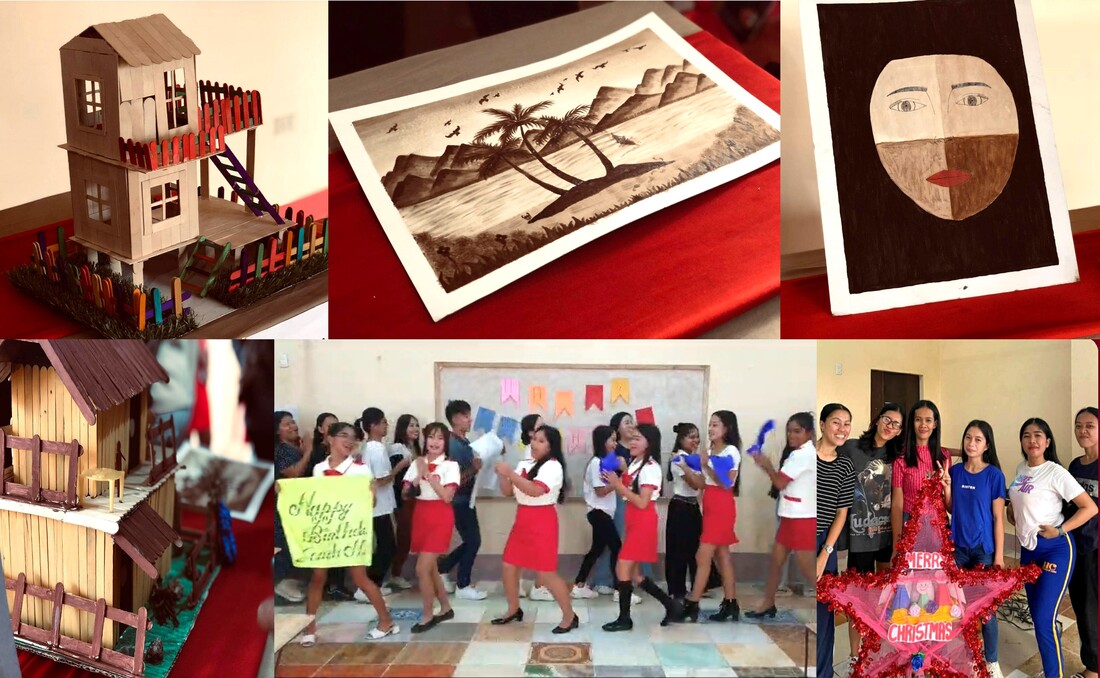 ‘What is the human being? In our anti-metaphysical age, we regard the question as having little importance. It is, however, the most crucial of all.’ (Felipe M. De Leon) A good friend in the Philippines – St. Paul as I affectionately call him because of his dedication to the Jesus and the poor – works with student educators, teachers of the future. Today, he supported his students to create their own art exhibition as a way of exploring the relationship between art and humanities. It’s a topic that interests me too. I’ve travelled and worked in many different countries in the world but I’ve never encountered a culture as vibrantly and spontaneously artistic and creative as the Philippines. Music, dance and colour are everywhere, and with such natural richness of talent. I find myself wondering – why is this? By stark contrast, in terms of art, my own part of the world can appear and feel quite cerebral, introverted and restrained. (I notice that even using the word ‘feel’ in that sentence can feel edgy and a bit risky in my context.) St, Paul’s students, like so many others I’ve had the great privilege of encountering in the Philippines, inspire me by their passion, energy and uninhibited emotional expression. They danced for me on my birthday even though I’ve never met them before, rather than offering me a simple written greeting. They bring the ordinary things of life to life. In ‘Life as Art’, Felipe M. De Leon makes similar observations and explores cultural and contextual conditions that contribute to this gift-phenomenon. In Filipino society, in which, ‘a person learns to develop an expanded sense of self – a sphere of being which includes not only his (or her) individual self but encompasses immediate family, relatives, friends…closeness to others allows (one) to be more trusting, open and freely expressive. Arts and crafts are richest, most creative and diverse in communal cultures. Food is tastier, speech more melodic and things of everyday life more colourful.’ De Leon goes on to comment on other distinctive dimensions of Filipino culture and spirituality that also play a part. Yet there’s something about the relational dimension that resonates very powerfully with me. I notice when I work with people and groups that, if they feel genuinely loved, valued and involved, they often find themselves at their most free, experimental and creative too. Conversely, if they feel isolated, undervalued or excluded, they are more likely to become defended, closed-in or shut-down. These amazing Filipino students have a lot to teach the Western world, and me…and I’m still learning. 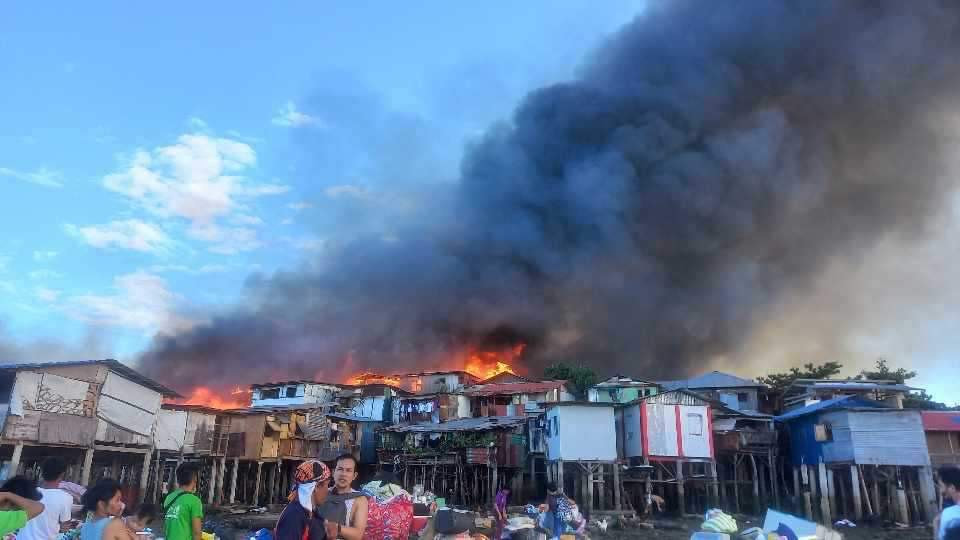 ‘If you tremble with indignation at every injustice, then you are a comrade of mine.’ (Ernesto Che Guevara) It looked like a scene from Dante’s inferno. Students from a very poor barangay (community) in the Philippines arrived home this week… Delete, rewind: arrived at where their makeshift homes had been until this week, to see them engulfed in a blaze of fire and billowing with thick, black smoke. The poor have no land rights, no insurance and no savings to fall back on. For a moment, it felt like their lives, as well as their homes, had gone up in flames. On hearing of this, one of their tutors, Jasmin, raced to provide them with emergency relief. She offered them a safe place to sleep in her own home, yet they refused – preferring to stay with their families in the midst of the charred and burned-out remains. On receiving her gift of food supplies, they immediately shared it with their extended families and with their neighbours who had lost all too. The next day, their fellow students rallied around in support. Rumours spread quickly that corrupt officials were behind the disaster as a way of driving the poor off the land to sell it to rich property developers – in exchange for a substantial bribe. Being sited at a prime seaside location, and being told immediately by the local Mayor that they would not be allowed to return, added sinister credence to these fears. The barangay residents have no access to justice, yet say they have Jesus as their advocate and hope. Life is hard-edged for the poor. We, too, can be hope. 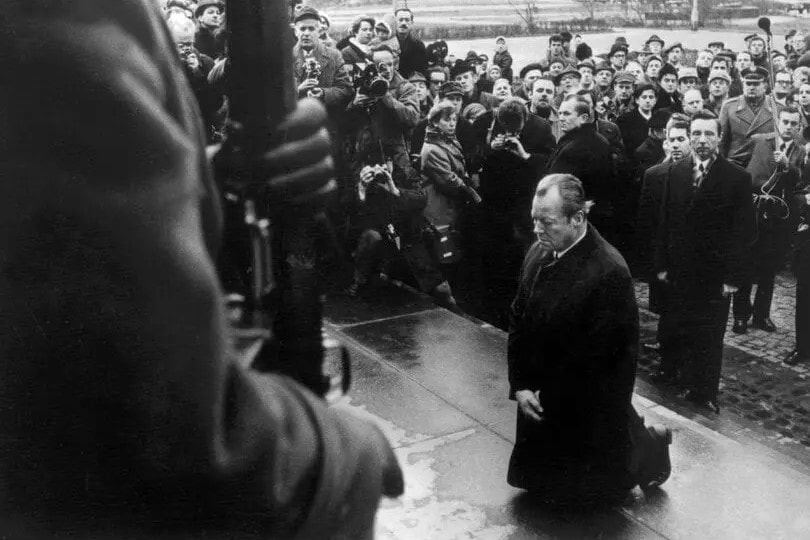 ‘To the victims of violence and betrayal, in the hope of an enduring peace.’ (Willy Brandt) Angelika gave me a gift this year of a shiny German 2 Euro coin. It was minted in 2020 to commemorate 50 years since West German Chancellor Willy Brand’s legendary ‘Kniefall’. I had heard of Willy Brandt but, I must confess, not the act that has, since, gripped my imagination. The German word Kniefall means, quite literally, to fall to one’s knees. I’m especially indebted to Valentin Rauer’s exceptional social-psychological study, Symbols in Action (2009), of what took place in that extraordinary moment in world history. I’m curious about what it meant and what made it so powerful. Brandt visited Warsaw in Poland, 25 years since the end of World War 2, on a mission to seek post-war reconciliation. Poland, including its Jewish population, had suffered horrific genocidal brutality at the hands of the Nazis. At the Monument to the Heroes of the Jewish Ghetto Uprising (against their Nazi oppressors in 1943), with a crowd of media reporters watching, Brandt suddenly and unexpectedly fell to his knees. He stayed there, in silence, as those around him looked on in amazement. It was an astonishing example of an action speaking far louder than words. At a political level Brandt, as Chancellor, represented West Germany. At a personal level, during the war, Brandt had been an anti-Nazi activist. The imagery of Brandt’s Kniefall, as an act of penitent humility that acknowledges guilt and seeks ‘forgiveness for an unforgivable past’ (Rauch), resonated deeply in a prevailing Christian culture. The symbolism of ‘the innocent (who) takes up the burden of the collective’s sin, thus redeeming the nation’ (Rauer) reflected Jesus Christ’s death on the cross. Brandt was in the square from which Jews were deported to concentration camps. For me, the most striking and moving dimension of this event was Brandt’s own reflection on the spontaneity and authenticity of his act: ‘Faced with the abyss of German history and the burden of the millions who had been murdered, I did what people do when words fail us.’ It paints the picture of a human being, beyond the public trappings of a politician, who allowed himself to feel empathy and brokenness, to take undefended responsibility and to reach out in peace. It transformed the trajectory of Cold War politics then. How desperately we need leaders like that now. ‘Not all of us can do great things. But we can do small things with great love.’ (Mother Teresa) Small things are big things in the hands of the poor. Imagine this: you live in dire poverty, in a cemetery. You and your neighbours each have only a handful of possessions – mostly a few clothes – and have nowhere to keep them clean or dry. In fact, you live life day-by-day, moment-by-moment, and have no discretionary income whatsoever. No-one sees you, and no-one helps. Then, today, a woman appears, as if out of nowhere, carrying sturdy plastic boxes and offers them to you freely, as ‘a gift from Jesus’. At first, you can’t believe it. Your face lights up as you realise: they really are for you and for your friends. A woman in your group, who hasn’t been able to hear or speak since birth, rushes to this woman, throws her arms around her neck…and cries. A box full of love. A beautiful hug. Small things are big things. We can be hope. |
Nick WrightI'm a psychological coach, trainer and OD consultant. Curious to discover how can I help you? Get in touch! 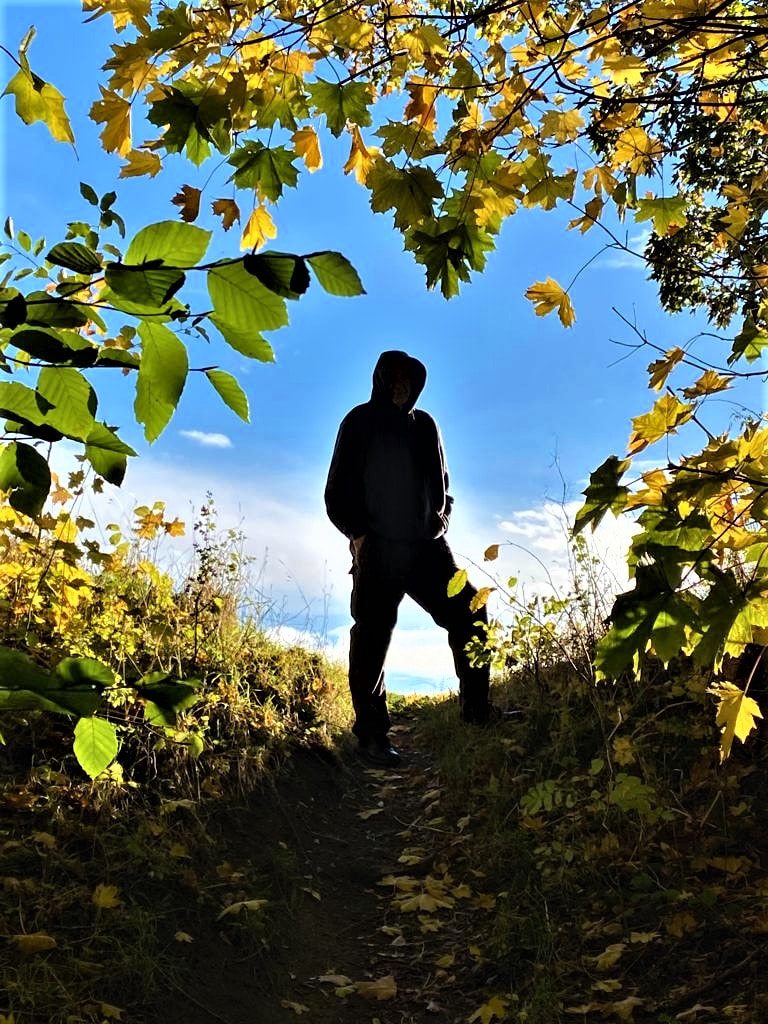
Like what you read? Simply enter your email address below to receive regular blog updates!


|
 RSS Feed