 '95% of what we think we know, we have simply accepted from what other people have told us.' (Dennis Hiebert) Nothing adds up. How can we identify hidden assumptions, implicit agendas and vested interests that lay behind what we see, hear and read in the media? Perhaps the answer to this question has rarely been so critical. Democracy and social cohesion within and between peoples and nations are threatened by manipulation and misrepresentation of what we may ordinarily regard as truth. Following writer Mark Twain, actor Denzel Washington commented famously, ‘If you don’t read the news, you’re uninformed. If you do read the news, you’re misinformed.’ Take international news in the UK. Why are we so focused on Russia-Ukraine and Israel-Gaza? Why haven’t we noticed, apart from the occasional glance, the terrible civil wars in Sudan, Myanmar or Democratic Republic of Congo? Why do we call Russia’s brutal intervention in Ukraine a ‘full-scale invasion’? Why do we assume that increasing NATO size-spend is the only solution? If Israel’s bombing is indiscriminate, why has it killed, proportionately, so few ‘adult men’? Why didn’t we see outraged street demonstrations against horrific, widespread atrocities by Daesh? These are profoundly important, deeply complex and extremely painful issues and we rarely have access to the underlying research or information that could help us, as ordinary and concerned citizens of the world, to discern and decide how to act. We are presented with multiple, competing viewpoints and demands and this can feel both perplexing and paralysing. I don’t know the answers to such questions yet I do believe they should play at least some part in shaping my response. I will share some considerations that may help us to avoid sleepwalking blindness. As we’re exposed to news reports, what are we noticing and not noticing? How far does what we’re noticing appear to confirm what we already believe or want to believe? How open are we to having our assumptions, our preconceived beliefs and ideas, challenged to reveal something different or new? Why is the news presenter or media channel presenting this particular story or angle? What do they want us to believe, think, feel or do? Who or what is being excluded by the reporter’s narrative? Whose voice, perspective or experience is being ignored or filtered out? Behind the scenes: who owns and-or funds the media channel, the presented report or the research that underpins it? How rigorously are research methods tested to avoid implicit bias? Are views and experiences presented in a report genuinely representative of a wider and diverse population, or different sides to a conflict? In interpreting statistics, is a reporter presenting a case selectively, or cherry-picking results to show or advocate a particular stance? In short, be sceptical – and look for evidence that supports or contradicts the research-reporter’s ‘news’.
20 Comments
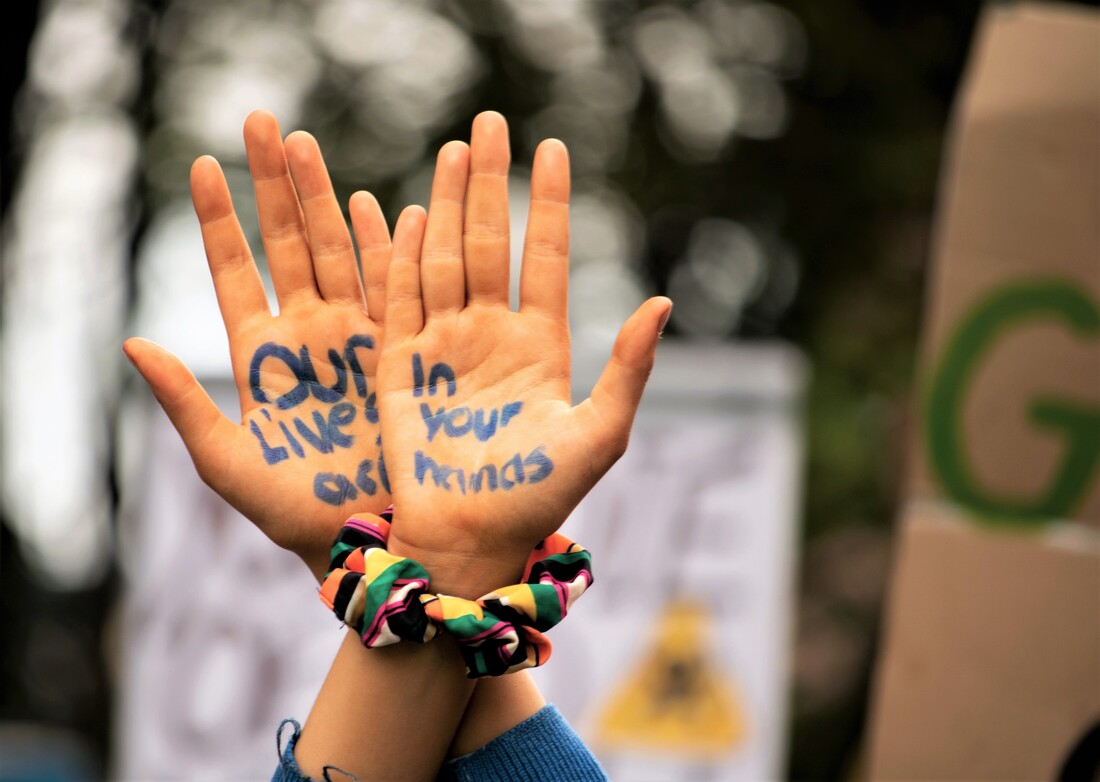 ‘Now let us begin. Now let us re-dedicate ourselves to the long and bitter, but beautiful, struggle for a new world.’ (Martin Luther King) Few songs convey the pain and potential consequences of protest like the Dixie Chicks’ (now Chicks’) ‘Not Ready to Make Nice’. Singer Natalie Mains had dared publicly to criticise the then-U.S. President, George W. Bush, during the 2003 run-up to the U.S.-led invasion of Iraq. The group was subsequently banned from being played on many U.S. radio stations and group members were subject to attacks on their character, and even to death threats. ‘Not Ready to Make Nice’ is a passionate reflection on that experience, a resounding spirit of unbroken resistance in a near-breaking voice: ‘Forgive, sounds good. Forget, I'm not sure I could. They say time heals everything, but I'm still waiting. I'm through with doubt. There's nothing left for me to figure out. I've paid a price, and I'll keep paying. I'm not ready to make nice, I'm not ready to back down. I'm still mad as hell, and I don't have time to go 'round and 'round and 'round. It's too late to make it right. I probably wouldn't if I could ‘cause I'm mad as hell. Can't bring myself to do what it is you think I should. I know you said, ‘Why can't you just get over it?’ It turned my whole world around – and I kinda like it. I made my bed, and I sleep like a baby with no regrets. And I don't mind saying it's a sad, sad story when a mother will teach her daughter that she ought to hate a perfect stranger. And how in the world can the words that I said send somebody so over the edge that they'd write me a letter saying that I better shut up and sing – or my life will be over?’ This experience reflects the spirit of an age in which we find ourselves too. Voices of dissent against a mainstream narrative are often heard with disdain, if at all, in the clamour of polarised and conflicting ideologies, opinions and rage. Platforms that could protect and promote democratic values, ranging from conventional and social media to schools and university campus’, all too often create echo chambers that reinforce the dominant view. Silence is golden. Silenced is not. When did you last speak up? What have you left unspoken that needs to be said? 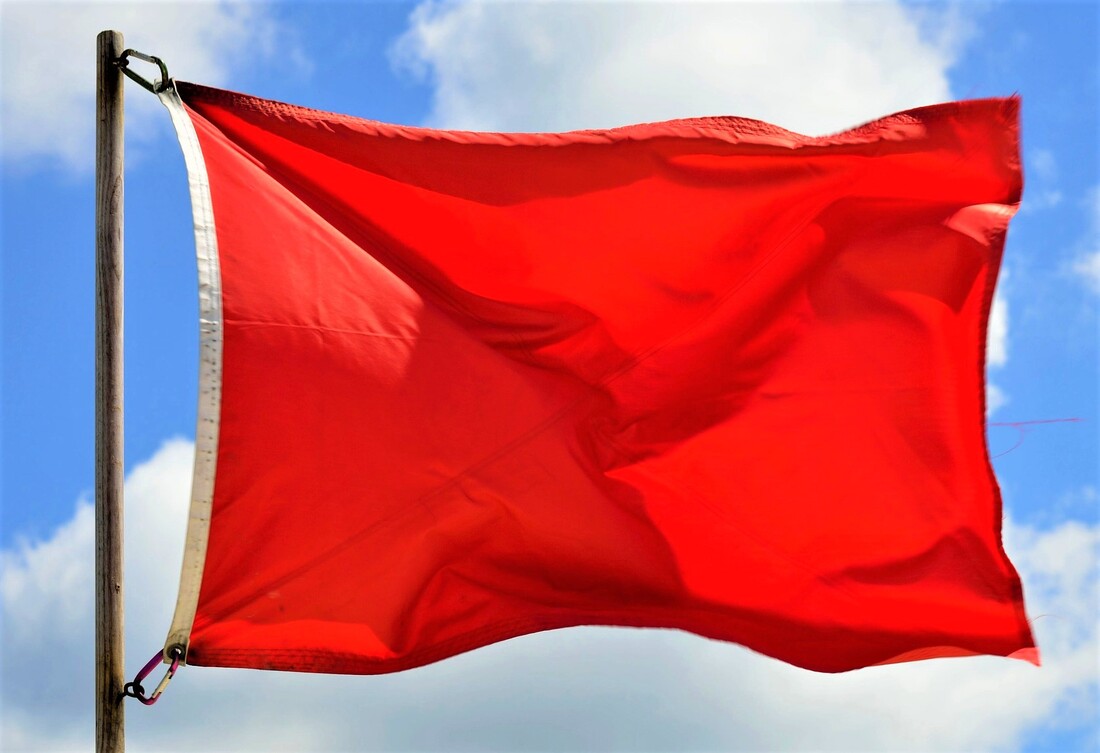 ‘Instead of singing the same song in different ways, we need to learn to sing a new song.’ (Nancy Akanbombire) I took part in a fascinating international webinar this afternoon organised by INTRAC: ‘Shifting the Power through Organisation Development’. It called for fundamental shifts in the ways in which we perceive ourselves, others and our work, particularly as consultants engaged with civil society and civil society organisations (CSOs) throughout the world. It also challenged us to examine our stance and approach by applying critical reflection and critical reflexivity to our relationships and practice. Underlying values of humility, courage, curiosity, engagement and co-creation shone throughout. The overriding theme, which extends well beyond organisation development (OD) and our work with CSOs, was how to make a paradigm shift that enables sustainable transformation. This is a big question and one that we now face urgently in so many different contexts globally. Our tried-and-tested ways of thinking about, construing and addressing situations are somehow leading us into disaster after disaster – and the stakes couldn’t be higher. This ought to be raising some serious red flags, not just Ukrainian flags: and the fact that it isn’t should be cautioning us to think very hard. Take, for instance, the devastating war in Ukraine that risks disastrous consequences for the lowest-income countries where fuel, energy and food security are already at crisis point, yet our gaze is fixed on Europe. Take the climate emergency that still threatens to kill the entire world, yet captures our attention for a brief moment then slips back to the fringe. Take the on-going Covid crisis with risks of a variant emerging from anywhere that could wipe out all of humanity, yet only 1% of people in the poorest countries have yet been vaccinated. What powers and vested interests lay hidden here? I raised a red flag with some friends this week: ‘Why are we putting up Ukrainian flags everywhere, and not Russian flags?’ The response was instinctive and immediate: ‘Firstly, we want so show solidarity with Ukraine that is on the receiving end of a brutal and unjustified attack by Russia. Secondly, if we put up Russian flags, it would look like we’re supporting Putin.’ I get it. So, I asked a second question: ‘So what about showing solidarity too with the Russian people who are proud to be Russian, who are horrified by Putin’s war and who are also suffering terribly for showing dissent?’ The room fell silent. Now, a third question: ‘This war - how did we get here?’ Again, an instinctive response: ‘Russia’s aggression.’ The Russian military is aggressive in Ukraine, and the Russian police is aggressive in Russia. Yet that’s an answer to a different question. ‘Do you think NATO expansion to Russia’s borders could have been an influencing factor?’ One frustrated person came straight back at me angrily: ‘You’re acting like a spokesperson for the Kremlin.’ I had touched on a nerve, a boundary: what is acceptable to think, what I’m allowed to ask. Yet this itself is the real learning edge. So – why do we shrink back? Why do we allow simplistic answers, binary narratives and biased judgements to so easily dominate our discourse; and why do we work so hard to defend them? Why is implicit or explicit silencing so prevalent, including in democratic societies that depend on critical debate as a core value, learning opportunity and safeguarding mechanism? The scale and complexity of the issues we face can evoke anxiety, and to face the fear can feel threatening. We retreat to where it feel familiar and safe: where red flags are torn down – and that could be our undoing. 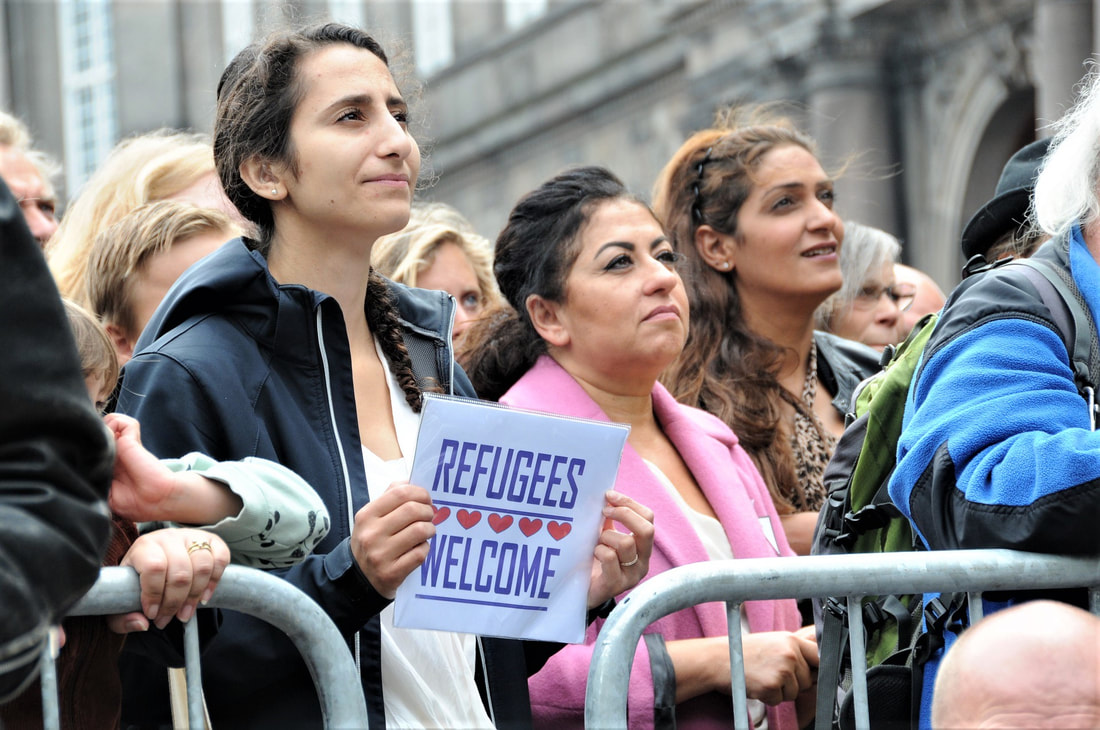 Turn on the TV and you will see heart-breaking scenes of streams of desperate people, frightened, shell-shocked and displaced by war, fleeing within Ukraine or escaping across crowded borders into neighbouring countries. It’s a tragic and all-too-familiar scene. Not that long ago, we witnessed similar images of dispossessed and traumatised people, at that time clinging together in crowded boats or walking on long roads, trying to reach safety away from the ravages of a brutal war in Syria. It's tempting, in such circumstances, to compare and contrast. Why, for instance, is Poland throwing its doors wide open to Ukrainian refugees whereas it was decidedly reluctant to do so for Syrian refugees? Is this evidence of endemic racism? It is because Ukrainians are white, because they ‘look like us?’ – as more than one TV reporter asked this week. These are important questions... and they also risk pitching one set of refugees against another, as if competing for empathy and support. I’ve had the personal privilege of working in the UK alongside asylum-seekers and refugees from countries as diverse as Afghanistan, China, Congo, Egypt, El Salvador, Eritrea, Honduras, Iran, Iraq, Kurdistan, Mali, Mexico, Somalia, Sudan, Syria, Turkey, Vietnam and Yemen. Up-close, every person is unique, has a name, and carries his or her own lived experience, his or her own individual story. Step back, and we can discern patterns shaped by e.g. culture, history, language, narrative and geopolitics. In some significant respects, I believe European public discourse concerning the Ukrainian refugee situation is different to that in 2015. Geopolitical factors include: Ukraine borders directly with Europe, vs Syria lays at a geographical distance; Ukraine is perceived primarily as an invasion by a foreign power, vs Syria was viewed primarily as a civil war; Ukraine is perceived in simple terms as a ‘hero’ against a ‘villain’, vs Syria was perceived as a complex conflict between multiple ‘villains’. Cultural factors include: Ukrainian refugees are perceived as culturally- and pro-European, vs asylum-seekers in 2015 who came from a diverse range of countries and cultures – often perceived as hostile to European liberal values and cultures; Ukrainian refugees are primarily women and children and, therefore, considered most-vulnerable and least-threatening, vs asylum-seekers in 2015 were perceived as primarily men and, therefore, considered least-vulnerable and most-threatening. If we are willing to pause and reflect openly, honestly and critically, we can see that the stance we take reveals all kinds of underlying personal and cultural beliefs, values, assumptions and biases – including whom we consider worthy, or not, and why. The media plays a very powerful role since most of what we believe and think we know about asylum-seekers and refugees is mediated via media. The ‘news’ is a blend of info and drama, with an agenda. Let’s not fan the flames of a refugee war. (For further reading in this area, see: Alexander Betts & Paul Collier, Refuge: Transforming a Broken Refugee System (2018)) I was skim reading a book today, ‘Organisations Don’t Tweet, People Do – A Manager’s Guide to the Social Web’ by Euan Semple (2012). It sparked my curiosity about how people and organisations could better engage with and draw on the benefits of social media culture and tools.
Most organisations I’ve seen up close are still feeling their way forward, sometimes trying to use social media such as Facebook or Twitter to spread corporate messages. It’s an old PR/marketing paradigm that needs a radical shift to unleash and realise this new media’s real potential. So I’m intrigued. What have been your experiences of using social media in organisations? What media have you used? How has it influenced your leadership and culture? What have been the upsides and downsides? How have you handled them? I look forward to hearing from you! My daughter is studying media and we had a chat today about communication principles, particularly about working with large groups, e.g. presenting at meetings or conferences. On the face of it, I explained, it’s as simple as ABC: (a) having clear intention, (b) knowing your audience and (c) using effective media.
Having clear intention What do you want your audience to leave thinking? Do you want them to have fresh information, knowledge, questions, understanding? If so, what is the focus? If you were to meet with each person present one week later, what are the three key things you hope they would remember from this meeting? What do you want your audience to leave feeling? Do you want them to feel encouraged, inspired, confident, challenged? What do you want your audience to do as a result of this encounter? Do you have specific actions in mind? If so, is the audience clear what you want them to do – what, how and when? Knowing your audience This is tricky in large meetings, especially if open meetings. It’s about finding out as much as you can beforehand. Why are these people here? What are their core interests? What kind of language, metaphors and concepts do they tend to use? What would make this meeting worthwhile from their point of view? It’s worth assuming a mix of theorists (who will want to know that what you’re saying is well founded), reflectors (who will want space and time to think it through), pragmatists (who will want to know there is some practical purpose to it) and activists (who will want to get on and do something). Also a mix of thinkers (like to know the rationale), feelers (want to feel an emotional connection), big picture people (like to know overall vision and concepts), data people (want to know the key details), organised people (like structure) and emergent people (enjoy fluidity). Using effective media The choice of media falls out of intention and audience and what kind of facilities and equipment are available. Some people have a visual preference (engage with what they see) some auditory (engage with what they hear) and some kinaesthetic (engage by doing something practical). Using a range of media, therefore, that involve seeing, hearing and doing can be most engaging for a large mixed group. This often demands creative thought and planning beforehand. ‘What could be the most creative and engaging way to do this?’ ‘How can we best use a diverse mix of media in the same meeting?’ It’s worth thinking about who to involve too. It would be one thing for a team to present on its own work, what it does. It would be another thing for a different team to present on what that team’s efforts have enabled them to do. It can help to involve a range of people, to hear different, unexpected voices. Building trust Intention, audience and media are important. I’ve learned over time, however, that authenticity and trust are equally, if not more, important. Covey comments, ‘When the trust account is high, communication is easy, instant, and effective’. When trust is low, even the most simple communications can feel strained. I often encourage speakers to consider beforehand, ‘As you look out on this sea of faces, what do you really believe? Do you genuinely love these people? Do you believe they are worthy of trust and respect? Is what you want to communicate real and true? Are you really open to listen and invite challenge?’ These are the more subtle aspects of communication, the character and values dimensions that can easily be missed, lost or ignored whilst focusing on technical messages, methods and techniques. It's passionate conviction, quiet humility and determined integrity that often make the difference. |
Nick WrightI'm a psychological coach, trainer and OD consultant. Curious to discover how can I help you? Get in touch! 
Like what you read? Simply enter your email address below to receive regular blog updates!


|
 RSS Feed