 ‘You can’t depend on your eyes when your imagination is out of focus.’ (Mark Twain) I worked with a group of very busy professionals this week who had carved out precious space in their diaries to help each other think through complex work-related issues. The process I was there to facilitate can be powerful yet demanding and requires presence, focus and careful listening. I’ve noticed that one of the challenges of meeting, particularly online, to do this type of work is that participants can feel time-pressured or tempted to leap straight into the session from other meetings, phone calls or tasks. In order to enable participants to arrive, therefore, I invited them to pause for a moment and to create their own ‘not to-do’ list for the next 12 hours. The session itself would only last for 4 hours, interspersed with breaks, but it allowed them opportunity to reflect and...breathe. After a few minutes, I invited them to disclose highlights from their lists and to share what it was like to identify not to-dos. They said they found it empowering and releasing. Now they could focus. What focusing exercises have you found useful?
10 Comments
 ‘When the bombs were falling like rain, Jennie stayed here with us.’ As a leader in international NGO, Tearfund, Jennie had always struck me as a quiet and unassuming person. We visited community rebuilding initiatives together in Lebanon just after the harsh and brutal civil war. Amidst shattered buildings, lives broken by sectarian conflict, aerial bombardment of the Beirut power station (just as we arrived) and Syrian ‘peacekeeping’ troops everywhere, we met with Christian leaders who recounted countless stories of heartache and hope. One of the things that struck me most was their deep reverence and respect for Jennie. Whenever she spoke, they listened with profound attention. Curious about this, I asked one of the leaders about it afterwards. He replied, ‘During the war, most NGOs withdrew because it became too dangerous for them to stay. Jennie was different. She refused to abandon us. When the bombs were falling like rain and we had nowhere else to run to or hide, Jennie stayed here with us.’ I felt completely speechless, humbled and amazed. I imagined myself in that same situation: how I would almost certainly have fled for my own safety – and have found or created very good reasons to justify myself for doing so. Yet what an impact now. The leadership and influence that Jennie was able to bring to this work by having been-with; not based on any hierarchical status, power or authority she held, but on a deep and incarnational, presence, relationship and trust.  Have you ever felt truly seen? Perhaps the romantic gaze of a secret admirer from across the room? Perhaps a boss, colleague or friend who acknowledged your best efforts, talents and achievements? Perhaps an encounter where you felt exposed, vulnerable – and yet accepted? There’s something about being seen that can be and feel tremendously affirming, reassuring and life-giving. In some cultures, it’s as if we don’t truly exist until seen by another; whether that be e.g. God, a lover, a friend or a family member. In some deep existential way, I know that I am because you perceive me.
Consider the alternative: how it is to be and to feel unseen, ignored or invisible. It’s as if, somehow, our very humanity, value and existence can be unrecognised, marginalised or diminished. It can feel socially, psychologically and existentially alienating. I was struck, therefore, by the moving example of a student friend in the Philippines this week who spontaneously stepped outside her own world. This girl visited and said hello to some of the poorest people who live in shacks at the roadside beside her college. In this simple-yet-profound act she saw the unseen and, in doing so, the invisible became visible. I believe there are parallels in our organisations here. I think back to some amazing leaders and colleagues who have seen me, often spotting gifting and potential that was not-yet-alive in my own awareness. I also think back to places that have felt stifled by hierarchy and bureaucracy, where people were viewed by job titles and as employees rather than as whole, creative, wonderfully-complex human beings. As leader, coach, OD or trainer, who do you see and not-see? What have been your best/worst examples of seeing and being-seen? What can you do to see the unseen..?  I have rarely witnessed such a humbling, authentic act of generosity. I was in the Philippines for the past 2 weeks visiting people and communities who are, by global standards, economically poor. The Filipina who accompanied me is poor too. She grew up in a remote jungle hut with no running water, electricity or sanitation. She works hard, long hours to support her children, family and community, determined that others should have better opportunities in life that she has experienced in her own. We were walking through an island village with children, teenagers and parents staring and smiling to see these strange visitors. The homes they were living in had only one room, no facilities, and we were passing a small hut with snacks hanging outside it on strings. It served as the village shop. We hadn’t eaten or had anything to drink for some time and the weather was hot and humid so I handed some money to my guide to buy herself some food. What happened next took me completely by surprise. This young woman bought all the snacks that were hanging there and immediately handed them to the intrigued children that had surrounded us. Then she walked around, handing them openly to mothers who were carrying toddlers – and toyed playfully with teenagers who wanted some too but were too shy to ask. The scene around us was transformed into one of spontaneous celebration with smiles everywhere and children running and laughing excitedly. It reminded me of Spirit, of incarnation, of Jesus. As we left the village with these images and sounds still dancing vividly in my mind, I commented to this special person, ‘You were amazing with them.’ She looked at me, wide eyed, and replied quite simply, ‘Nick – I am them.’ Those words detonated deeply in my soul. As leaders, OD and coaches, how far do we view staff, clients etc. as ‘them’, distinct from ‘us’? How would it impact on our presence, our behaviour, our effectiveness if we shifted our perspective, our stance, to one of radical identity with..?  It can be one of the most painful of human experiences, especially if compounded by rejection or betrayal. But why is loss so difficult, whether it be loss of a person, a relationship, a job, a home, our health? Thinking back, I remember vividly when I heard the news of Princess Diana’s death. I have never been a royalist and had no interest whatsoever in the UK royal family. Yet still, somehow, I felt an odd sense of grief, of bereavement, that made no rational sense to me at all. Susie Orbach, a psychotherapist and writer who applies psychodynamic insights to social and political phenomena, explained this well. Although I had no relationship with Diana, she had nevertheless been part of the backdrop, the fabric, of my life so that when she died, it felt like something of that fabric had been lost, torn away. The subconscious effect of this was amplified and intensified by the social, cultural effects of experiencing that loss alongside others. At another level, this feeling of loss also echoed deeply with previous losses in my life, e.g. when I moved home as a child, when I lost a precious relationship. These combined insights enabled me to understand that Diana’s death carried symbolic significance (some part of my life would never be the same again) and psychological resonance (echoes of previous experiences of loss). I’ve learned that these same dynamics are present when working with people, teams and organisations too. So, if you’re a leader leading change, an OD practitioner facilitating groups through transition, a coach enabling a person to move deeper and move forward: look out for loss – sometimes masked as resistance, sometimes as denial, sometimes as loss of energy and hope. You can’t always know or predict what change may represent symbolically or trigger psychologically. Be present, be patient and be willing to persevere until the person, the group, is able to see and feel light again. I struggle for words at Easter. How can I speak? It’s about horrific pain…and incredible hope. An intense emotional, physical roller coaster that evades articulation, defies human language. It’s a place of stretched imagination, strained to its most bewildering, unfathomable limits.
And, today, I worked with a Christian organisation, Open Doors. I arrived during a vivid presentation about conflict in South Sudan. The images were harsh and hard and yet, in the midst of such suffering, they held strange glimmers of light, of hope. I just can’t make sense of it. So I’m reminded of Christ who presences himself – Person of Jesus, God with us – and Easter’s stark reminder of the risk, the cost, of presence and contact. It’s an existential, spiritual challenge that feels so completely beyond me and yet, paradoxically, the deepest place that I find hope. I took my mountain bike for repairs last week after pretty much wrecking it off road. In the same week, I was invited to lead a session on ‘use of self’ in coaching. I was struck by the contrast in what makes a cycle mechanic effective and what makes the difference in coaching. The bike technician brings knowledge and skill and mechanical tools. When I act as coach I bring knowledge and skills too - but the principal tool is my self.
Who and how I am can have a profound impact on the client. This is because the relationship between the coach and client is a dynamically complex system. My values, mood, intuition, how I behave in the moment…can all influence the relationship and the other person. It works the other way too. I meet the client as a fellow human being and we affect each other. Noticing and working with with these effects and dynamics can be revealing and developmental. One way of thinking about a coaching relationship is as a process with four phases: encounter, awareness, hypothesis and intervention. These phases aren’t completely separate in practice and don’t necessarily take place in linear order. However, it can provide a simple and useful conceptual model to work from. I’ll explain each of the four phases below, along with key questions they aim to address, and offer some sample phrases. At the encounter phase, the coach and client meet and the key question is, ‘What is the quality of contact between us?’ The coach will focus on being mentally and emotionally present to the client…really being there. He or she will pay particular attention to empathy and rapport, listening and hearing the client and, possibly, mirroring the client’s posture, gestures and language. The coach will also engage in contracting, e.g. ‘What would you like us to focus on?’, ‘What would a great outcome look and feel like for you?’, ‘How would you like us to do this?’ (If you saw the BBC Horizon documentary on placebos last week, the notion of how a coach’s behaviour can impact on the client’s development or well-being will feel familiar. In the TV programme, a doctor prescribed the same ‘medication’ to two groups of patients experiencing the same physical condition. The group he behaved towards with warmth and kindness had a higher recovery rate than the group he treated with clinical detachment). At the awareness phase, the coach pays attention to observing what he or she is experiencing whilst encountering the client. The key question is, ‘What am I noticing?’ The coach will pay special attention to e.g. what he or she sees or hears, what he or she is thinking, what pictures come to mind, what he or she is feeling. The coach may then reflect it back as a simple observation, e.g. ‘I noticed the smile on your face and how animated you looked as you described it.’ ‘As you were speaking, I had an image of carrying a heavy weight…is that how it feels for you?’ ‘I can’t feel anything...do you (or others) know how you are feeling?’ (Some schools, e.g. Gestalt or person-centred, view this type of reflecting or mirroring as one of the most important coaching interventions. It can raise awareness in the client and precipitate action or change without the coach or client needing to engage in analysis or sense-making. There are resonances in solutions-focused coaching too where practitioners comment that a person doesn’t need to understand the cause of a problem to resolve it). At the hypothesis stage, the coach seeks to understand or make sense of what is happening. The key question is, ‘What could it mean?’ The coach will reflect on his or her own experience, the client’s experience and the dynamic between them. The coach will try to discern and distinguish between his or her own ‘stuff’ and that of the client, or what may be emerging as insight into the client’s wider system (e.g. family, team or organisation). The coach may pose tentative reflections, e.g. ‘I wonder if…’, ‘This pattern could indicate…’, ‘I am feeling confused because the situation itself is confusing.’ (Some schools, e.g. psychodynamic or transactional analysis, view this type of analysis or sense-making as one of the most important coaching interventions. According to these approaches, the coach brings expert value to the relationship by offering an explanation or interpretation of what’s going on in such a way that enables the client to better understand his or he own self or situation and, thereby, ways to deal with it). At the intervention phase, the coach will decide how to act in order to help the client move forward. Although the other three phases represent interventions in their own right, this phase is about taking deliberate actions that aim to make a significant shift in e.g. the client’s insight, perspective, motivation, decisions or behaviour. The interventions could take a number of forms, e.g. silence, reflecting back, summarising, role playing or experimentation. Throughout this four-phase process, the coach may use ‘self’ in a number of different ways. In the first phase, the coach tunes empathetically into the client’s hopes and concerns, establishing relationship. In the second, the coach observes the client and notices how interacting with the client impacts on him or herself. The coach may reflect this back to the client as an intervention, or hold it as a basis for his or her own hypothesising and sense-making. In the third, the client uses learned knowledge and expertise to create understanding. In the fourth, the coach presents silence, questions or comments that precipitate movement. In schools such as Gestalt, the coach may use him or herself physically, e.g. by mirroring the client’s physical posture or movement or acting out scenarios with the client to see what emerges. In all areas of coaching practice, the self is a gift to be used well and developed continually. I took part in an excellent mediation workshop this week run by Karen Bailey, a talented and experienced coach, mediator and trainer in this field (http://www.karenbaileymediation.com/).
I found it interesting to explore different models and approaches ranging from arbitration and advocacy through to non-directive facilitation. It resonated for me professionally because, as an OD practitioner, I’m often invited to coach others on conflict resolution, to do teambuilding where unresolved conflict is a factor affecting team morale and performance, or to act as a third party helping others (e.g. line managers and staff, or peers) to address and resolve stuck-ness or tensions between them. It also resonates for me spiritually because the notion of mediation is at the heart of my Christian beliefs. The biblical characterisation of Jesus Christ as mediator between God and humanity is the cornerstone of Christian theology, a role that Christians too are called to emulate and follow as peace-builders in the world. The model we explored and practised emphasised the importance of creating a semi-structured space for parties to listen to each other. If they can genuinely hear each other, there is scope for establishing empathy and reaching shared solutions. This involves the willingness of all parties to engage in open, direct and…potentially scary…dialogue. The mediator speaks to this fear dynamic explicitly: ‘This is going to feel very uncomfortable, but we’re here because we believe the outcome will be worth it.’ If the mediator and participants can learn to manage their own anxiety by facing it head on, they may also feel able to lower their defences and hear each other. We looked at four conditions that enable this type of mediation to be successful: the mediator is impartial; the mediation is confidential; participation is voluntary; outcomes are self-determined. These condidtions provide a basis for establishing clarity and for contracting with oneself, participants and sponsors beforehand. Karen explains why these same conditions can sometimes make it difficult for internal HR (or OD) practitioners to fulfil this role within their own organisation or business partnering arena effectively. (For further comment on this issue, see: http://www.karenbaileymediation.com/transforming-hr-practitioners-into-mediators/). We also looked at four aspects of participant experience and perspective that provide a content-orientated focus for the mediation: each participant’s Story; each participant’s felt Impacts; each participant’s Needs; each participant’s Goals (making the acronym SING). The mediator meets with each participant to tease out these aspects beforehand. The participant’s story is his or her own subjective experience of the situation; impacts are what he/she is feeling emotionally; needs are unfulfilled desires or challenged values; goals are the outcomes each person hopes for. ‘What’s going on for me’, ‘How this is impacting me’ and ‘Why this is important to me’. At the start of the session with all parties in the room, the mediator reiterates the process and invites the participants to (a) be honest and direct with each other and (b) listen and show respect to each other. The mediator may invite each party to make an opening statement and then allow the conversation to free-flow. The tricky part I found as mediator-in-practice was when to intervene and not to intervene, how to intervene in such a way that facilitates rather than interferes with the process, how to manage my own anxieties if ferocious conflict emerges, if one party appears bullied or if the conflict became directed at me. Karen offered some useful ideas…simple in principle, harder to do in practice! The mediator can summarise, reflect back…’This is what I’m hearing…’, ‘Sounds like…’, enabling the participants to feel heard before moving on. The mediator can call for a break, allowing mediator and participants to step back, take time out if they need to cool down or reflect before re-engaging. The mediator can co-facilitate with another mediator, creating the benefit of two perspectives, insights and interventions, especially valuable if one of the mediators feels hooked, emotionally destabilised or disorientated by something in the conversation and needs to detach in order to re-engage. The real challenge, opportunity and skill lies in enabling the participants to establish and maintain high quality contact with each other, even if that contact feels loaded with intense emotion. It’s a process that involves faith, faith that if the participants will find a way to hear and connect with each other, that they may feel empathy and will move towards finding their own solutions. It also demands that the mediator be fully present in the room, fully in role and fully in contact with participants. The session ends with participants discussing and agreeing their own way forward. This kind of mediation clearly demands patience and courage but the benefits can be transformative. It was minus 7 so I got up early to scrape ice off the car windows. The journey to the train station that followed felt like torture. I got stuck behind a JCB for 10 miles with nowhere to pass. It reached a peak of 20mph and I kept glancing at the clock anxiously. Was I going to make it? I could feel the frustration like a tight knot in my stomach. Every passing moment felt like slow motion. I kept looking ahead, hoping for a clear stretch to overtake. It took forever. When I finally did get past, I felt like waving an angry gesture at the JCB driver. ‘How could you be such a *£%!&$* pain?!’
I left the car and jogged the final 10 minutes to the station. According to the clock, I’d missed the train but adrenaline spurred me on. On arrival, breathless, I discovered the train was running late. I caught it, stepped on board just as it pulled into the station. I sighed with great relief. Yet what a waste of nervous energy. The pressure I put myself under not to miss the train. The imagined exaggerated consequences if I were to arrive late. The risk of dangerous driving in icy conditions. My ungracious attitude towards the JBC driver. The life draining stress of an impatient journey. How much of my life I live under self-imposed pressure. The deadlines I create for myself. The expectations I place on myself. The determination to arrive on time, never to be late. The avoidance of risks that could lead to a mistake. The drive to do everything perfectly. The unwillingness to let a ball drop. The desire always to do well, never to fail. Such pressures can drive me inwards, close me down, cause me to lose contact with God, lose contact with people. It leaves me tired, stressed, anxious, irritable, frustrated and self-centric. It’s not the kind of person I want to be. I can almost hear God whispering to me, ‘Stop…look...listen...look up and around you…breathe…’ It’s about regaining perspective, keeping the most important things in view. Not losing sight of the people, the things, the issues, the actions that matter most. It’s about loosening my grip, learning to prioritise, learning to negotiate, increasing flexibility. I know these things in my head, I practice them in my work, but the experience this morning has flashed into consciousness with renewed energy and vision. It’s something about learning to live, to love and to know peace. Gestalt psychology emphasises the value of high quality contact, where contact is about presence, attention, engagement, relationship. I'm sure you've had the experience of being with someone who appeared bored or distracted. Conversely, think of examples when someone has really been there for you, with you, really listened hard. In that moment, you felt close, connected.
In the busyness of life, it can feel hard to stay in contact with ourselves, our physical environment, others around us. It's as if we live in a blur, a semi-conscious state, that deadens us to the richness of life and real engagement. It's a survival strategy, a way of dealing with complex pressures and demands, that can nevertheless leave us feeling empty, alientated, lifeless. We can experience the same in our spiritual lives too, vaguely aware of a Presence that lies beyond but largely drowned out by other activities and preoccupations. We get bored, restless, dissatisfied, exhausted. Christian life can feel like a concept, an abstraction, a memory rather than a vibrant, life-giving relationship in the here and now. In order to re-establish contact, a Gestalt therapist may encourage a person to pause, sit, notice what's going on in and around them at that very moment...thoughts, feelings, breathing, sights, sounds, their own body. The aim is to help raise into awareness that which lies buried, ignored, suppressed or unnoticed. It's about exploring the 'what else' of a person's experience. Take 5 minutes. Allow yourself to relax. Notice your breathing. Notice your body, how you are sitting, how you are feeling in different parts of your body. Notice how you are feeling, where you are feeling it. Notice what thoughts are drifting through your mind, what is preoccupying you. Look and listen, what do you notice in the room, sights, sounds, smells, what do you notice outside? This kind of practical exercise draws our attention away from the past or the future into the present. Now practice being present, really present to another person. Allow that person to fill your attention. Notice how they look, listen to them attentively, tune into how they are feeling. Notice how giving attention affects the quality and feeling of contact between you. These principles are really important in Christian leadership. It's about paying attention to how we arrive in meetings and enable others to arrive. It's too easy to rush in, race ahead with an agenda, without really first becoming present to and with one another. It's about how to establish high quality, meaningful contact with oneself, others in the room and God, to really hear and discern. (I love Richard Rohr's comment in Things Hidden: 'God's face is turned towards us absolutely...it is we who have to learn, little by little, to return the gaze.' It conveys the profound and startling revelation that God is already present to us, already in deep contact with us. In this sense, spirituality is something about becoming present to the Presence, the God who is already with us.) Take an aide-memoire into your next meeting. Ask yourself silently, 'What is the quality of my contact with myself...with the other people in the room...with God...with the subject matter we are considering?' 'What can we do to improve the quality of contact in order to bring out the best in ourselves and each other?' You may be amazed at the difference it can make. |
Nick WrightI'm a psychological coach, trainer and OD consultant. Curious to discover how can I help you? Get in touch! 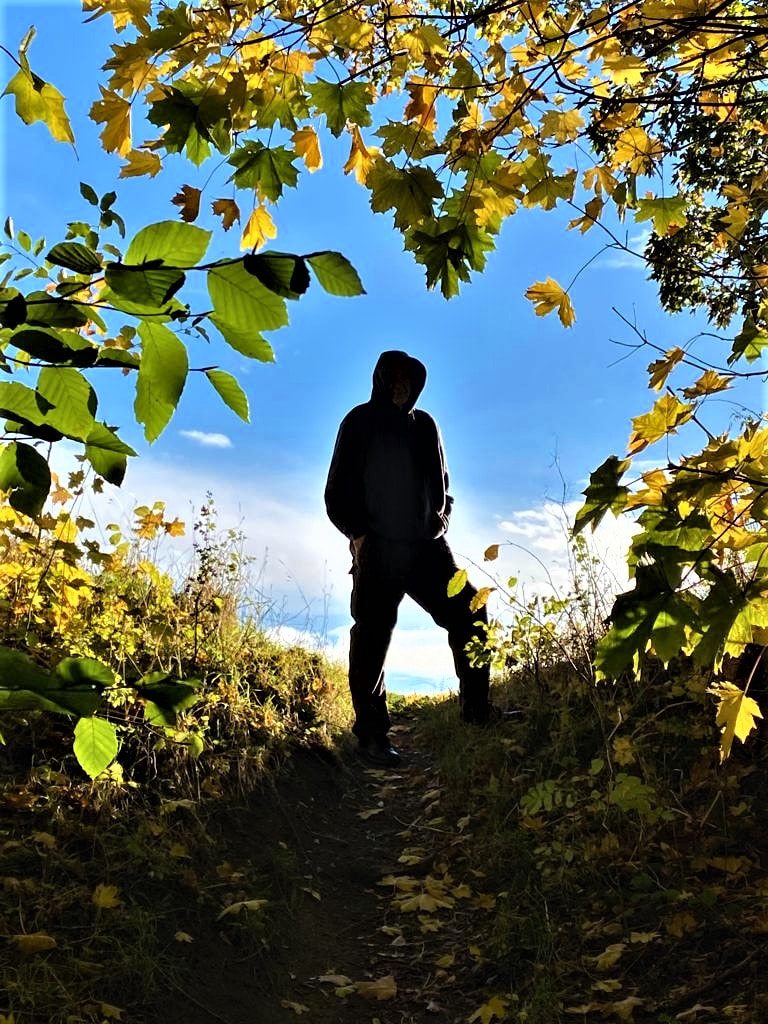
Like what you read? Simply enter your email address below to receive regular blog updates!


|
 RSS Feed