 ‘The question is to provoke fresh thought, not to elicit an answer.’ (Stephen Guy) I thought that was a great way of framing it. At an Action Learning Facilitators’ Training event with the NHS this week, we were looking at open coaching-type questions in the exploration phase of an Action Learning round and how they differ from, say, simple questions for clarification. A great question for exploration often stops a presenter in their thinking tracks. We may notice them fall silent; gaze upwards as if on search mode; get stuck for words; speak tentatively or more…slowly. That’s very different to a presenter who answers quickly, fluently or easily – as if telling us something they already know or have already thought through for themselves. In a different Action Learning set recently, one presenter did just that. They were speaking as an expert, not as a learner, so I invited them to count to 10 silently before responding to any question posed – and invited the rest of the group to count to 10 silently too, after the presenter had spoken, before offering a next question. The idea here was to allow the questions to sink deep. Thomas Aquinas, a philosopher and theologian, commented (my paraphrase) that a great question sets us off on a journey of discovery. Brian Watts observed, similarly, that the word question itself has the word quest embedded in it. Sonja Antell invites a presenter simply – but not always easily – to ‘sit with the question’, to reflect in silence and allow the question to do its work. It’s often the place where transformation occurs.
8 Comments
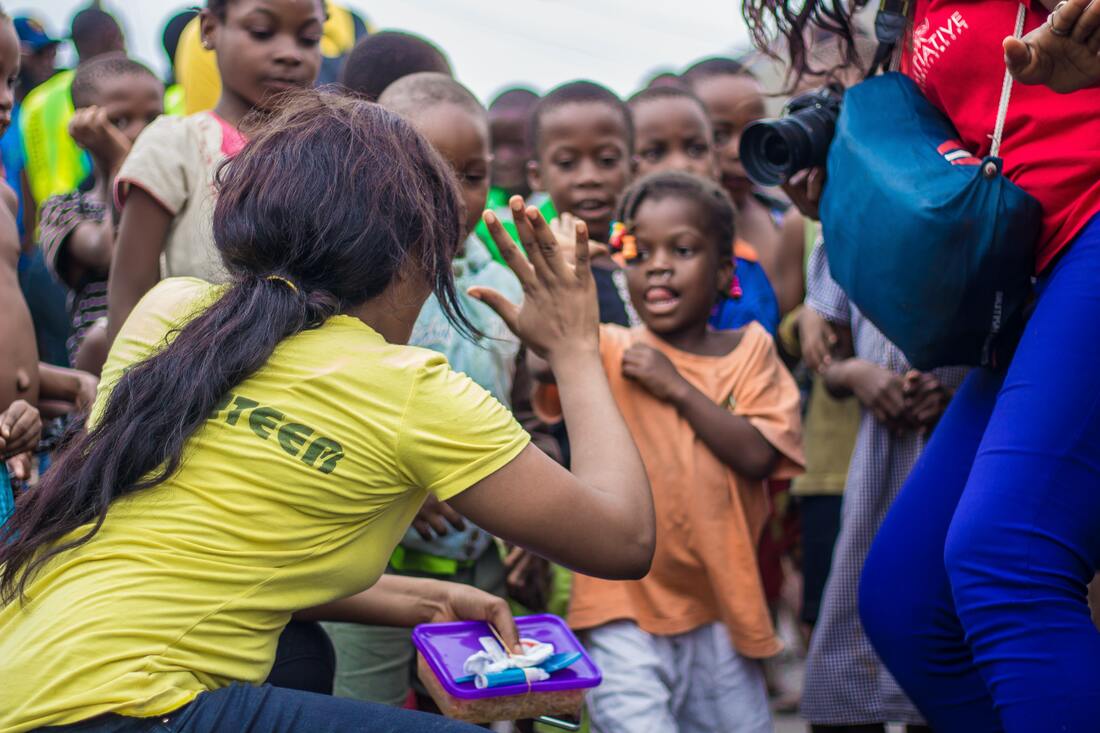 'There is no act too small, no act too bold. The history of social change is the history of millions of actions, small and large, coming together at critical points to create a power that governments cannot suppress.' (Howard Zinn) At the heart of coaching generally lays a desire and opportunity for impact and change, a goal that may seem obvious, but one that raises important questions. As coaches aspiring to make a difference in the world, we can find ourselves navigating complex dilemmas. When we work with agents of change in, say, NGOs, charities, churches or public sector organizations, we often seek to empower individuals, teams, and organizations to be resourceful and effective in achieving transformation. One challenge we may encounter is determining the coaching agenda. A Western coaching ethic advocates for giving the client complete control over the agenda, focusing on their chosen goals and boundaries. While this approach seems straightforward, our intention of promoting social change may lead us to contemplate how much influence we should exert on the client’s journey. What if the client's solutions seem unethical, ineffective, or could pose risks to broader social development? Furthermore, when working in diverse cultural contexts, we need to be mindful of differing perspectives on individual autonomy. In some Eastern and Southern cultures, the concept of setting individual goals might not resonate the same way it does in the West. People in these cultures often prioritize the wishes and expectations of a wider group, whether family, team or community, before their own hopes and ambitions. We could risk inadvertently imposing our own cultural values onto the client. The solution often lays in recognizing the significance of context and building a strong and trusting relationship with the client. By understanding the dynamics of power, language and agendas that may emerge between us, we can gain insight into the issues at hand and potential solutions. We become allies, working together to achieve meaningful impact. A critically-reflective process allows us to adapt our coaching practice on route and to challenge our assumptions as we learn and grow.  ‘Wait time is making space for authentic learning.’ (Takayoshi & Van Ittersum) A key skill in Action Learning is an ability to wait. It calls for patience and a positive tolerance of periods of silence. Imagine the presenter who receives questions from peers yet answers them too quickly or too easily, without allowing the questions enough time to sink deep. Such responses can sound and feel like surface-level learning, where a presenter knows, or is reasonably easily able to work out, a solution without much need for consideration. A metaphor that comes to mind is that of the UK innovator, Barnes Wallis who, during World War 2, designed a revolutionary bomb to break through dams. ‘The bomb would spin backwards across the surface of the water before reaching the dam. The spin would then drive the bomb down the wall of the dam before exploding at its base.’ It took time and patience from the moment it was released until the cracks began to show, but then… breakthrough. This principle of allowing time for questions to sink deep often proves critical to a presenter faced with complex problems in achieving their own breakthroughs: those profound moments of insight and agency that transform everything. It calls for discipline from peers, to wait and hold silence for the presenter before posing a next question. For people who find silence difficult, this entails learning to sit comfortably with discomfort. It’s well worth the wait.  ‘One fish asks another fish ‘How is the water?’ The two swim on for a bit and eventually the other fish replies, ‘What is water?’’ (David Foster Wallace) The more I know, the less I understand. That’s the conclusion I came to after spending 5 years in a Christian faith community in London with 70% Nigerian people, 20% Ghanaian, 8% Mauritian and 2% from the UK. It’s a belief that’s been reinforced by 7 years closely alongside people from the Philippines and other countries in East and South East Asia. Beyond surface-level cultural traits such as distinctive clothing and food, culture runs very deep, mostly well below the radar of conscious awareness. Like the values and beliefs that underpin it, culture often only becomes known, including to ourselves, when we encounter a person or situation that contradicts or clashes with it. It can take us by surprise. I’ve made various cross-cultural blunders on route, ranging from an innocent hug in one context to posing questions in a group in another. On reflection, I’ve sometimes been astounded by my own naivety. Yet few opportunities for learning compare with a cross-cultural experience. It may feel like a bumpy ride on route yet the results can be transformational. [See also: Cross-cultural coaching; Crossing cultures; Cross-cultural action learning]  ‘I’m not a teacher, but an awakener.’ (Robert Frost) I imagine something like a coffee table between us. As the client talks about a challenge, issue or opportunity they are dealing with, I imagine them metaphorically painting a picture on the table, perhaps adding something like colourful photos from magazines, to depict their situation vividly. If, as a coach, I allow myself to follow the client’s gaze, to focus my own attention too on the scenario that is unfolding, I risk losing sight of the client. It may weaken the contact between us; draw us both into the place where the client already feels stuck; diminish the potential for transformation. How can I know if this is happening, if I have inadvertently become preoccupied with or seduced by the drama the client is presenting? Here are some tell-tale signs: ‘Tell me more about…’; ‘I’d be interested to hear more about…’; ‘Could you share a bit more of the background..?’ It could be that the client’s issue resonates with an area of interest, expertise or experience of the coach; or that the coach has subconsciously slipped into diagnostic-consultant mode, with a view to finding or creating a solution for the client. It’s as if, ‘If you give me enough information, I can resolve this for you.’ A radically different approach is to hold our attention on the client, to be aware of the figurative coffee table in our peripheral vision, but to stay firmly focused on the person (or team) in front of us. This is often where the most powerful coaching insights and outcomes emerge. Here are some sample person- (or team-) orientated questions: ‘Who or what matters most to you in this?’; ‘What outcome are you hoping for?’; ‘As you talk about this now, how are you feeling?’; ‘What assumptions are you making?’; ‘What are you not-noticing?’; ‘What are you avoiding?’; ‘Now that you know this, what will you do?’  ‘I turned my head and saw yet another wisp of smoke, on its way to nothingness…’ (King Solomon) On three separate occasions, a female grass roots activist in the Philippines was followed at night by strangers: men on motorbikes. As she walked alone, they would ride slowly and menacingly behind her, aiming to threaten and intimidate her into silence. She had taken a very public stance against corruption in high places – a stance that, for other activists in her country, had resulted in a deadly blade or a bullet in the back from a passing motorcyclist. Undeterred, this young woman turned around and confronted the bikers, fearlessly: ‘Even if you kill me, you can’t take my life.’ She’s a radical follower of Jesus who has chosen a determined, startling and courageous life stance at the cutting edge of faith. It stands in stark contrast to the greyness of nothingness that the writer of Ecclesiastes speaks to at the start of this blog. It’s a spiritual-existential stance that holds the potential to transform…everything. Zoom out now, back to our own lives. Strip back the trappings and tear away the superficial facades. What lays behind and beneath for us? This is the deep stuff of spiritual and existential coaching. It touches on fundamental questions: identity, meaning, purpose and stance. ‘Human life must be risked if it is to be won.’ (Jürgen Moltmann). ‘If you risk nothing, then you risk everything.’ (Geena Davis). I don’t want my life to be a wisp of smoke. You? (See also: Deep; Spirituality in coaching; Existential coaching)  ‘What is it your plan to do with your one wild and precious life?’ (Mary Oliver) Íñigo López de Loyola suggests a fast-forward in your imagination to the end of your life, then to ask yourself seriously from that standpoint what you will want your life story to have been. Having decided it, rewind back to the present and ensure that your vision of the future guides your priorities, decisions and actions now. This idea resonates with Stephen Covey’s 'begin with the end in mind', and Simon Sinek’s 'start with why'. According to John Kotter, if our vision is convincing enough to the mind and compelling enough to the heart, we are most likely to see it through. Without such a vision, we may drift meaninglessly. I believe the best visions are rooted deeply in ethics and values and, in essence, a fulfilment of them. I have been incredibly inspired by Jasmin’s vision, a poor follower of Jesus who lives among the poor in the Philippines: ‘Whatever status or power you have, use it for those who are vulnerable; whatever money you have, use it for the poor; whatever strength you have, use it for the weak; whatever hope you have, use it to bring hope to those who live without hope. Speak up for justice and truth – whatever the cost. Pray.’ The challenge is not just in the aspiration itself but in her sheer determination to live it out in practice. She scares me. My own vision is shaped by a trust in God too. I slip and slide on route and have sustained and caused too many scars to prove it, yet Jesus still influences profoundly the purpose, focus, boundaries and possibilities of my life and my work. As I get older, I'm experiencing a subtle and gradual shift from what I want to do in the future, to what legacy I want to leave behind me. It doesn’t feel like a mid-life crisis. Echoing Richard Rohr, it feels more like a falling upward than a falling apart. I still want to make a significant, positive and tangible difference in the lives of the poor and most vulnerable people in the world. I – you – we can be hope. What’s your vision for 2022 and beyond? How will it influence your decisions now?  ‘The opportunity to make effective personal choices is highly unequal.’ (Robert A. Dahl - After the Revolution) New Years’ Resolutions. A time and practice in Western cultures when some of the more reflective or impulsive among us will commit to do something new. It could be, for instance, a new relationship, a new job, a new home, a new diet or a new fitness routine. For many people, very soon after having made a decision, the resolve will dissolve and be lost in the mists of time. Yet central to this idea of resolution is the notion of personal choice and, with it, the principle that I can succeed in achieving what I choose – if I’m willing to do whatever it takes. I often create (prayerfully) a list of key aspirations at the start of each year, then put practical steps in place so that, all things being equal, I will be able to look back at the end of that year and see that I have fulfilled them. The goals are intentionally inspiring and stretching. They are, with God’s help, within my grasp and, therefore, possible. On the whole, this discipline works by ensuring focus, parameters and accountability. It also centres on people and things that are genuinely important to me and, thereby, taps into values, motivation and determination. We can think of this choosing-acting-influencing phenomenon as exercising personal agency. Shaun Gallagher describes this as, ‘the sense that I am the one who is causing or generating an action’. ‘I can choose’ is a profound existential, psychological and political statement and stance. It means I can break out beyond the apparent default of my circumstances. We hold the potential to be catalysts of real change in the world, within ourselves as well as in broader relationships and situations – and this brings opportunity and responsibility. I can choose and you can choose. I think vividly of Jasmin in the Philippines, a poor woman among the poor who chooses to follow Jesus’ call and example, whatever the cost. Rather than allowing herself to be limited by her circumstances or by expediency, she exercises radical personal agency and transforms everyone and everything in her path. Malala Yousafzai and Greta Thunberg are famous examples of women too who take personal choice, action and influence seriously – and, similarly, at considerable personal risk. There are wider dimensions. A person's sense and scope of agency are affected by structural factors that transcend the individual, e.g. social status; wealth; education; gender; ethnicity; culture. Mustafa Emirbayer and Ann Mische observed that a person’s lived experience limits what possible alternatives or future scenarios he or she is able to imagine. Paulo Freire proposed, on a similar basis, that critical consciousness (‘conscientisation’) is a necessary condition for people to exercise freer choices and agency for change. I worked with a client from Myanmar and asked her what she dreamed of. She looked at me blankly then responded that she was unable to conceive of a different reality to the one that she had lived until now. She felt crushed by the mental and practical constraints of living as an ethnic minority in a country dominated by a military dictatorship. The impact of unequal and unjust social-political power is not a fixed determinant of agency – but the stark psychological and tangible inequalities of choice and opportunity it engenders are significant. Other influences include personal confidence, competence and capacity. If a person operates psychologically and relationally from a secure base with trust and support, he or she is more likely to choose to take a positive risk. If, conversely, someone is and-or feels alone and has experienced or anticipates unfair discrimination, negative evaluation or other painful consequences, to act can feel hazardous – especially if the stakes are high. Agency can demand energy, courage and resilience. A person may not (yet) feel ready, willing or able to take that step. If a client is unaware of or avoiding personal agency, William Glasser suggests stimulating his or her sense of reality, responsibility and relationship in order to enable more life-giving choices. If stuck in a pattern of apathy or passivity, John Blakey and Ian Day propose offering high challenge with high support. If we risk inadvertently colluding with or disempowering a client, Reg and Madge Batten advise focusing attention on what the person can do for him- or herself and, only after that, what we could do by agreement with them, or on their behalf. Viktor Frankl, victim of Nazi persecution concluded that, fundamentally: ‘The one thing you can’t take away from me is the way I choose to respond.’ In our personal, social and political lives, we can see how a person’s choices, actions and influence are affected by a diverse range of factors. These include the privileges a person may hold (or not) and the opportunities he or she has benefited from by birth, background or context. Jesus – help me choose this year to exercise my own agency for the life and liberation of others. We can be hope. (Would you like to discover how to exercise greater personal agency? Get in touch!)  'Not all those who wander are lost.' (J.R.R. Tolkien)
I felt ridiculously excited last week to get first class train tickets for the same price as second. It was a brand-new experience for me. Not used to this level of luxury, every time a steward passed by and offered me food or drink I asked, hesitantly, ‘Is it free?’ They looked back at me and smiled, perhaps with a hint of pity in their eyes, and said, ‘Yes sir, it’s included in the price of your ticket.’ Wow. I’ve never eaten so many bags of crisps, ham-salad sandwiches and chocolate brownies. Amazing. Yet a far more adventurous journey for me was 4 years ago, from the UK to the Philippines. 30 mins drive + 2 hours on train + 2 hours wait in airport + 12 hours flight to Hong Kong + 2 hours transition in airport + 2 hours to Cebu (West Ph) + 30 mins motorbike to port + 2 hours wait + 12 hours ship to Samar (East Ph) + 30 mins drive in car + 30 mins on motorbike + 30 mins up-river on boat + 30 mins trek through jungle – to arrival. The warm welcome of Waray children made it all worthwhile! That was, however, nothing compared to the journey of a Christian biker friend, ‘Iron Butt Rob’, who met and prayed with me at the start of that journey then set off at exactly the same time as I did on a gruelling non-stop 1800-mile motorbike ride to all 4 extreme corners of the UK. The whole time I was on route, he was riding…and riding…through torrential rain to finish at the same time as I did. His remarkable feat raised sponsorship money to support the Filipina activist who was hosting me. Yet perhaps a deeper journey still was into that amazing encounter with those 120 children. They had never met a foreigner and, as we walked between their simple wooden huts, they smiled, laughed, held our hands and skipped along in front of us. They joined in everything we did with infectious energy and, astonishingly, appreciated absolutely everything. When we left a few days later, the children picked wildflowers as gifts as we meandered back to the boat. We all cried as we said goodbye. When have you taken a life-giving or life-changing journey – literally or metaphorically? What impact has it had on you?  Running for the school bus every morning felt like hard work. I don’t know why I didn’t just get up a bit earlier but, hey, I was a teenager. I remember vividly having my attention caught by a programme on TV featuring Timothy Gallwey and his revolutionary idea of The Inner Game. I think it served as an introduction for me to the world of psychological insight. I practised his idea, focusing away from the activity itself onto something else as a distraction, and the running became smoother, easier.
Some years later, the UK’s Guardian Newspaper ran an advertisement on TV, Point of View, that challenged perspective and interpretation. It invited viewers to re-think their own ways of making meaning of events, including the implicit risks of assumptions and prejudice. I found the ad’s message simple yet profound. It was at a time when the need to question everything was already pulsating through my own mind, within a prevailing culture that seemed to question far too little. Later still, I saw a psychology experiment on TV, The Invisible Gorilla, by Christopher Chabris and Daniel Simons, designed to test selective attention. The narrator invited viewers to try the test for themselves by watching a short video clip with specific instructions to follow. She also suggested that viewers record it so that they could play it back afterwards. I dutifully followed the instructions and was so completely astonished by the results that I did play it back to check if I’d been tricked. Such influences, among others which now included my Christian faith, drew me into the professional fields of psychological coaching, training and organisation development (OD). I continue to be curious, intrigued and amazed by the dazzling weirdness, complexity and potential of people, teams, groups and organisations, and by different cultures. I hope and pray I will never lose that sense of wonder. Who or what have been the earliest or greatest influences on your life and career? |
Nick WrightI'm a psychological coach, trainer and OD consultant. Curious to discover how can I help you? Get in touch! 
Like what you read? Simply enter your email address below to receive regular blog updates!

|
 RSS Feed