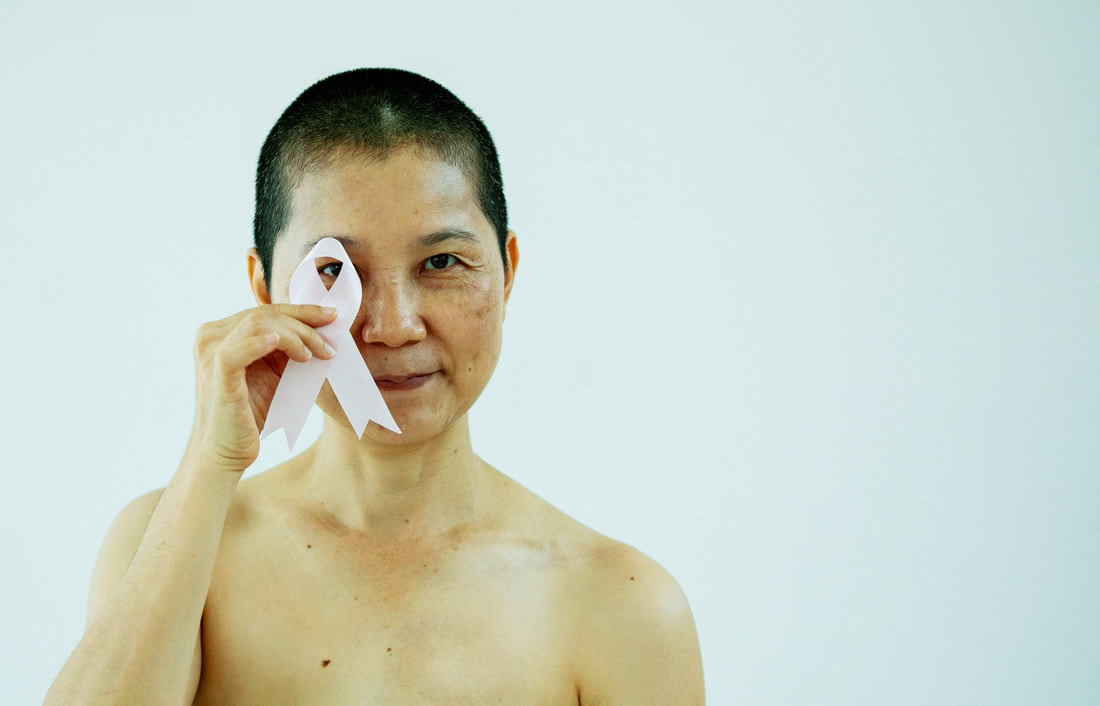
 ‘Well-behaved women rarely make history.’ (Laurel Thatcher Ulrich) International Women’s Day. A day to recognise and celebrate the extraordinary contribution of women all over this world and throughout all history. There are so many amazing women who have inspired, stretched and enriched my life: those I’ve known, those I’ve heard or read about and those I’ve only encountered indirectly through the personal-cultural legacy they’ve left behind. This is a shout-out, a thank you, to all women – especially to those who are and feel invisible and unseen; those who live on the frayed and torn edges of societies; those who persevere in the face of poverty, vulnerability and other threats; those who live and love in a way that goes unnoticed and unknown. You humble and challenge me. The world is a better place because you're here.
40 Comments
 ‘It’s a question of what the relationship can bear.’ (Alison Bailie) You may have heard the old adage, the received wisdom that says, ‘Don’t try to run before you can walk.’ It normally refers to avoiding taking on complex tasks until we have mastered simpler ones. Yet the same principle can apply in relationships too. Think of leadership, teamworking, coaching or an action learning set; any relationship or web of relationships where an optimal balance of support and challenge is needed to achieve an important goal. Too much challenge, too early, and we can cause fracture and hurt. It takes time, patience and commitment to build understanding and trust. I like Stephen Covey’s insight that, ‘Trust grows when we take a risk and find ourselves supported.’ It’s an invitation to humility, vulnerability and courage. It sometimes calls for us to take the first step, to offer our own humanity with all our insecurities and frailties first, as a gift we hope the other party will hold tenderly. It's an invitation, too, for the receiver to respond with love. John, in the Bible, comments that, ‘Love takes away fear’. To love in the context of work isn’t something soft and sentimental as some cynics would have us believe. It’s an attitude and stance that reveals itself in tangible action. Reg Revans, founder of action learning, said, ‘Swap your difficulties, not your cleverness.’ A hidden subtext could read, ‘Respond to my fragility with love, and I will trust you.’ I joined one organisation as a new leader. On day 3, one of my team members led an all-staff event and, afterwards, she approached me anxiously for feedback. I asked firstly and warmly, with a smile, ‘What would you find most useful at this point in our relationship – affirmation or critique?’ She laughed, breathed a sigh of relief, and said, ‘To be honest, affirmation – I felt so nervous and hoped that, as my new boss, you would like how I had handled it!’ In this vein, psychologist John Bowlby emphasised the early need for and value of establishing a ‘secure base’: that is, key relationship(s) where a person feels loved and psychologically safe, and from which she or he can feel confident to explore in a spirit of curiosity, daring and freedom. It provides an existential foundation on which to build, and enables a person to invite and welcome stretching challenge without feeling defensive, threatened or bruised. How do you demonstrate love at work? What does it look like in practice?  ‘I know that I know nothing.’ (Socrates) Action Learning is an opportunity to receive questions. It’s founder, Reg Revans, advocated: ‘Swap your difficulties, not your cleverness.’ Revans’ approach was a radically different philosophy and praxis that stood in contrast to conventional didactic methods at the time. It affirms the value of not-knowing, curiosity and exploration. It facilitates a grappling with questions that have no easy answers and creating experimental solutions; without a pressure to hide from or impress peers. A transformational dimension of Action Learning is the power of vulnerability in building trust. If I model an authentic openness, a willingness to share those issues and experiences that I find most perplexing or troubling in my own work, it may invite others, in Susan Scott’s words, to ‘come out from behind (themselves) and make it real’ too – if they choose it. Stephen Covey expresses this dynamic well in his insight that, ‘Trust grows when we take a risk and find ourselves supported.’ I like the questions that Angie Bamgbose poses to herself in her insightful Action Learning blog, Race, Power and Privilege: ‘What is my gift? What am I still confused about? What have I learned? What will I do?’ It models the spirit of courage, humility and reflexivity that lays at the heart of Action Learning practice. It reminded me of guru Rick James’ opening words at an INTRAC webinar this year, looking at the future of humanitarian work internationally: ‘There is so much I don’t understand’. How do you use questions to stimulate reflection, insight and action? How do you handle personal and cultural pressures to present a front, to impress or to ‘perform’? (See also: Not-Knowing; Managing our Not-Knowing; Action Learning)  ‘You ask way too many questions, pal.’ (Homeless person – to me, 1982) I was excited, intrigued and a little nervous to visit my first homeless project in London. As a young Christian activist, I wanted to learn from the lived experience of people in need so that I could use my own life to make a positive and tangible difference in their world. In my enthusiasm and a genuine spirit of curiosity, I asked this homeless man question after question about his life. After a while, he cautioned me politely but sternly – to stop. It was a stark, timely and important lesson. Questions lay at the heart of coaching and facilitation; questions that aim to enable a person or group to think through an issue more deeply or broadly and to reach their own solutions. We may talk about powerful questions, or impactful questions – questions targeted at a person: what he or she is thinking, feeling and doing, rather than at the broader issue itself – to enable the greatest shift. It’s a language that, in a safe space, speaks of constructive challenge with a positive intent. Yet what happens if we are working with people or groups where the very experience of receiving questions, however well intended or framed, evokes considerable anxiety or stress? We can think of various examples: e.g. a refugee who has been subjected to violent interrogation in their country of origin; an asylum-seeker who associates questions with having to defend an appeal for help; a person who has endured abuse from a controlling partner who challenged her/his every action. The language of power-ful questions can itself raise issues of power dynamics implicit in the coach or facilitator relationship with a person or group. After all, the coach is the person posing the questions – not feeling a need, pressure or expectation to answer them – and may at some level reflect or represent the type of person, group or authority the client regards as oppressive. Similarly, impact-ful can sound like hitting, violence, done-to, to a person or group living in a state of anxiety. The homeless man I alluded to above explained, with pain in his eyes, that my questions were taking him to places in his past that he was trying hard not think about or deal with because they felt too traumatic. I was, in effect, inadvertently re-triggering the emotional effects of experiences he had lived through. I remember feeling horrified, apologising, and falling silent in shame. Yet I learned the vital need to pay attention to sensitive relationship and mutual contracting in these fields of work. Given these risks and dynamics, it could feel tempting to shrink back altogether from coaching or, say, action learning with vulnerable people or groups. What if we make a mistake or make things worse? Is there a risk that we will inappropriately stray or be drawn into the realms of counselling or therapy where we are and feel out of our depth? Is there any guidance that could help us navigate such potentially difficult terrain? I will offer some practical insights here that I’ve found helpful: Some vulnerable clients may feel concerned about why they are being asked questions, how they are expected to respond (the ‘right’ or ‘acceptable’ answer, in that context), who will have access to their responses and what they might do with them. This may be especially the case if they have been sent for coaching or action learning, perhaps as a remedial measure, or if they come from a personal-cultural background where posing questions as a developmental approach is unfamiliar. In my experience, vulnerable clients rarely raise these concerns explicitly. They are more likely to surface during contracting as something like, ‘How can I be sure that what I may share here will not be shared elsewhere?’ This points to a need for trust-building. I may ask a client, ‘What would give you the reassurance you need?’, ask other participants (if in a group), ‘What are you willing to commit to?’ and explore and agree explicitly what we will do if, say, a conflict of interest should emerge. Claire Pedrick offers a simple and useful frame that helps ensure healthy and constructive focus and boundaries: ‘What are we here to do?’ and ‘How shall we do this?’ The language of ‘we’ points towards a coactive conversation in which both parties discuss, negotiate and agree their terms of engagement. Claire also regards the client positively, whether an individual or group, as resilient enough to engage in the process – unless it transpires that they aren’t – and contracts accordingly. Geoff Pelham, drawing on Gestalt psychology, focuses on creating an authentic human relationship (‘contact’) with the client rather than a purely transactional one. This can help to create a safe-enough space for coaching to be effective. He may inquire with empathy, ‘What do you need?’ – and listen carefully to the response – before discussing and agreeing how to address respective needs and to move forward. (Attention to need is framed as a healthy foundation for growth, vs ‘needy’.) I may ask a client, ‘Where would you like us to focus our attention?’, ‘What questions is this raising for you?’ or ‘What questions would you find most useful to explore?’ I will also discuss and agree explicitly with the client what he or she may do if I (or others, in a group) pose a question that, for whatever reason, he or she would prefer not to answer; e.g. simply to respond with, ‘Thank you.’ This enables the client to exercise choice and control throughout and, by doing so, to enhance their own agency. Finally, Karen Treisman encourages us to beware of 'pathologising' the client; of focusing on his or her vulnerability as if it’s their sole defining characteristic and, instead, ‘To see the whole person, their story, their world – to magnify, celebrate and learn from people’s survivorships, strengths, resources and what they truly bring to the table.’ I’m keen to learn: what has been your experience of working with vulnerable people or groups? What trauma-informed principles help to guide your practice? (See also: A Safe-Enough Space) (For further research and resources in this area, see: Dr Karen Treisman, A Treasure Box for Creating Trauma-Informed Organizations: A Ready-to-Use Resource for Trauma, Adversity, and Culturally Informed, Infused and Responsive Systems, 2021).  On the edge of a New Year, social media accounts have been bombarded with messages about how terrible 2020 has been and how we can’t get out of it fast enough. Of course, 2020 has posed some significant challenges; most notably, on the global stage, the Covid-19 pandemic. The challenges in the wealthier countries, where we have tended to make the most emotional drama out of it, pale into insignificance when compared to the those faced by the poorest. We’re not used to this level of vulnerability, uncertainty and threat. It has freaked us out and, perhaps in some ways, that’s a good thing.
My hope for 2021 is that this glimpse of vulnerability, of real fear and helplessness, will engender far greater empathy for those poorest people in the world who live with that anxiety every day. And not just empathy, but a greater resolve to do something tangible to bring about positive and sustainable change. I hope it will drive us re-evaluate our crazy consumerism that is pushing the world further into irreversible environmental disaster. I hope it will reveal, too, our fundamental interdependence; although reports of rich countries racing to buy-up Covid vaccines first fills me with near-despair. Yet there have been, for me, silver linings in the midst of all this. I’ve been grateful to God for the opportunity to live with my parents all year, to support each other during the lockdown and to spend valuable, irreplaceable time with them. I’ve been grateful for free technology that has allowed me, and others, to do so much online that would otherwise have been impossible. I’ve been grateful for the chance, with others, to support the poor in the Philippines; an experience that has often brought at least as much richness and joy to my life as to theirs. What have been your silver linings in 2020? When teams are under pressure, e.g. dealing with critical issues, sensitive topics or working to tight deadlines, tensions can emerge that lead to conversations getting stuck. Stuck-ness between two or more people most commonly occurs when at least one party’s underlying needs are not being met, or a goal that is important to them feels blocked.
The most obvious signs or stuck-ness are conversations that feel deadlocked, ping-pong back and forth without making progress or go round and round in circles. Both parties may state and restate their views or positions, wishing the other would really hear. If unresolved, responses may include anger/frustration (fight) or disengagement/withdrawal (flight). If such situations occur, a simple four step process can make a positive difference, releasing the stuck-ness to move things forward. It can feel hard to do in practice, however, if caught up in the drama and the tense feelings that ensue! I’ve found that jotting down questions as an aide memoire can help, especially if stuck-ness is a repeating pattern. 1. Observation. (‘What’s going on?’). This stage involves metaphorically (or literally) stepping back from the interaction to notice and comment non-judgementally on what’s happening. E.g. ‘We’re both stating our positions but seem a bit stuck’. ‘We seem to be talking at cross purposes.’ 2. Awareness. (‘What’s going on for me?’). This stage involves tuning into my own experience, owning and articulating it, without projecting onto the other person. E.g. ‘I feel frustrated’. ‘I’m starting to feel defensive.’ ‘I’m struggling to understand where you are coming from.’ ‘I’m feeling unheard.’ 3. Inquiry. (‘What’s going on for you?’). This stage involves inquiring of the other person in an open spirit, with a genuine, empathetic, desire to hear. E.g. ‘How are you feeling?’ ‘What are you wanting that you are not receiving?’ ‘What’s important to you in this?’ ‘What do you want me to hear?’ 4. Action. ('What will move us forward?’) This stage involves making requests or suggestions that will help move the conversation forward together. E.g. ‘This is where I would like to get to…’ ‘It would help me if you would be willing to…’. ‘What do you need from me?’ ‘How about if we try…’ Shifting the focus of a conversation from content to dynamics in this way can create opportunity to surface different felt priorities, perspectives or experiences that otherwise remain hidden. It can allow a breathing space, an opportunity to re-establish contact with each other. It can build understanding, develop trust and accelerate the process of achieving results. It’s Christmas Day and I could have better used the title Christmas mess-edge for this short piece. The story of Jesus Christ isn’t just a sweet and sentimental account of a baby boy born in Bethlehem 2000+ years ago. If it’s true, it’s about God entering the very real messiness of our lives and world and offering the potential to transform them into something completely new. Something beyond our wildest dreams, hopes or expectations. Something that stretches and transcends the boundaries of all human existence and experience.
I’ve known something about this notion of stretching boundaries over this past year, about extending the edges of my own experience. I bought a new bike in the spring, challenged myself to cycle over 1000 miles in 6 months and over 50 miles in a single ride. I had never done anything like that before and yet I did it. I also challenged myself to swim 1 mile 3 times in the same week. And I did it. It felt like I had crossed over an important physical and psychological line, achieving things that had previously felt impossible for me. I wrote and had published my first article with the British Association for Counselling and Psychology (BACP). I’d written lots of articles for different publications before but this felt like the next step up in a professional field that sits close to my heart. The editor of Coaching Today invited me to write on spirituality and I jumped at the chance. To top it off, I did my first ever series of radio interviews on spirituality too. It was a great opportunity and a novel experience so sit in a recording studio and to share my beliefs openly on air. And if that was the end of the story, there would be no need for a Jesus, at least for me. But it’s far from the end. I’ve struggled and failed on so many fronts. Sometimes, I haven’t even struggled when I have known I should. I’ve known deeply and personally what Francis Spufford aptly calls the universal ‘human propensity to f* things up’ (Unapologetic, 2013). At times, I’ve failed in relationships, made mistakes at work, fallen short of my own standards, spoken when I should have kept quiet and kept quiet when I should have spoken. What’s more, one of my closest friends has fought courageously with terminal illness. I’ve felt hopeful and helpless, trying to offer support where I could yet knowing I can’t make it OK. I’ve yearned to take the anxiety away but known that I can’t. I’ve watched Syria in the news, the damage that human beings are able to inflict on each others’ lives, on whole countries and regions. I’ve felt impotent and confused. Not all the time, but enough to know that redeeming the world is something I can take part in yet, ultimately, lies well beyond me. And so as I reflect on Christmas, I know what it is to be an aspiring yet fragile human being. I’ve felt exciting moments on the edge of success and have known what it is to screw up and need forgiveness. I have felt the amazing love of others, often undeserved yet tangible all the same. At that first nativity, I believe God himself entered the messy complexity of our lives and world with the most profound message of love and hope possible. Not just in words but in a life well-lived and a promise of presence and eternal life. Merry Christ-mas! It stands around the corner from an authentic Thai restaurant in central London. On the face of it, it’s an elegant building. As you walk past, however, you realise with surprise that the frontage is a façade, an elaborate shield concealing a plain office building that lies behind it. It’s a striking metaphor, a symbol of sorts for an inauthentic life. It challenged me powerfully yet silently to consider the masks I wear, the images I project to disguise my real self.
Some years ago, John Powell published a popular, short self help book, ‘Why am I afraid to tell you who I am?’ He explored how we attempt to protect our fragile egos and avoid our fear rejection by acting out roles or playing games. These are defensive routines aimed at minimising social anxiety or negative evaluation. By putting on a front that we believe will impress others, we attempt to feel better about ourselves and to win others’ approval. At one level, these strategies can prove successful in life and work. It’s one reason why we pay attention to our physical appearance, the way we behave and conduct ourselves in public, the way we present ourselves at job interviews etc. From our earliest childhood experiences, we learn what wins love and affirmation from others within our key relationships, social environments and culture. We learn how to play the game. At another level, however, keeping up appearances can prove self-defeating. Over time we may feel alienated from ourselves, not sure how we really are, and alienated from others, not sure if we are really loved and accepted. We can feel lonely, frustrated and tired. It’s as if, paradoxically, the façades we create to develop and maintain relationships can have the opposite effect, preventing authentic and intimate contact with others. This presents us with a dilemma, an anxiety-provoking risk. What if I remove the mask, tell you what I’m really thinking, show you how I’m really feeling? Would you love and accept me for who I am or would you look at me with disappointment in your eyes? Will making myself vulnerable release you to be vulnerable too? Can we find a new way of connecting that feels more real, more authentic, less defended, less like a façade? It can feel like a breathtaking step. The possibility feels exciting and yet the potential feels daunting. I’m reminded of Jesus’ call in the gospels: ‘remove the mask and come into the light’. There is further New Testament teaching too: ‘perfect love casts out fear’. If God can love and accept me as I am, perhaps I can learn to love and accept myself and to love and accept others too. Perhaps that’s where it starts, feeling truly safe with God. So therein lies the challenge. As a leader and a coach, am I willing to make myself vulnerable so that others can be vulnerable too? Can I demonstrate unconditional love with such honesty that others feel safe to remove their masks, to take down their façades? Can I find new ways to relate to others with an increasing sense of trust and authenticity, creating ever-deeper levels of contact? It’s certainly a goal worth praying and striving for. What makes a great influencer? What influences you? What have been your best and worst experiences of influencing other people? What have you found makes the difference?
Influence is sometimes described as the art or psychology of persuasion. It’s about creating a shift in a person or group’s beliefs, thinking, feelings, attitudes, actions or behaviour. We’re influencing all the time through our everyday social interactions but not always in the ways we would hope for. For example, as you read what I’m writing here, your own views about influencing will be affected at some level. It could strengthen your existing beliefs or create a shift, no matter how small. The art of influencing is at heart about enabling a shift in the direction that the influencer hopes for. This implies at the outset that influence demands intentionality. It implies a deliberate act, a strategy or sorts, with a particular goal in mind. This intention is not always clear, however, even to the influencer. We’re not always sure what influences our own behaviour, even if we rationalise or post-rationalise it at a conscious level. So, for instance, I could tell and convince myself that I’m behaving or acting in a certain way because that explanation feels more personally or socially acceptable, even if deeper factors or motivations are at work at subconscious or unconscious levels. Assuming for argument’s sake that I have a clear and conscious intention or goal in mind, what can I do to create a shift in another towards my desired direction? As a leader or manager, I could use my positional power to demand a change in action or behaviour. It could result in compliance to achieve reward or avoid punishment, or resistance as an effort to avoid the change. It’s unlikely, however, to change the other party’s underlying beliefs, values, attitudes etc. in the way that I may hope for, especially if I want to achieve transformational and sustainable change. This is of course one of the critical challenges of change leadership: how to move a person or group to a psychological place where they choose freely to change without coercion or external pressure. It’s the same kind of challenge faced by trainers and marketeers: how to influence people’s attitudes, choices and behaviours without access to formal power or authority to ensure those changes happen. It begs interesting and important ethical questions, e.g. how to achieve a shift without unethically manipulating people or groups, especially those who are vulnerable. In my experience, a key factor in influencing is understanding what matters most to other people. This is often the starting point for market research, surveying targeted populations to find out what they choose and why. If I understand what matters to you, what you value most, I can frame my product, service, idea, argument, language etc. in terms that will make it feel familiar, acceptable or attractive to you. In advertising, I may use people or images you consider iconic, admirable, inspiring or trustworthy to build a psychological bridge towards you – and to entice you to cross it. The same principles apply to influencing in the workplace. Recognising that employee engagement influences talent retention and organisational performance, many organisations conduct staff surveys, pulse checks, focus groups etc. to understand how the organisation feels to those who work for it. Such surveys provide opportunity for leaders and staff to influence the organisational culture and climate and for staff to influence what leaders pay attention to. Some of the more sophisticated surveys check ‘what matters most to you’ alongside general satisfaction scores. Many organisations also use a whole variety or initiatives including competency frameworks, performance management systems, reward and recognition strategies to identify, publicise, affirm and reinforce behaviours that leaders consider most valuable for the organisation. All of these processes aim at some level to influence perspectives, attitudes and actions. The leadership agenda involves not only understanding what matters most to staff but influencing what people will choose in order to align personal choices and decisions with what the organisation wants or needs. So, what are the key factors that enable us to be effective influencers? Firstly, have a clear and explicit intention. If we have mixed or hidden motives, we lack integrity, others will pick it up intuitively and it will undermine trust. If you’re unsure what your true motives are, reflect on this honestly with a critical colleague or friend beforehand. Secondly, research and understand what matters most to other people. If we can tap into others’ language, culture, values and goals and address them well in what we propose, we are more likely to build bridges and achieve win-win solutions. Thirdly, have a clear sense of what we want others to think, feel or do differently. This enables us to design and communicate messages clearly. I often ask myself before presentations or meetings, for instance: ‘What do I want people to think, feel and do as a result of what I do today?’ Fourthly, reward changes in ways that others value and appreciate. If we ask those we seek to influence, for instance: ‘How do you want to do this?’, ‘What would make this worthwhile for you?’ or ‘What would make a great outcome for you?’, it demonstrates humanity, relationship, humility and respect. I had strange dreams about mirrors and reflections last night and woke early in the darkness. I lay there for a while, semi-conscious, daydreaming about the brightness of the moon and how it reflects the light of the sun. I prayed silently, instinctively, ‘Just as the moon reflects the light of the sun, may my life reflect the light of God’. Then I woke up.
I do think there’s something profound about mirrors and reflection as psychological, cultural and spiritual phenomena. The recent fantasy film, 'Snow White and the Huntsman' created a vivid portrayal of a tormented queen returning repeatedly to seek reassurance in the mirror of legend: ‘Mirror, mirror on the wall, who is the fairest of them all?’ The queen’s sense of self, security and value were based on the response from the mirror. It’s as if she didn’t really know who she was, how she was, without reference to its external perspective. According to psychodynamic and social psychological theories, our sense of self is affected by the responses we evoke and encounter in others. Take, for instance, a young child who gazes into its mother’s face. If it sees consistent expressions of warmth, attentiveness, affection and happiness, it may well develop the sense that ‘I am loved’ and, thereby, ‘I am loveable.’ If on the other hand the child consistently sees looks of disapproval, it may develop a negative sense of self. Psychodynamic theorists (e.g. Winnicott) call this process ‘mirroring’.Just as a person knows what they look like by glancing in a mirror, a child sees something of itself, learns something about itself, its relationships and its place in the world, by observing what is mirrored in the face of others. It’s a process that continues throughout our lives. This phenomenon has deep existential implications. Corinne Taylor in her paper, You are the fairest of them all, comments on what may happen if a mother lacks connection with the child and fails to offer mirroring: ‘Perhaps a mother with a rigid face gives the baby the sense of never having being at all.’* Its very existence may feel negated. Richard Rohr in his book, The Naked Now draws spiritual parallels, inviting us to consider what we see in God’s face, his gaze, as we gaze at him in prayer. It’s as if God is the ultimate, absolute parent figure in whose face we are able to gain a true sense of who we actually are. A distorted image of God will create a distorted image of self. Projection is a related psychological process whereby we project aspects of ourselves (often aspects we feel uncomfortable with) onto other people or even onto God. I may be aware of and focus on characteristics of others that I’m not aware of or deny in myself, even though others may recognise them as typical of me. If I grow in awareness of my projections, I can grow in awareness of myself by noticing what I notice in others. It’s another form of mirroring. As a leader and coach, I can draw important lessons too: what do others see in my face; do my responses help others develop a truer and more-loved sense of self; do I reflect the light of God? (*http://www.hertspsychotherapy.co.uk/%e2%80%98you-are-the-fairest-of-them-all%e2%80%99-an-exploration-of-the-concept-of-mirroring/) |
Nick WrightI'm a psychological coach, trainer and OD consultant. Curious to discover how can I help you? Get in touch! 
Like what you read? Simply enter your email address below to receive regular blog updates!


|
 RSS Feed