|
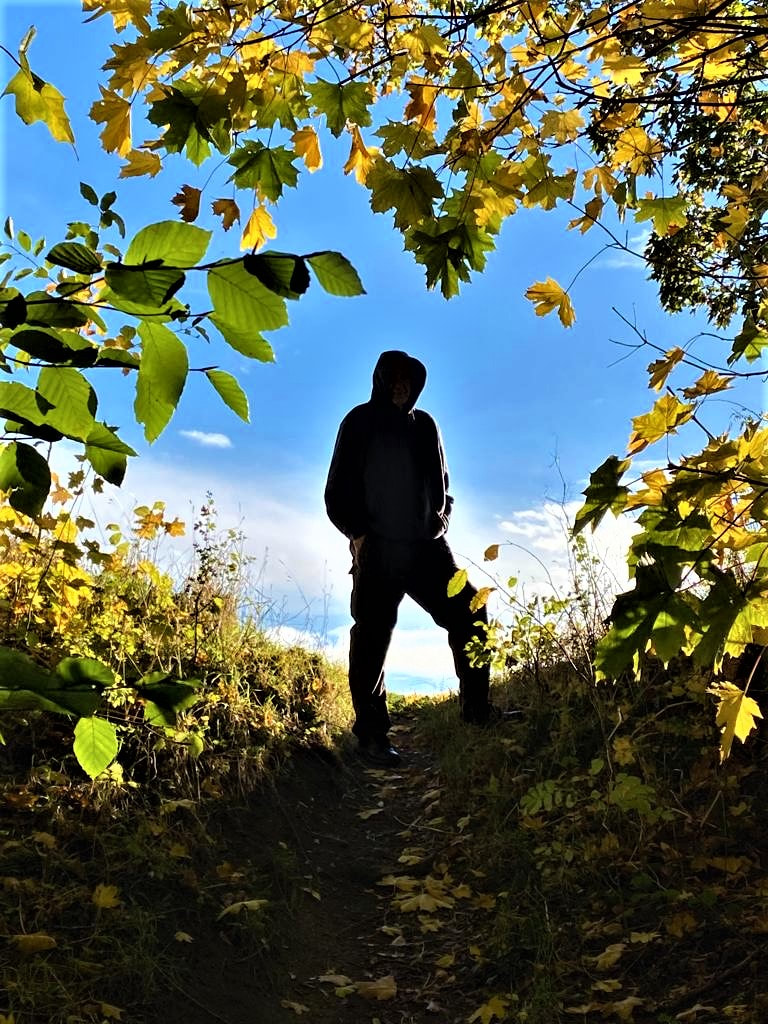
‘Is the world going to be OK? Are we going to be OK?’ (John Andrew Williams) John’s questions (above) took me by surprise in a recent podcast. I’d been invited to speak about cross-cultural coaching and after John’s peer, Raj Anderson, had invited me to introduce myself and my work, it triggered a profound existential response. At a global level, my honest answer would be, ‘I don’t know’. In so many ways, the world appears to be spinning out of control (again) with potentially cataclysmic consequences. Many of the actions and proposed solutions look totally inadequate or, worse still, risk pouring yet more fuel onto the smouldering fire. It reminds me of Albert Nolan’s depiction of Jesus, in which Jesus is portrayed as warning those around him of impending disaster. He saw this as an almost inevitable consequence of the spiritual, social and political direction of travel at the time, particularly of those in positions of power. Jesus’ compassion for the poor, marginalised, vulnerable and oppressed, along with his revelation of a new ‘kingdom’ of hope, did not impress those with vested interests in the status quo. Not long afterwards, the people, state and institutions he had warned were completely obliterated. I do find myself wondering if we’re living in parallel circumstances now. With leaders the world over focused on self-interested nationalism, aggressive militarism and rapacious consumerism – with scant regard for impacts on the poor, vulnerable and oppressed, let alone the fragile environment on which everything depends to survive – ‘Are we going to be OK?’ is a poignant question. Jesus offered a solution – salvation in the fullest possible sense of that word – and still does now to those who will listen and respond. There may still be time. We can be hope.
14 Comments
Faith
28/10/2026 12:54:00 pm
What a simple question but the weight of the answer signifies uncertainty and hopelessness. May all of us put our hope and focus to JESUS for us to be okey. Praying humanity will chose PEACE and Faith in every gift of goodness GOD planted in each one of us to make this planet a better place to live in. 🙏🙏🙏
Reply
Nick Wright
2/11/2026 02:55:42 pm
Thank you, Faith. Your attitude and faith remind me of the Stockdale Paradox: https://www.nick-wright.com/blog/stockdale-paradox. My hope is, too, in Jesus.
Reply
Sarah Mitchell
2/11/2026 03:05:22 pm
I think one of the greatest challenges facing leadership today is the temptation to confuse control with responsibility. We see it in politics, business and even some of our institutions. Faced with uncertainty, leaders reach for stronger rhetoric, tighter control and increasingly short-term solutions. The questions you raise point to something much deeper. Perhaps the issue isn't simply whether the world is going to be OK, but what kind of world we're actively creating through our everyday decisions? With geopolitical tensions, climate instability and the growing influence of technology, leadership needs to become far more courageous, compassionate and genuinely collaborative. Hope isn't a strategy in itself. But without hope, what would motivate us to pursue a better strategy?
Reply
Declan Murphy
2/11/2026 03:07:12 pm
We're very good at talking about saving the world. Not quite so good at changing the things that are destroying it. Perhaps that's where we need to start.
Reply
James Foster
2/11/2026 03:09:26 pm
Nick, something I keep coming back to is the contradiction of our age. We're developing AI at extraordinary speed, making scientific breakthroughs, connecting billions of people and creating technologies that previous generations would have considered science fiction. Yet we still seem incapable of agreeing on some fairly basic things like how to prevent wars, how to distribute resources fairly, how to protect the planet and how to stop political debate descending into tribal warfare.
Reply
Dr. Miriam Clarke
2/11/2026 03:11:40 pm
I was particularly interested in your interpretation of Jesus as someone who recognised the destructive trajectory of the society around him rather than simply offering reassuring words to those living within it. There's something important here about the distinction between optimism and hope. Optimism can sometimes become a form of denial, the assumption that things will somehow work themselves out. Hope, as I understand it within the Christian tradition, is much more demanding. It requires us to face suffering, injustice and the possibility of catastrophe without surrendering our responsibility to one another.
Reply
Gareth Pritchard
2/11/2026 03:12:46 pm
Good blog Nick. Hope is important but hope without action is just wishful thinking. We need fewer speeches more humanity.
Reply
Tariq Mahmood
2/11/2026 03:14:43 pm
Hi Nick. There is an uncomfortable question underneath all of this. OK for whom? For someone living comfortably in Western Europe, the world might feel unstable and frightening. For someone living through conflict, displacement or extreme poverty, catastrophe isn't necessarily something approaching. It may already be their everyday reality. I think we need to be careful that conversations about the future of humanity don't overlook those who are already paying the price of our collective decisions. The language of compassion is easy but redistributing power, resources and opportunity is considerably harder. That's where we should be looking for evidence of genuine hope.
Reply
Bronwen Ellis
2/11/2026 03:15:33 pm
I don't underestimate the seriousness of what's happening in the world but I refuse to believe that fear should have the final word.
Reply
Nikhil Desai
2/11/2026 03:16:21 pm
I would argue that we need to move beyond asking whether political and business leaders are behaving badly and start examining why our institutions so often reward precisely those behaviours.
Reply
Eleri Vaughan
2/11/2026 03:17:18 pm
I read this and immediately thought about the children in my school.
Reply
Moira Kavanagh
2/11/2026 03:18:17 pm
Nick, I remember growing up believing that, despite everything, the world was generally moving in the right direction. I'm not so sure anymore.
Reply
Eleanor Hughes
2/11/2026 03:19:55 pm
Your reference to the fragile environment particularly resonated with me, Nick. I find it difficult to reconcile the scale of the ecological challenges we face with the political and economic incentives that continue to prioritise immediate returns over long-term survival. Climate change is not an abstract future scenario. Its consequences are already being experienced through extreme weather, biodiversity loss, food insecurity and displacement. These pressures also interact with conflict and inequality in ways that make already vulnerable populations even more exposed. What I find encouraging, though, is that solutions do exist. Renewable energy, ecological restoration, international cooperation and community-led adaptation are all making a difference. I would perhaps frame hope slightly differently: not as an expectation that things will turn out well but as a willingness to act even when the outcome is uncertain.
Reply
Mark Thompson
2/11/2026 03:20:35 pm
I agree with much of this, Nick, but I'm not entirely convinced that looking to Jesus provides the answer for everyone.
Reply
Leave a Reply. |
Nick WrightI'm a psychological coach, trainer and OD consultant. Curious to discover how can I help you? Get in touch! Like what you read? Simply enter your email address below to receive regular blog updates!
|
RSS Feed