 ‘Life is like the harp string. If it is strung too tight it won't play, if it is too loose it hangs. The tension that produces the beautiful sound lies in the middle.’ (Gautama Buddha) In World War 2, when faced with a critical decision on how to respond to the Nazi threat, one of Winston Churchill’s advisers argued forcefully that ‘organisation is the enemy of improvisation’. This wasn’t a diatribe against the power of organisation per se. It was, however, deeply rooted in a belief that the UK’s main chance of success would be to act in ways that would capitalise on its own agile cultural traits – and leave the highly-organised German war machine disorientated and defeated. I’ve noticed there are parallels in learning a second language too. Students are often taught in highly-organised ways – focusing on vocabulary, grammar, reading and writing. It can provide them with a useful foundation, yet can also leave them completely paralysed in free-flow conversation. I’ve concluded that, at least in this respect, ‘Accuracy is the enemy of fluency.’ Remove the expectation to get everything right, distract from fears of making a mistake, and the words will start to flow. That said, I need to beware of unhelpful polarisation. Early in my OD career, I worked alongside an experienced HR consultant, Chris Rowe, who introduced me to a tight-loose principle. I had argued instinctively that an organisation needed to let go of its highly-organised, stifling structures and processes to become more flexible, responsive and innovative. Chris challenged me: there is a time for tight and a time for loose – and wisdom in knowing which, where, when and for whom.
8 Comments
‘Organisations do not exist. People do.’ This was the provocative title I chose for a dissertation I wrote some years ago now. The idea, the belief, has stayed with me. It shapes how I think about and approach leadership development, OD, coaching, facilitation and training. Inspired by Gareth Morgan’s Images of Organisation and insights from social constructionism, I continue to be fascinated by how the images we hold when we think of ‘organisation’ influence and, at times, constrain our awareness, actions and the range of options we believe we have available to us.
So I meet you in the street and ask you to tell me about you organisation. You may start by telling me about the products or services you provide. You may well move onto saying something about the structure, by which you are less likely normally to mean the physical structure and more likely to mean how jobs, roles, responsibilities and authority are organised. You may well describe or depict the structure like an organisation chart. Now here’s the important bit. Insofar as you and everyone else in the organisation believe this structure exists and behave as if it does, to you – it does. Now imagine that the structure dissolves so that what is left is people and whatever physical assets the organisation may own. Imagine that people are released from job titles, role boundaries and that you now see them as whole people, rich with experiences, in vibrant colour. You have a task to achieve and you invite people with the best energy, enthusiasm, skills and life experiences to offer. As different tasks arise, different people get involved. Imagine, just for a moment, what that could look and feel like and achieve. Imagine the creativity and potential for innovation. Imagine! What did this thought experiment reveal for you? What images are constraining you or your clients? What assumptions are you making about what’s possible? What dreams could be realised if the images were to change? What would it take to make the shift? Participants are arriving at the training room. I’ve never met them before and one appears very loud and confrontational. I’m taken aback, wondering how I’m going to work with this person in the group. I mention this to my co-trainer and he responds calmly, ‘Everyone has their own way of dealing with anxiety’. This was many years ago now but his words still resonate when I’m facilitating training events.
I’m back in a training room again. This time, more recently. It’s a group of senior leaders from an organisation and one of the participants repeatedly questions the trainers’ credentials as if to imply: ‘I don’t know if you have what it takes to do this well.’ He avoids taking part in activities by discussing and debating them rather than doing them. His behaviour feels resistive, disruptive, difficult. ‘Everyone has their own way of dealing with anxiety…’ OK, let's hypothesise: this man is among peers, concerned about how his performance will be perceived and evaluated. His organisation is going through leadership changes and he feels vulnerable. A subconscious voice gnaws at him from within: ‘What if I don’t have what it takes to do this well?’ ‘What if this exposes how inadequate I am?' He projects his insecurity onto the trainer and avoids activities as a defence against anxiety. At the end of the day, the co-trainer and I leave feeling drained. It’s an unusual feeling and we wonder what we are carrying from the group. The group itself feels draining, drained. After all, it takes huge amounts of energy to hold up a front, to mask and subdue anxiety, to contain it. Perhaps the group’s behaviour opens a window into its wider organisational reality: ‘We don’t feel safe; this organisation doesn’t feel safe.’ I've found this psychodynamic perspective to be valuable for trainers, coaches and leaders alike. It poses questions such as: ‘What is really going on here?’, ‘What is what happens within the room telling us about what may be happening outside of the room?’, ‘What do participants in this group need to feel sufficiently safe to work together?’, ‘What do I need to recognise and work well with complex group dynamics?’ What is your experience of dealing with group anxiety? What have you noticed and experienced? How have you worked with it? I'll be interested to hear more! How would you describe your coaching style? What questions would you bring to a client situation?
In my experience, it depends on a whole range of factors including the client, the relationship, the situation and what beliefs and expertise I, as coach, may hold. It also depends on what frame of reference or approach I and the client believe could be most beneficial. Some coaches are committed to a specific theory, philosophy or approach. Others are more fluid or eclectic. Take, for instance, a leader in a Christian organisation struggling with issues in her team. The coach could help the leader explore and address the situation drawing on any number of perspectives or methods. Although not mutually exclusive, each has its own focus and emphasis. The content and boundaries will reflect what the client and coach believe may be significant: Appreciative/solutions-focused: e.g. ‘What would an ideal team look and feel like for you?’, ‘When has this team been at its best?’, ‘What made the greatest positive difference at the time?’, ‘What opportunity does this situation represent?’, ‘On a scale of 1-10, how well is this team meeting your and other team members’ expectations?’, ‘What would it take to move it up a notch?’ Psychodynamic/cognitive-behavioural: e.g. ‘What picture comes to mind when you imagine the team?’, ‘What might a detached observer notice about the team?’, ‘How does this struggle feel for you?’, ‘When have you felt like that in the past?’, ‘What do you do when you feel that way?’, ‘What could your own behaviour be evoking in the team?’, ‘What could you do differently?’ Gestalt/systemic: e.g. ‘What is holding your attention in this situation?’ ‘What are you not noticing?’, ‘What are you inferring from people’s behaviour in the team?’, ‘What underlying needs are team members trying to fulfil by behaving this way?’, ‘What is this team situation telling you about wider issues in the organization?’, ‘What resources could you draw on to support you?’ Spiritual/existential: e.g. ‘How is this situation affecting your sense of calling as a leader?’, ‘What has God taught you in the past that could help you deal with this situation?’, ‘What resonances do you see between your leadership struggle and that experienced by people in the Bible?’, ‘What ways of dealing with this would feel most congruent with your beliefs and values?’ An important principle I’ve learned is to explore options and to contract with the client. ‘These are some of the ways in which we could approach this issue. What might work best for you?’ This enables the client to retain appropriate choice and control whilst, at the same time, introduces possibilities, opportunities and potential new experiences that could prove transformational. What are your favourite coaching questions? I often use 3 that I’ve found can create a remarkable shift in awareness, insight and practice, especially in team coaching. I’ve applied them using variations in language and adapted them to different client issues, opportunities and challenges. They draw on principles from psychodynamic, Gestalt and solutions-focused coaching and are particularly helpful when a client or team feels stuck, unable to find a way forward.
* ‘What’s your contribution to what you are experiencing?’ * ‘What do you need, to contribute your best?’ * ‘What would it take..?’ Client: ‘These meetings feel so boring! I always leave feeling drained rather than energised.’ Coach: ‘What’s your contribution to what you are experiencing?’ Client: ‘Excuse me?’ Coach: ‘What do you do when you feel bored?’ Client: ‘I drift away, look out of the window.’ Coach: ‘What might be the impact on the wider group when you drift away?’ Client: ‘I guess others may disengage too.’ Coach: ‘How does the meeting feel when people disengage?’ Client: 'Hmmm…boring!’ Coach: ‘What do you need to contribute your best?’ Client: ‘It would help certainly if we could negotiate and agree the agenda beforehand, rather than focus on things that feel irrelevant.’ Coach: ‘So you want to ensure the agenda feels relevant to you. What else?’ Client: ‘If we could meet off site and break for coffee from time to time, that would feel more energising.’ Coach: ‘So venue and breaks make a difference too. Anything else?’ Client: ‘No, that’s it.’ Client: ‘I don’t think I can influence where and how these meetings are held.’ Coach: ‘It sounds like you feel quite powerless. How would you rate your level of influence on a scale of 1-10?’ Client: ‘Around 3’. Coach: ‘What would it take to move it up to a 6 or 7?’ Client: ‘I guess if I showed more support in the meetings, the leader may be more open to my suggestions.’ Coach: ‘What else would it take?’ Client: ‘I could work on building my relationship with the leader outside of meetings too.’ These type of questions can help a client grow in awareness of the interplay between intrapersonal, interpersonal and group dynamics, his or her impact within a wider system, what he or she needs to perform well and how to influence the system itself. They can also shift a person or team from mental, emotional and physical passivity to active, optimistic engagement. What are your favourite coaching questions? How have you used them and what happened as a result? ‘What is most important about any event is not what happened, but what it means. Events and meanings are loosely coupled: the same events can have very different meanings for different people because of differences in the schema that they use to interpret their experience.’ These illuminating words from Bolman & Deal in Reframing Organisations (1991) have stayed with me throughout my coaching and OD practice.
They have strong resonances with similar insights in rational emotive therapy and cognitive behavioural therapy. According to Ellis, what we feel in any specific situation or experience is governed (or at least influenced) by what significance we attribute to that situation or experience. One person could lose their job and feel a sense of release to do something new, another could face the same circumstances and feel distraught because of its financial implications. What significance we attribute to a situation or experience and how we may feel and act in response to it depends partly on our own personal preferences, beliefs, perspective and conscious or subconscious conclusions drawn from our previous experiences. It also depends on our cultural context and background, i.e. how we have learned to interpret and respond to situations as part of a wider cultural group with its own history, values, norms and expectations. A challenge and opportunity in coaching and OD is sometimes to help a client (whether individual or group) step back from an immediate experience and reflect on what the client (or others) are noticing and not noticing, what significance the client (or others) are attributing to it and how this is affecting emotional state, engagement, choices and behaviour. Exploring in this way can open the client to reframing, feeling differently and making positive choices. In his book, Into the Silent Land (2006), Laird makes similar observations. Although speaking about distractions in prayer and the challenges of learning stillness and silence, his illustrations provide great examples of how the conversations we hold in our heads and the significance we attribute to events often impact on us more than events themselves. He articulates this phenomenon so vividly that I will quote him directly below: ‘We are trying to sit in silence…and the people next door start blasting their music. Our mind is so heavy with its own noise that we actually hear very little of the music. We are mainly caught up on a reactive commentary: ‘Why do they have to have it so loud!’ ‘I’m going to phone the police!’ ‘I’m going to sue them!’ And along with this comes a whole string of emotional commentary, crackling irritation, and spasms of resolve to give them a piece of your mind when you next see them. The music was simply blasting, but we added a string of commentary to it. And we are completely caught up in this, unaware that we are doing much more than just hearing music. ‘Or we are sitting in prayer and someone whom we don’t especially like or perhaps fear enters the room. Immediately, we become embroiled with the object of fear, avoiding the fear itself, and we begin to strategise: perhaps an inconspicuous departure or protective act of aggression or perhaps a charm offensive, whereby we can control the situation by ingratiating ourselves with the enemy. The varieties of posturing are endless, but the point is that we are so wrapped up in our reaction, with all its commentary, that we hardly notice what is happening, although we feel the bondage.’ This type of emotional response can cloud a client’s thinking (cf ‘kicking up the dust’) and result in cognitive distortions, that is ways of perceiving a situation that are very different (e.g. more blinkered or extreme) than those of a more detached observer. In such situations, I may seek to help reduce the client’s emotional arousal (e.g. through catharsis, distraction or relaxation) so that he or she is able to think and see more clearly again. I may also help the client reflect on the narrative he or she is using to describe the situation (e.g. key words, loaded phrases, implied assumptions, underlying values). This can enable the client to be and act with greater awareness or to experiment with alternative interpretations and behaviours that could be more open and constructive. Finally, there are wider implications that stretch beyond work with individual clients. Those leading groups and organisations must pay special attention to the symbolic or representational significance that actions, events and experiences may hold, especially for those from different cultural backgrounds (whether social or professional) or who may have been through similar perceived experiences in the past. If in doubt, it’s wise ask others how they feel about a change, what it would signify for them and what they believe would be the best way forward.  What is real, what is true, how can we know? These are questions that have vexed philosophers for centuries. In more recent times, we have seen an increasing convergence between philosophy and psychology in fields such as social constructionism and existential therapy. How we experience and make sense of being, meaning and purpose is inextricably linked to how we behave, what we choose and what stance we take in the world. As a Christian and psychological coach, I’m intrigued by how these fundamental issues, perspectives and actions intertwine with my beliefs, spirituality and practice. Descartes once wrote, ‘If you would be a real seeker after truth, you must at least once in your life doubt, as far as possible, all things.’ It’s as if we must be prepared to suspend all assumptions about ‘what is’, to explore all possibilities and dare to think the unthinkable in order to grow and make our best contribution. Things are not always as they at first appear. There are sometimes multiple explanations for the same phenomenon, depending on the frame of reference we or others use to interpret it (see, for instance, Gareth Morgan’s seminal work, Images of Organisation, 1986). We are sometimes blinded to what’s in front of us by our prejudices, preconceptions, cultural constraints or rigid views of the world. It can be hard to maintain healthy scepticism without cynicism. I see it with clients, sometimes in myself too. A sense of being trapped by a fixed Gestalt, a cognitive distortion, an inherited or learned belief system. An inability to see, to recognise the box that we’re in, never mind to see or think outside of it. An avoidance of deep, difficult questions because of the discomfort, confusion or anxiety they may evoke. If we’re not careful, if we can’t find the right help when we need it, it may limit our lives and our learning. I think this is where coaching can play a very important role, helping pose and address some deep questions. Nick Bolton commented insightfully in Coaching Today that, ‘To explore a coaching issue existentially is to understand the relationship that the presenting problem has to the human condition to which it is a response, and to remain focused on enabling a change of perspective that allows the client to move past their current challenge.’ He also provided some helpful examples: ‘For instance, how is a client’s procrastination around something that seems to matter to her a failure to remember that life comes to an end? How is a client’s need to be unconditionally loved by his partner an attempt to deal with existential rather than interpersonal isolation? (And the solutions are very different things). How is someone’s lethargy simply a part of their fear of taking responsibility for their life?’ (July 2013, p17) A metaphysical, existential or theological dimension can shift the entire paradigm of the coaching conversation. The question of whether a client should apply for this or that job is influenced by her sense of purpose. If she is willing to consider that God may exist and have a plan for her life, the whole situational context will change. It can be a dizzying and exciting experience, yet it’s really a question of how courageous and radical we and the client are prepared to be. I had a new, short, mini-article published online in About Leaders this week called, ‘What is really going on here?’
http://www.aboutleaders.com//bid/176196/leadership-dynamics-what-is-really-going-on-here?source=Blog_Email_[Leadership%20Dynamics%3A. It introduces examples of different frames of reference we may use when working with people as a leader or coach. I would love to hear what you think, what frames you use and what experiences you have in this area. Looking forward to hearing from you! What is it that makes certain individuals stand out from the crowd? How is it that some people resist peer pressure, seize the initiative and radically break the mould? Is this kind of personal leadership, the ability to think freely, move proactively and act autonomously, something we should seek to attract and nurture in organisations? Could it release fresh energy, inspiration and innovation? The relationship between an individual, group and organisation is complex. Organisations as groups often foster consistency, continuity and conformity. We test people during recruitment for their potential fit, we induct and orientate people into the existing culture and we performance manage people to deliver preconceived products and services.
It’s a brave organisation that recruits and develops social revolutionaries, people who will instinctively challenge the status quo, think laterally, refuse to accept time-honoured traditions and push for something new. For leaders who operate in a conventional management paradigm, it can feel threatening, confusing and chaotic. The risks can seem too high and too dangerous. I worked in one organisation where we recognised our culture had become too settled, too complacent, too safe. People often commented on its warm, supportive relational nature but it lacked its former edginess, struggled to deal with conflict and desperately needed to innovate. The challenge was how to introduce and sustain a shift without evoking defensiveness. Social psychologists offer some valuable insights here, for instance in terms of social loafing and diffusion of responsibility where individuals are less likely to act independently or with the same degree of effort if they perceive themselves as part of a wider group where responsibility is shared. A challenge in this organisation was how to stimulate personal initiative and responsibility. Social conformity is another social psychological factor where people are likely to act consistently with the norms of a group if it provides them with a sense of acceptance and belonging within that group, or the approval of a perceived authority figure. A challenge in this organisation was how to ensure that personal initiative and responsibility were valued and affirmed. We took a four pronged approach. Firstly, we worked with the leadership team with a skilled external consultant known for his outspoken, courageous, challenging style to develop a more robust leadership culture, capable of open and honest conversations without fear that this would undermine relationships. This enabled the top team to model a new cultural style. Secondly, we introduced a simple behavioural framework that positively affirmed personal leadership in terms including personal initiative, personal responsibility, creative thinking and innovative practice. This framework was embedded into the organisation’s recruitment and performance development to attract, develop and reward these qualities and capabilities. Thirdly, we held an annual ceremony where staff were invited to nominate peers for awards where they had seen positive examples of such qualities demonstrated in practice. The peer aspect helped raise awareness and reinforce personal leadership as a cultural quality valued and affirmed by the organisation and to capture real stories that illustrated what it looked like in practice. Fourthly, we created a new innovation post, appointed an innovation enthusiast and allocated a new budget to stimulate and enable creative thinking and innovation across the organisation. This created a culture shift and a tangible symbol of the leaders’commitment to move in this direction. A willingness to question the status quo became a cultural value. A corresponding challenge was how to engender a spirit of personal leadership that took the wider system and relationships into account. If individuals only operated independently and didn’t take account of or responsibility for the implications of their decisions and actions on others, relationships would become strained, the organisation would become chaotic and it wouldn’t achieve its goals. To address this issue, we introduced the notion of shared leadership alongside personal leadership, emphasising and affirming the value of collaborative working alongside independent initiative. This too was reflected in the annual staff award ceremony and in recruitment, development and rewards. It was a matter of creative balance. As a tool for developing greater personal and shared leadership, I have found the following questions can be helpful: Who are my cultural role models? Who have I seen demonstrate great personal leadership? What can I learn from them? What would it take to contribute my best in this situation? What will I do to make sure it happens? In the past 12 months, where have I shown personal initiative? When have I held back from saying what I really thought or felt for fear of disapproval? What are the impacts of my actions on others? How far do I take responsibility to help others manage the implications of my decisions? How can I work collaboratively to achieve better win-win solutions? What difference do I want my life to make here? 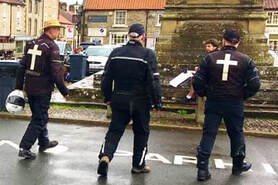 I met with a group of Christian bikers yesterday who were discussing the Paris to Dakar rally. During the course of the conversation, the group leader spoke about the incredible teamwork and logistics involved in achieving success in such a gruelling event. He compared it by analogy to supporting each other as friends and fellow bikers on an exciting yet demanding journey of faith. He mentioned how we sometimes talk about the ideal team as a ‘well-oiled machine’. It was certainly a metaphor that appealed to the group. He went on, however, to challenge the metaphor. ‘A team isn’t a machine. It’s people. People like us. People like you and me. People who are different to each other, each with their own personality, talents – and quirky habits.’ He went on. ‘It’s that kind of team that I want to be part of. A team of friends who care deeply about each other, look out for each other, support each other, laugh together, cry together, pull together. A machine does none of those things. It’s cold, efficient, impersonal, inhuman. The machine metaphor is all about performance. The team I’m talking about is all about relationships.’ One bloke piped up with a playful glint in his eye. ‘This group is nothing like a well-oiled machine. It’s more like a buckled wheel – and I love it!’ As I looked around the room at these leather clad men, each with his own mixed life story of brokenness and success, I could see what he meant. There’s something about this team that's intensely human, personal and real. I reflected more as I rode home. I thought back to teambuilding events I’ve been involved with, team coaching experiences, team models and technical scientific psychometrics. This man wasn’t simply advocating a different team model to the norm, a different team focus or approach. He was advocating a radically different existential–spiritual paradigm to that we find in many Western organisations today. He was challenging an over-emphasis on performance and efficiency that loses sight of humanity and meaning. I was taken back to a conversation with an African colleague who once commented, ‘I know Western organisations are preoccupied with targets and metrics. Our invitation, however, is to meet with us as people and to walk together.’ Is this hopelessly naïve, idealistic and unrealistic? What about all the pressures organisations face in increasingly competitive markets? What about increasing demands from boards, employees and shareholders for greater accountability, productivity and profits? What about organisational cultures that foster internal competition too? I agree, it’s a real challenge. It calls for visionary, courageous leadership, a radical step back to consider deep questions of identity, meaning and purpose at organisational and wider stakeholder levels. It begs profound questions, e.g.‘What is influencing our beliefs about what is most important to us?’ ‘What is driving our behaviour?’, ‘How can we be more human?’, ‘What legacy do we want to leave in the world?’ I’ve had the privilege of working with some leadership teams that have taken this challenge seriously. Admittedly, it felt counter-intuitive at the time, especially at first. How to build in a more explicit spiritual-humanising dimension to the organisation’s thinking, practice and culture in the midst of intense organisational busyness, pressures and deadlines? Wouldn’t it take more time than was available, slow things down? I could feel the understandable tension alongside the aspiration. One team decided to bite the bullet. Its 2hr meetings had constantly packed agendas. It struggled to work through everything and the pressure felt relentless. Some felt tired and wondered in conversations offline about their team’s sustainability and their own ability to cope. We discussed how it would feel to check in with each other and with God at the start of each meeting - and they were open to experiment. We decided to allow 20 mins of each 2 hour meeting so that people could arrive and breathe before diving into business. As they settled in, they shared stories of how they were feeling, what was happening in their worlds at the moment, what was preoccupying them. They practised active listening, being genuinely present to each other. Sometimes they prayed. At the end of the 20 mins, they felt more relaxed and focused with a stronger sense of team spirit. They used the next 5 minutes to revisit the agenda: ‘What now stands out as most important to us?’ ‘How shall we do this?’, ‘What do we need to do this well?’ The team commented after practising this for a few months on how it had transformed their relationships and meetings. Their times together felt more focused, inspiring, energising, open, honest, human, and productive. They achieved higher quality and faster results. They began to identify ways of working that served them well (e.g. speak up; hear well; challenge; support) and used bright green cards light-heartedly to signal and affirm when anyone in the team modelled those behaviours. When others joined them for their meetings, they explained their new team culture and invited them to join in too. The effect was electric. It modelled inspiring team values and effective ways of working that extended beyond the team into the wider organisation. So, some questions for reflection. What difference do you, your team and organisation want to be and to make in the world? How far and how often do teams you are part of feel and act like a human place? What are your best and worst experiences of team? What made the biggest difference? What kind of person, team or organisation do you aspire to be and become? What kind of personal, team and organisational leadership will it call for to succeed? What will 'success' look and feel like for those involved and impacted by it? What values, practices and culture will others notice characterise your team? What place, if any, do God, spirituality and prayer take in your thinking and practice as a team? I would love to hear from you! |
Nick WrightI'm a psychological coach, trainer and OD consultant. Curious to discover how can I help you? Get in touch! 
Like what you read? Simply enter your email address below to receive regular blog updates!


|
 RSS Feed