 ‘Votes are cast based on rational decisions, right?’ (Zaria Gorvett) As I watched the former leader of a very influential nation speak on TV last night with what came across (to me, at least) as a mishmash of delusions and mistruths, I felt, to put it mildly, both bemused and dismayed. This felt even more so because current polls in that country point to a distinct possibility, if not yet a probability, that that person could actually be re-elected to that position of power. I found myself asking myself, ‘What kind of craziness would compel people to vote for this person? How can’t they see through the nonsensical and narcissistic rhetoric?’ Shaking my head with a deep sigh, I got up to make a cup of tea. Suddenly (I don’t know if it was the caffeine), a revelation hit me. I flashed back to some years ago in Germany, watching a 1-hour interview with Angela Merkel on TV. She was at the height of her leadership that year and, to be honest, I could hardly understand a word she said. My German language skills simply weren't up to it. Yet, somehow…I found her absolutely mesmerising. Something about her style, presence and tone subtly seduced me. I would have voted for her. I would have married her! Maybe. This took me back, next, to the Brexit-EU psychodrama in the UK. At that time, arguments flew back and forth vociferously in favour of Leave or Remain. Little I heard on either side bore much resemblance to evidential reality. Noticeably, most people I spoke with voted on instinct, on gut-feel intuition, and were swayed little by spurious claims or counterclaims. Boris Johnson, who won that game (by a narrow margin), played subconsciously on cultural memories of Winston Churchill, the lone hero who stood alone against overwhelming internal and external odds. So, an ex-President, an ex-Bundeskanzlerin and an ex-Prime Minister. It's far more than the words they say. It’s what they symbolise and represent. It’s how they make people feel.
12 Comments
 ‘The arrival of Jesus in our lives is not just something that happened 2000 years ago. It still happens now.’ (Steve Sutton) 20,000+ people gathered in London to demonstrate against horrific human rights abuses in El Salvador. A friend, Paul, and I travelled down by coach from the North East of England wearing our protest-style combat jackets and keen to add our own voices to the crowd. A large number of people were assembling in Hyde Park, the starting place, with various organisers moving among us to arrange the procession. Suddenly, Paul and I were approached by the leaders to carry a large banner at the very front of the march. We were astonished that, out of so many thousands of protestors, they chose us. God chose us. We were and are nobodies, yet as a new follower of Jesus at age 21, it felt like Jesus was walking with us, among us. Spotters on embassy rooftops monitored and took photos through long camera lenses. Our image appeared on the front cover of a well-known human rights magazine. On arriving at Trafalgar Square, the police mysteriously allowed only Paul and me through the cordon to sit at the foot of the speakers’ platform. 2 years later, I was chosen to meet the main speaker at a secret rendezvous in a basement flat in Islington, but I could never have imagined that at the time. On moving to London a few months later, I attended a vigil at St James’ Church, known for its firm stance on behalf of the poor and oppressed in the world. We were there to mark the inspiring life yet brutal assassination of radical follower of Jesus, Archbishop Oscar Romero. By God’s mysterious design, I discovered that I was sitting beside the Nicaraguan ambassador. At the end of the service, a Spanish nun, passionate follower of Jesus and human rights activist chose me to come forward, a lone stranger, to have my photo taken with Salvadorean refugees. She and I became life-long friends. Some 40 years later now, I’ve had the humbling privilege of witnessing and experiencing so many more such miracles than I could ever count or recount. I don’t know or understand why God chooses us but I’m glad and grateful that he does. When he does, it feels to me like a Divine voice that calls out from within and beyond, that we hear and experience as a realisation. Hitherto 'coincidence' takes on a deeper significance. As we approach this Christmas with all that it holds for us and the world, the arrival of Jesus in our lives is not just something that happened 2000 years ago. It still happens now.  ‘Two roads diverged in a wood, and I — I took the one less travelled by.’ (Robert Frost) It was in a dark, cigarette smoke-filled pub one night. The trade union reps sat behind a long wooden table, cluttered with half-full beer glasses. We about-to-graduate apprentices sat opposite, waiting to be called forward. (It was in the days of closed shop when qualified trades people could only be employed if they held union membership). At the time, I supported the value of trade unions in principle, yet felt dismayed and disillusioned by the corruption that this source of power had created. I noticed my colleagues often lived in fear of the union rather than represented by it. If you said or did something that challenged or upset union leaders, you risked losing your union card and therefore your job. One by one, my fellow apprentices stepped up to the table. ‘Raise your right hand. Do you swear to abide by the rules of the trade union?’ ‘Yes.’ ‘OK, go and sit down.' My turn came. ‘Do you swear…?’ ‘No’, I replied. ‘I have no idea what the rules of the trade union are.’ The panel looked bemused. ‘You really want to read the whole rule book before you agree?’ ‘Yes’, I replied. The shop steward thrust a copy into my hands then ejected me forcefully from the meeting. ‘Wait outside until we call you back in.’ I skimmed through the book then, on return, insisted I was exempted from default political party contributions, as was my right according to the rules. They looked intensely frustrated but had to consent. I don’t think such encounters changed the trade union, but they did change me. Some months later, I was sent on a 2-week residential apprentices' programme that aimed to stimulate personal leadership qualities. I challenged the senior managers there with whom, providentially, I had opportunity to speak. ‘Why invest in this programme when the prevailing management behaviour in the workplace is so autocratic? We need to change culture, not just individuals’. They looked deeply uncomfortable yet I held my ground. (They had, after all, encouraged personal leadership). At the formal dinner of the final evening, they invited me to sit at the top table alongside the most senior leader for that region. I was learning to navigate my way through power structures and systems and to exercise personal and political agency. [See also: Pivotal points]  ‘No matter what happens, we always have a choice.’ (Napz Cherub Pellazo) ‘What are your options?’ is a good question in coaching, except when it isn’t. Many people come for coaching in the first place because they face an issue or a dilemma, and they can’t see a way forward. Sabine Dembkowski and Fiona Eldridge observed this phenomenon in their article, ‘Beyond GROW’ (2023): ‘Clients often experience a stuck state…where they feel trapped as if there are no alternatives or keep circling around the same issue without being able to generate new options.’ Against this backdrop, ‘What are your options?’ can be met with a bemused, ‘I don’t know. That’s why I’m here.’ An inexperienced coach may feel stuck too at this point and perhaps, hoping to find a way through, ask something along the lines of ‘What have you already tried?’ Again, this may elicit little more than feedback on what the client has already done and found to be ineffective (which the client knows already anyway), and bring both parties back to square one. An alternative, and potentially more useful, framing could be something like, ‘Given what you have tried already, what is the crux of the issue for you now?’ This may stimulate fresh insight and, in turn, raise new possibilities into awareness. A different approach can be to pose questions that aim to stretch the boundaries of the client’s current constructs and imagination, for example: ‘What would you do if you had a blank cheque?’ ‘What would you do if you felt no fear?’ ‘What could you do if you were not answerable to anyone?’ Claire Pedrick might invite a stuck client to generate a spectrum of options, from ‘Do nothing’ to whatever they would regard as a ‘Nuclear option’. Ian Gray deploys a fun and radical brainstorming technique, where every third option or idea must be ‘illegal, immoral or absolutely unworkable’. If a client still feels completely stuck, I may invite them to take a large, blank sheet of paper, draw themselves at the centre, then co-create radical options in the form of a mind map. In order to help minimise the risks of instinctive psychological and emotional resistance or push back from the client, I emphasise that the options simply represent possibilities, not what the client may want or consider right to do. Against each option, I then invite the client to respond to two questions: ‘If you were to do this, what would it make possible (or right)?’ and, ‘If you were to be do this, what would you need?' [See also: Out of the building; Worst possible idea]  ‘If you can walk away from a landing, it’s a good landing. If you can use the plane the next day, that’s an outstanding landing.’ (Chuck Yeager) ‘I think I just crashed the plane!’ That made me laugh. We had been toying with the metaphor of flying an aircraft to think about different stages of a coaching or action learning process. My nephew, a trainee pilot, had explained to me previously how landing a plane after a flight can be the tricky part. There’s a risk that, having touched down, the plane bounces off the runway and takes off again, resulting in something like a kangaroo-effect along the runway until it finally comes to a halt. During an action learning facilitation training workshop this week, a participant guided the group successfully ‘down’ into the action stage, only inadvertently to have it take off again as she opened up to further questions for exploration. In the learning review afterwards, one of her fellow participants commented with a smile that it felt, perhaps, more like a turbulent landing than a crash into the runway. That was a relief. Yet, how to land a plane without the bumpy-bounce effect? Tony Stoltzfus in Coaching Questions (2008) offers a useful guide that focuses on three successive stages to help create a shift, from possibilities to decisions to committed actions: Could do; Want to; Will do. Could-do raises possibilities and options into the frame. Want-to touches on energy and motivation. Will-do moves towards determination and traction. We could picture this sequence as something like: What could you do? Is that a step you want to take? What will you do, by when? Stoltzfus goes on to highlight potential issues to look out for and to attend to, including ‘insurance’ and ‘equivocation’. The former involves helping a person to identify and address critical factors that could either ensure or undermine their success. The latter can be useful if a person appears to be feeling ambivalent or only superficially committed to a course of action. It’s the person’s own choice as to whether they follow-through. This is, however, about helping them to land themselves well. Examples of insurance-type questions are: ‘Are there any obstacles to getting this done?’ ‘Who else do you need to check with?’ ‘On a scale of 1-10, how confident are you that you’ll complete this step by the deadline?’ ‘What would it take to raise that to a 7, 8 or 9?’ ‘How could you change the step or the deadline to make this more realistic?’ ‘What could you do to increase your chances of getting this done successfully?’ ‘Do you need an accountability person or mechanism to help you do this?’ Examples of equivocation-type questions are: ‘Are you ready to commit to that next step?’ ‘You said you might take that next step. Is there anything holding you back?’ You said you ought to do this. What would make it something you’ll do because you really want to do it?’ ‘You sound like you're procrastinating. You can choose to do this or not to do it. What will you do?’ ‘Is there anything we need to discuss or change about the step you’re considering that would help you to make a more decisive choice?’ Stoltzfus ends by offering some tips on tentative language to listen out for at the action phase that could indicate a person is equivocating, or hasn’t yet reached a decision point: ‘I could…’ ‘I might…’ ‘I’m thinking of…’ ‘One possibility…’ ‘Maybe I should…’ ‘I ought to…’ ‘I’d like to…’ ‘Someday…’ It’s analogous to hovering above the runway without yet having achieved touch-down. Try: ‘How do you feel, here and now, as you consider each option?’ ‘If you were to land this, what would you need?’ [See also: A good ending; Get a grip; Grit]  ‘If you want to know what your true values are, have a look at your diary and your bank statement.’ (Selwyn Hughes) Take any example of an important-to-you decision that you have taken during this past week. Consciously or subconsciously, directly or indirectly, it will have reflected something of your underlying beliefs and values. At one level, every decision we take with awareness represents the outcome of a choice point, analogous to a choice of a direction at an intersection in a road. Guiding principles are a way of choosing to align our decisions and behaviour with our beliefs, ethics and values. I worked with a group recently where, during feedback, participants commented on how they felt impacted by what they saw and experienced as my ‘distinctive’ style and approach. They were curious and asked me what, if anything, lay behind this – that which they had experienced – for me. What is it that makes the difference? I held up a small, yellow, post-it note to the screen. On it are written 3 words in my own scrawled handwriting: Prayer, Presence, Participation. These are, if you like, the guiding principles that underpin me personally and all of my work professionally. I carry them with me and have them stuck on my desk, beside the monitor. I pause and focus on them consciously and deliberately before, say, writing a message, joining a conversation or running a workshop. They really do matter to me. Prayer is inviting and opening myself to God’s insight, wisdom and power. He is able to reveal, do and achieve things that are truly impossible for me alone. Presence is ensuring quality of attention and contact with each person or group that I will meet. It’s viewing and approaching each person, each moment, as a sacred encounter. Participation is an invitational spirit that calls for humility and courage. It means engaging with people, not simply technology or any materials that we may use. At the end of the conversation, I invited each person in the group to reflect for a moment – for as long as they needed – and to write down 3 words that, perhaps, they would choose to underpin their own practice. They did this thoughtfully, alone, then each shared with others in the group what they had written. This felt so much deeper and more meaningful than simple words on paper could capture or convey. It was about integrity, authenticity and congruence: choosing to take a stance. What core principles guide the focus and parameters of your decisions and behaviour? What stance are you willing to take? 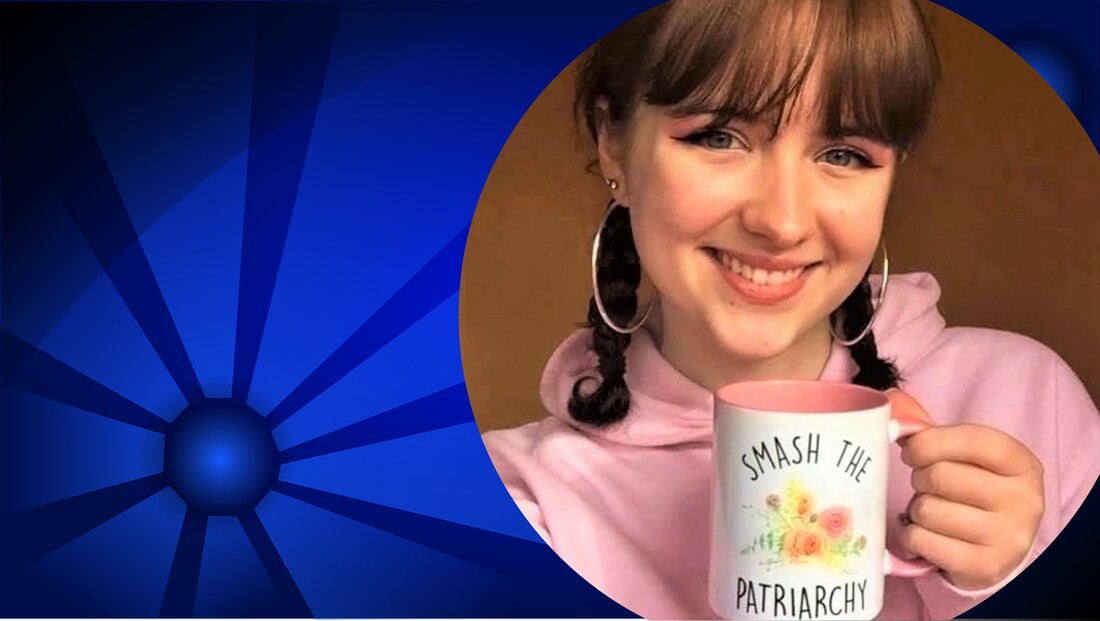 This is Andi. She's a woman in her own right. She's also my daughter. I'm immensely proud of her. As a child, her favourite colour was blue. People would often say things like, 'Blue's a boy's colour. Shouldn't you like pink?' She would reply calmly yet assertively, 'My favourite colour is blue.' Andi's 21 now and she also likes pink. She wears it because she chooses it, because she likes it, and not to conform to some arbitrary cultural stereotype. What's your favourite colour? Shouldn't you like a different one?  ‘I like to deal with things in the order in which they are going to kill me.' (Rita Cooper) In response to Rita’s satirical note (above), we could imagine prioritising in simple form by posing a question such as: ‘Is it going to kill me? a. Yes. b. No. c. Maybe.’ Sorted. :) A different question, orientated around vision and values, could be, ‘In 5 years' time, what will make me feel proud of the decision I take now?’ It brings existential-spiritual ethics and wisdom sharply into view. A recurring theme in leadership, coaching and organisation development (OD) is how to prioritise, especially when faced with an array of options and each with its own implications. The challenge is compounded if a context keeps shifting, or if different stakeholders value and demand different things. It can feel like being caught in a bewildering, exhausting, push-pull, tug of war. Common prioritisation tools include a map of urgency against importance; or value against cost (or risk); or probability (or difficulty, or effort) against impact. The Pareto Principle suggests that 80% of the most significant outcomes arise from 20% of actions or resource investments. A critical path analysis can help to determine what should take precedence at different phases of a timeline. Useful as they are, a limitation of these methods is that they are, essentially, tactical management techniques that aim to enable us to navigate from point A to point B. A transformational approach calls us to reflect broadly and deeply. A question of what B may represent and how I may choose to get there from point A draws vision, values, identity, meaning and purpose into the frame. What criteria do you use when choosing priorities? How do you decide who or what takes first place?  ‘The opportunity to make effective personal choices is highly unequal.’ (Robert A. Dahl - After the Revolution) New Years’ Resolutions. A time and practice in Western cultures when some of the more reflective or impulsive among us will commit to do something new. It could be, for instance, a new relationship, a new job, a new home, a new diet or a new fitness routine. For many people, very soon after having made a decision, the resolve will dissolve and be lost in the mists of time. Yet central to this idea of resolution is the notion of personal choice and, with it, the principle that I can succeed in achieving what I choose – if I’m willing to do whatever it takes. I often create (prayerfully) a list of key aspirations at the start of each year, then put practical steps in place so that, all things being equal, I will be able to look back at the end of that year and see that I have fulfilled them. The goals are intentionally inspiring and stretching. They are, with God’s help, within my grasp and, therefore, possible. On the whole, this discipline works by ensuring focus, parameters and accountability. It also centres on people and things that are genuinely important to me and, thereby, taps into values, motivation and determination. We can think of this choosing-acting-influencing phenomenon as exercising personal agency. Shaun Gallagher describes this as, ‘the sense that I am the one who is causing or generating an action’. ‘I can choose’ is a profound existential, psychological and political statement and stance. It means I can break out beyond the apparent default of my circumstances. We hold the potential to be catalysts of real change in the world, within ourselves as well as in broader relationships and situations – and this brings opportunity and responsibility. I can choose and you can choose. I think vividly of Jasmin in the Philippines, a poor woman among the poor who chooses to follow Jesus’ call and example, whatever the cost. Rather than allowing herself to be limited by her circumstances or by expediency, she exercises radical personal agency and transforms everyone and everything in her path. Malala Yousafzai and Greta Thunberg are famous examples of women too who take personal choice, action and influence seriously – and, similarly, at considerable personal risk. There are wider dimensions. A person's sense and scope of agency are affected by structural factors that transcend the individual, e.g. social status; wealth; education; gender; ethnicity; culture. Mustafa Emirbayer and Ann Mische observed that a person’s lived experience limits what possible alternatives or future scenarios he or she is able to imagine. Paulo Freire proposed, on a similar basis, that critical consciousness (‘conscientisation’) is a necessary condition for people to exercise freer choices and agency for change. I worked with a client from Myanmar and asked her what she dreamed of. She looked at me blankly then responded that she was unable to conceive of a different reality to the one that she had lived until now. She felt crushed by the mental and practical constraints of living as an ethnic minority in a country dominated by a military dictatorship. The impact of unequal and unjust social-political power is not a fixed determinant of agency – but the stark psychological and tangible inequalities of choice and opportunity it engenders are significant. Other influences include personal confidence, competence and capacity. If a person operates psychologically and relationally from a secure base with trust and support, he or she is more likely to choose to take a positive risk. If, conversely, someone is and-or feels alone and has experienced or anticipates unfair discrimination, negative evaluation or other painful consequences, to act can feel hazardous – especially if the stakes are high. Agency can demand energy, courage and resilience. A person may not (yet) feel ready, willing or able to take that step. If a client is unaware of or avoiding personal agency, William Glasser suggests stimulating his or her sense of reality, responsibility and relationship in order to enable more life-giving choices. If stuck in a pattern of apathy or passivity, John Blakey and Ian Day propose offering high challenge with high support. If we risk inadvertently colluding with or disempowering a client, Reg and Madge Batten advise focusing attention on what the person can do for him- or herself and, only after that, what we could do by agreement with them, or on their behalf. Viktor Frankl, victim of Nazi persecution concluded that, fundamentally: ‘The one thing you can’t take away from me is the way I choose to respond.’ In our personal, social and political lives, we can see how a person’s choices, actions and influence are affected by a diverse range of factors. These include the privileges a person may hold (or not) and the opportunities he or she has benefited from by birth, background or context. Jesus – help me choose this year to exercise my own agency for the life and liberation of others. We can be hope. (Would you like to discover how to exercise greater personal agency? Get in touch!)  My daughter is a guinea pig. This afternoon in the bright sunshine, I invited her to take part in an experiment. First, we stepped out into the street and, gesturing to a line of cars parked at the roadside, I asked, “If you were to buy a car, what colour would you choose, or definitely not choose?” She answered, “I’d love a white car.” “OK,” I replied, “let’s go for a walk into town and back. Your task is to count every white car that we pass. If you have the same number as me when we get back here, I will give you £10. How does that sound?” She grinned and willingly agreed.
An hour later, we stopped back where we had started and I asked her, “So, how many red cars did you see?” She looked at me blankly. “I didn’t see any red cars. I counted 206 white cars.” In fact, we had passed 93 red cars, yet she had been so focused on the white cars that she hadn’t seen a single one. This simple experiment illustrates an important psychological phenomenon known as selective attention: “The ability to pay attention to a limited array of all available sensory information…a filter that helps us prioritize information according to its importance.” (Bertram Ploog, 2013). Gestalt psychotherapist Geoff Pelham comments that, in any given relationship or situation, we notice who or what matters most to us (The Coaching Relationship in Practice, 2015). This idea of who or what matters most reflects beliefs, values and emotions. In this exercise, my daughter was influenced and motivated by her beliefs (that this experiment would serve some useful purpose), values (the prospect of a £10 reward) and emotion (her choice of a colour she likes). These factors combined to ensure concentration on a task (counting white cars) that required selective attention. Why is this insight significant in our work with people? The principle extends beyond literal-visual perception to deeper psychological processes too. Our beliefs, values and emotions subconsciously influence our focus and act as filters. We construe personal-shared narratives based on what we perceive. Such narratives appear to us as-if reality, as-if totality, and often without any awareness of who or what we have excluded. As such, narratives always point to and reveal, implicitly, who and what matters most to a person, group or culture, rather than to a definitive account of reality per se. A key question is, therefore: who or what are we, and others, not-noticing? If we can enable a shift in perception, a re-shaping of a narrative, what then becomes possible? Interested to do further reading in this area? See: The Art of Looking: Eleven Ways of Viewing the Multiple Realities of our Everyday Wonderland. |
Nick WrightI'm a psychological coach, trainer and OD consultant. Curious to discover how can I help you? Get in touch! 
Like what you read? Simply enter your email address below to receive regular blog updates!


|
 RSS Feed