 ‘Intuition is like reading a word without having to spell it out.’ (Agatha Christie) I had the privilege of training an inspiring, cross-cultural group of participants in South Africa, Rwanda and the UK this week who work in different roles in the same international non-governmental organisation (INGO). This online Action Learning Associates programme was designed to enable them to facilitate Action Learning sets (that is, groups) confidently and effectively. (If you’re unfamiliar with the concept of Action Learning, it’s a semi-structured, small-group, peer-coaching process that’s used widely in leadership and management development programmes and as part of wider organisation development (OD) initiatives). One of the areas we touched on during the training event is the value of drawing on intuition when facilitating groups. We could consider the facilitator’s role simply in terms of a series of tasks, e.g. introducing a meeting; leading a check-in; contracting ground-rules; guiding the group through the sequential steps of an Action Learning process; facilitating a review at the end. These are important elements that we learn to handle skilfully. At a deeper level, however, we can learn to tune into our intuition. This will help us to discern, for instance, unspoken issues; underlying group dynamics; or when a person-group is stuck or ready to move on. Intuition can feel mysterious, a sense of ‘knowing’ that we may experience bodily or as a feeling rather than as a rational concept in our mind. One of most mysterious experiences I had was when training a group of church and community leaders in Action Learning facilitation. When I first encountered one of the participants, the word ‘Ruth’ kept coming to mind. I mentioned this to him very tentatively and he looked astonished. Apparently, he was about to complete a PhD study on the book of Ruth in the Bible. I had no idea. For me, spiritual discernment sits close to intuition. I always pray deeply before coaching or facilitating a set. How do you draw on intuition in your own life and practice? I’d love to hear from you!
10 Comments
 ‘Is he – safe? I shall feel rather nervous about meeting a lion.’ ‘Safe? Who said anything about safe? Of course he isn’t safe. But he is good.’ (C.S. Lewis: The Lion, the Witch and the Wardrobe) I was 8 years old when the teacher asked us, a classroom of children, to sit on the floor while she read to us the next chapter of a novel, ‘The Lion, the Witch and the Wardrobe’. If you know the book, it was the part where Aslan the lion (which, I discovered later, the author had used to depict Jesus) appears in Narnia, a mythical world that represents this world. It's a beginning of real hope. This snow-covered land, which hitherto had been trapped under a curse of perpetual winter, is beginning to thaw. Meanwhile, the antagonist, an evil witch (depicting Satan), comes across a small group of woodland creatures enjoying a party to celebrate. She flies into a rage, interrogates them harshly and uses her magic powers to turn them into stone. At that awful and unexpected moment, I remember bursting into tears. As a child, I was horrified that, just as things had started to look up for these innocent animals, their lives and hopes had been shattered. It felt like a moment of despair for them – and for me. (A therapist-supervisor commented recently that little wonder most of my subsequent adult life has been spent in community work, human rights and international development). Today as I, along with Christians across the world, reflect on Jesus’ death on the cross, I’m reminded again of terrible injustice and violence against the innocent. I often identify more with Edmund than with Peter in Lewis' drama, yet what matters most is Aslan. It's He who breaks the power of the witch. 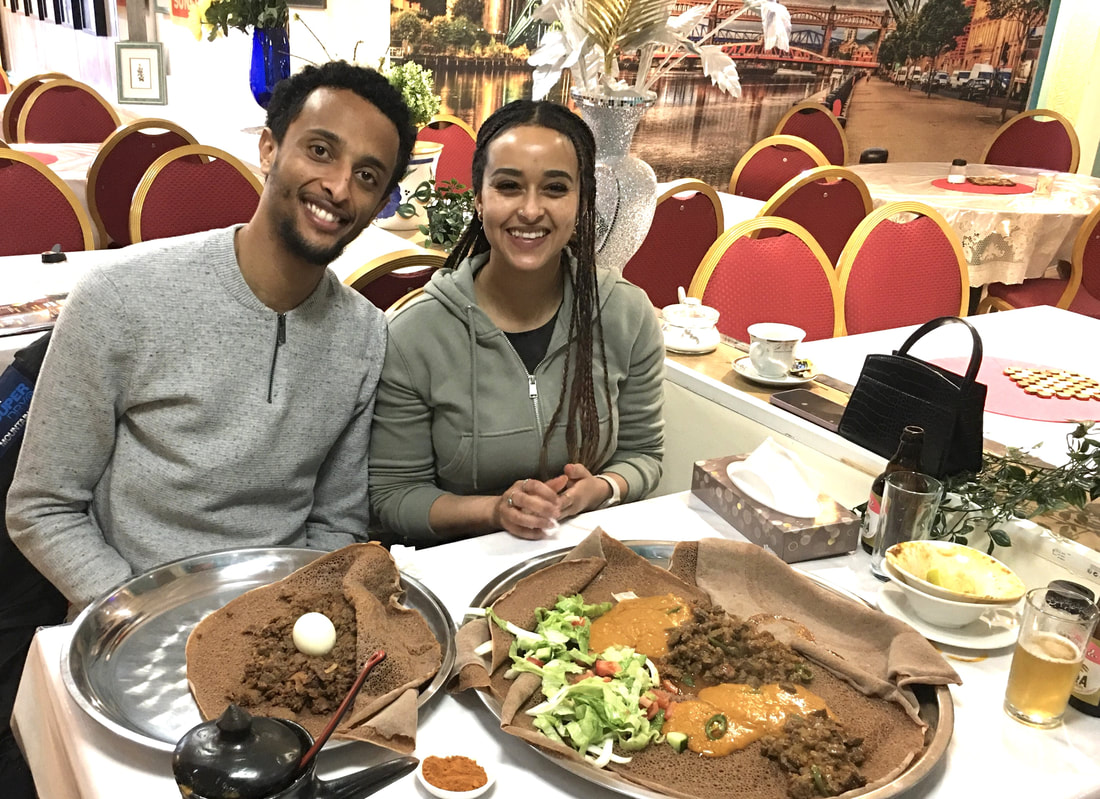 ‘Chance is perhaps the pseudonym of God when he doesn’t want to sign.’ (Anatole France) I enjoyed a very tasty Eritrean meal with an inspiring young couple today. I had met this bright young man on a plane on my way to Germany last year and we had chatted throughout the flight. It turned out his equally-talented partner is involved in very similar work to my own, including internationally, so we agreed to keep in touch with each other on our return to the UK. As we met up again for the first time today, we talked about our shared faith in Jesus and his profound significance in our lives. We talked, too, about ways in which we’ve witnessed his mysterious power at work. As I listened to this couple's stories and experienced their generosity and warmth, I had a deep sense this encounter was far more than coincidence. When have you experienced encounters that somehow felt sacred?  ‘Always vote for principle, though you may vote alone.’ (John Quincy Adams) I never had the privilege of meeting Soji Taguchi, but I do wish I had. Soji was a manager at a Japanese-owned textiles factory in the Philippines. Seeing how meagrely the Filipino workers were paid, he gave away a significant portion of his own salary each month to top up theirs. When a young Filipina was severely distressed one day and, in her upset, damaged an expensive piece of machinery, he paid for the repairs himself. Instead of chastising her he listened to her plight and, subsequently, regularly slipped money (secretly) into her pockets to help her, a poor teenager, to pay her bills. This woman’s life is now a clear reflection of his. The power of a positive role-model. Ted Winship was my mentor, a shopfloor supervisor at an industrial site in the UK. Once, the workers refused to enter an enclosure because the conditions in it were so terrible. The manager told Ted that, if he could persuade them to do the work, they would all be paid a substantial bonus. Ted took the manager at his word. He entered the compound first and the work was completed on time. At the end of the project, however, the manager refused to pay the bonus and only gave Ted his. It was a serious breach of trust. On hearing of this betrayal, Ted confronted the manager but to no avail. He distributed his own bonus to the workers, resigned from his job and walked out. Ethics in action. Self-sacrifice for the sake of others. The personal costs were high – but the spiritual benefits were immeasurable.  ‘If you’re not confused, you’re not paying attention.’ (Tom Peters) Leaders who develop strategy collaboratively with diverse key stakeholders often find that inviting others in proves critical to its success. It recognises that no leader, no matter how knowledgeable or experienced, can know everything and it values the contribution that others can bring. That said, leaders can also feel overwhelmed if levels of participation are high and inputs are complex. These tips (below) are, therefore, designed to help leaders sift through and make sense of the reams of hopes, ideas, information, impressions, data etc. that they may surface and receive through strategy research and through inviting input from various people and groups. They are not intended as a prescriptive one-size-fits-all set of rules. Have a glance and see which, if any, work best for you. 1. Don’t panic In the midst of some great information and ideas, you are also likely to receive input that will look unclear, confusing or contradictory. There may be handwriting you can’t read, comments in shorthand that made sense to the person who wrote them but don’t make sense to you etc. You may receive so much input from diverse people and sources that it could feel bewildering. If so...don’t panic! 2. Research questions Go back to your research questions. Use them as a guide to sift through the input you have received. How far does the overall input contribute to answering the questions you set out to address? Has any of it raised wider or deeper questions that need to be acknowledged? Is any of the input interesting but distracting? Avoid the temptation to race down fascinating rabbit holes that take you off track. 3. Test a hypothesis Some leaders suggest formulating a hypothesis – a provisional answer to the questions you set out to answer – before sifting through responses. This provides a focus, a testing stone, and enables you to check each response: ‘Does this support or contradict the hypothesis?’ If it doesn’t relate to the hypothesis, shelve it for now so that you don’t get distracted. You can always circle back to it later. 4. Cluster responses Some leaders prefer to start with a blank sheet, skim through responses and note intuitively what core themes or ideas emerge. You can then place responses under those themes, adding or modifying themes as the sifting process progresses. Don’t worry about identifying the themes perfectly too early. You can always hone them and see what answers they point towards later. 5. Test your biases It can be tricky for leaders to look at responses afresh, especially if we have a strong interest in the work we do currently or strong views about how we should move forward. During the research phase, I refer to these challenges as ‘blind spots’ (assumptions) and ‘hot spots’ (sensitive areas). Invite others to test your assumptions and to point out if you appear to avoid challenges or new ideas. 6. Trust the process We may have invited and received input from a diverse range of people and groups. Whilst no strategy research will ever be 100% exhaustive and conclusive, the insights that we draw through a collaborative strategy venture will in most cases be good enough – that is, good and enough as a signpost to the future. Pray, be confident in what you know and excited by what you discover! 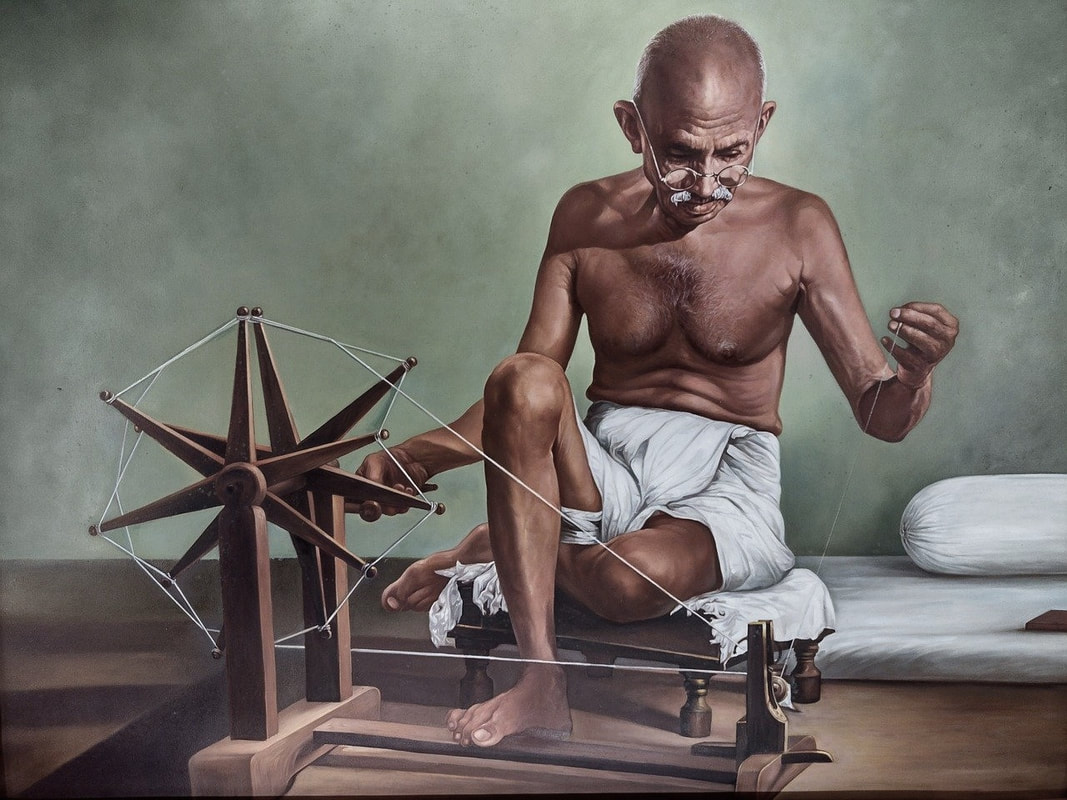 ‘Education consists of two things: example and love.’ (Friedrich Fröbel) I can’t remember last time a book gripped me as much as, Mahatma Gandhi Autobiography: The Story of my Experiments with Truth. (I’m trying very hard to read it slowly and thoughtfully so that I don’t get to the end too quickly). Perhaps it was Testament of Hope: The Essential Writings and Speeches of Martin Luther King, or Mother Teresa: An Authorized Biography. The next two books on my reading list are: The Autobiography of Martin Luther King Jr. and St. Francis and His Brothers. There’s something about reading the lives of these ordinary-extraordinary people of faith that always humbles, challenges and inspires me. I want to be more like them. They help keep my own life and work focused and in perspective. I have to remind myself: these were ordinary people, just like me, who became extraordinary through the life decisions they made. They proved in practice that faith is acting on what we believe as if it were true. They lived out: ‘put your body where your mouth is.’ At times, it can feel like standing vulnerable and naked in front of a mirror and seeing my own life, decisions and actions in sharp comparison and stark contrast to theirs. Yet I don’t want to be a carbon copy. I’m not in their situations and I’m not who they were in those situations. I’m me – and I’m here and now. This is my time, my place and my opportunity. I want to follow God’s distinctive call on my own life with authenticity and integrity, to be the very best version of me that I can be in His eyes. Who are your role models? What impact do they have in your life? 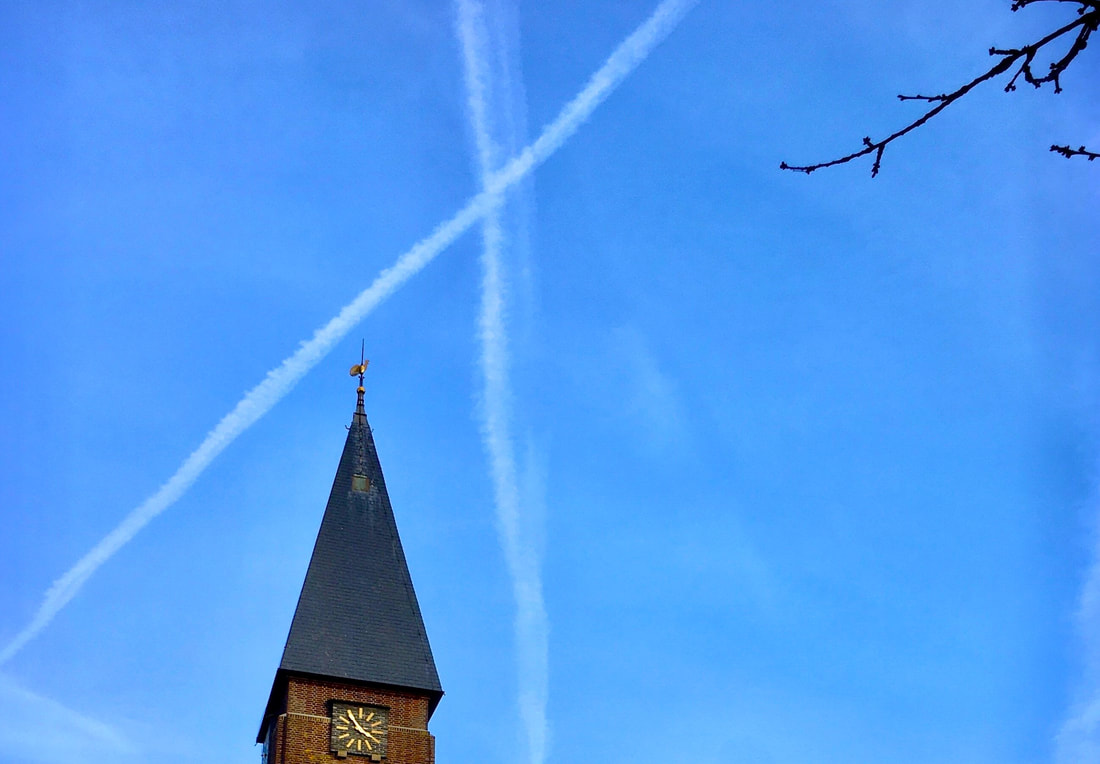 ‘Coincidence doesn't happen a third time.’ (Osamu Tezuka) I arrived in the Netherlands on Saturday, aiming to orientate myself briefly to this new country before working with an INGO team there on Monday. When I stepped into my hotel room, however, it smelt damp and sweaty. Trying not to breathe, I opened the windows to an icy blast and decided to go for a walk while the fresh air did its work. Not far away, I noticed a church building so walked over to have a glance at its meeting times. As I did so, I looked up and saw a cross in the sky, a misty symbol painted momentarily on blue canvas by vapour trails. It felt significant, but I didn’t know why. The next day, the church was full when I arrived and I sat quietly in the midst, happily surprised by how much Dutch I could understand. (I can speak German, but this was my first time to read this new language). At the end, a woman kindly introduced herself to me. On learning that I am English, she explained that the church is recovering from an intensely painful internal conflict. The pastor had spoken on a need to look to God. I showed her the photo I had taken the day before – a symbol of suffering and hope – and she started to weep. ‘God brought you here to us this morning, Nick.’ Another woman now introduced herself, explained briefly that she had worked internationally in medical mission, and invited me to a special meeting that afternoon for asylum seekers and refugees. ‘How could she possibly have known anything about my life and work?’ I asked myself, a total stranger. The guest speaker that day was a visitor from Algeria and, serendipitously, works for the same organisation I was about to work with the following day... as does a man who randomly found himself sitting beside me in a hall full of people. Was this all coincidence? I don’t believe so. You decide.  ‘We don’t have a plane crash scheduled for today, but I thought I’d take you through the emergency procedures just in case.’ (KLM Air Hostess) I love the difference that a sense of humour can make. The air hostess (above) made everyone laugh during the passenger safety briefing on a return flight from the Netherlands today. The airline’s own plane had experienced maintenance problems so it had had to borrow one from another airline. One hostess complained, with a glint in her eye, that the green décor didn't match the blue colour of her uniform. The passengers all laughed when another hostess made an announcement too, aiming to draw our attention to an apparent information light on the plane…only to correct herself moments later with, ‘Oh – this plane doesn’t have one!’ Brilliant. It took the terror out of the turbulence. On a more serious note, I had been in the Netherlands to work with a diverse NGO leadership team, to support its desire to enhance its international teamwork. I referenced briefly a couple of places in the Bible where the writer comments on the amazing potential of human diversity – where the Divine whole is seen, known and experienced to be more than the sum of its parts – yet also hints at the corresponding dark risks of undervaluing, fragmentation and conflict if not. Strikingly, the writer moves on in both places to emphasise a deep need for authentic love as the critical success factor. This insight set a spiritual-existential tone for the day, as we reflected on team-as-relationships. Returning to the plane – but this time as a metaphor, a participant from South Africa asked, ‘How many separate parts is a Boeing 747 aircraft made up of?’ Apparently, the answer is about 6,000,000. ‘And what do these diverse components all have in common?’ Puzzled faces all round now. ‘None of them can fly.’ I thought this was genius. What a great way to dispel the myth of the all-sufficient self in the face of the dynamic complexities of teams, organisations and wider world. We worked through an Appreciative Inquiry next, drawing on positives of the past and aspirations of the present to co-create shared trust and vision for the future. Set the trajectory. Fasten seatbelts. Enjoy the flight.  ‘You could start a fight in an empty room, mate.’ (Allan Jones) I’ve never sought conflict. Far from it. I much prefer harmony and peace. That said, however, I can’t escape a similar calling to that which Martin Luther King once heard: ‘Stand up for righteousness! Stand up for justice! Stand up for truth!’ It’s a call that burns deeply inside of me and has done, as far as I can remember it, for my entire life. I’m pained to admit that I haven’t always followed that voice anywhere near as courageously as MLK. I haven’t always handled it with his astonishing humility and love. I’ve stayed silent when I should have spoken up or spoken up when I should have stayed silent. My words have stumbled out clumsily. I’ve caused pain where I meant to bring healing and hope. Yet, at times, this vocational stance has proved authentic, valuable and worthwhile. In my 30s, I worked for a large UK charity in the health and social care sector. As an idealistic young radical, I challenged the leadership team on numerous occasions when I believed we were compromising our values. I tried to do this with prayer and humility and out of a genuine desire to build relationship and trust. On one occasion, the leadership team decided, in view of limited budget, to increase only senior leadership salaries until it had secured sufficient funding to increase frontline staff salaries too. I argued vociferously that we should do the exact opposite – and to freeze my own salary as a first step. On another occasion, the leadership team decided to reserve all spaces in its small head office car park for executives only, given that they didn’t have time to drive around to look for parking places elsewhere. I advocated passionately that, especially in the winter months, the spaces should be reserved for female and other vulnerable staff or visitors so that they wouldn’t have to walk along dark city streets at night to their cars. On yet another occasion, the leadership team recruited a ‘hatchet man’ on temporary contract to implement a tough restructure with associated redundancies. I protested that this blunt way of approaching the change would damage relationships, engagement and trust. At times, I imagined my challenges and counter-proposals were met with deafening silence or heavy sighs – especially as I wasn’t a senior leader at the time. Nevertheless, when a serious crisis broke out between the leadership team and entire middle management, both sides to the conflict invited me to mediate as ‘the only person they could trust’. The chief executive, a man of remarkable humility, took me into his confidence and treated me like a respected thought-partner. When I moved on, the company secretary wrote to me to say he had never encountered such integrity. Even the dreaded ‘hatchet man’ wrote that he wouldn’t hesitate to employ me alongside him in any future role. Pray with humility – take a stance – speak the truth in love.  ‘Just like seasons change in nature, they change in our lives as well. And, as they change, they ask different questions of us. What questions is your life asking of you now?’ (Funmi Johnson) I had a great conversation with Funmi, a fascinating and inspiring fellow coach, this afternoon and found her question (above) very thought-provoking. I’m at an age where legacy is a persistent question that calls out to me with growing insistence…and demands a response. Am I genuinely living my life authentically according to the mission and values that I claim to be real and true? Or am I compromising too much of what matters most, deluding myself with a clever façade that even I have found convincing? How deep will my spiritual footprint be? I love Funmi’s question. It stirs the waters and ignites a search. |
Nick WrightI'm a psychological coach, trainer and OD consultant. Curious to discover how can I help you? Get in touch! 
Like what you read? Simply enter your email address below to receive regular blog updates!


|
 RSS Feed