NICK WRIGHT
  • Home
  • About
  • Services
  • Testimonials
  • Articles
    • Organisations and leadership
    • Learning and development
    • Coaching and counselling
  • Blog
  • e-Resources
  • News
  • Contact
  • Home
  • About
  • Services
  • Testimonials
  • Articles
    • Organisations and leadership
    • Learning and development
    • Coaching and counselling
  • Blog
  • e-Resources
  • News
  • Contact

New world disorder

11/3/2025

20 Comments

 
Picture

‘Presidential elections are a form of madness that comes over us once every four years.’ (Rebecca Solnit)

Observing the 7 weeks old President in news headlines each day often feels like watching a school bully’s behaviour in a playground – or a proverbial bull in a China shop. Perhaps that's what dispensing with any felt need for multilateral relationship or diplomacy looks like. Some cynics argue that, when it came to international relations, ‘relationship’ was always euphemistic anyway: marriages of convenience would have been more appropriate. We're feeling the threat of a divorce.

It looks, to me, like a zero-sum game deal-maker on steroids. A fixation on win-lose outcomes is the preserve of the rich and powerful – or a disturbing trait of a sociopathic tendency. I keep hearing ‘transactional not ideological’ to describe this style. It’s a word play, a claim that self-interested pragmatism is somehow a values-free approach, rather than the actions of a leader who appears to believe breach of trust is a price worth paying for unilateral 'greatness'.

As I witness the flip-flopping of strategy and policy, the mixed-messaging, the alternative facts, I keep asking myself – is this the work of a negotiating genius; someone who wins the game by disorientating the other players, creating maxim instability and insecurity with the unblinking stare of a poker player… or is it a megalomaniac whose outward actions are a terrifying manifestation of internal chaos? Only time will tell. I hope there’ll be enough of the world left to pick up the pieces.
20 Comments

War to end all wars

11/11/2024

20 Comments

 
Picture

‘It is not enough to say, 'We must not wage war.' It is necessary to love peace and sacrifice for it. We must concentrate not merely on the negative expulsion of war, but the positive affirmation of peace.’ (Martin Luther King)

Armistice Day is a poignant moment to reflect on the end of the ‘war to end all wars’ – which, in spite of such terrible suffering and optimistic hope, didn’t end war. I will share some reflections here, drawing on critical conversations this month with lifelong peace activist, Rudi Weinzierl, in Germany.

Tension and conflict between countries and between state- and non-state actors is certainly on the increase. We aren’t (…some would say yet…) experiencing anything on the scale of the global World Wars of the 20th century – although the devastating impacts of current wars can feel like it locally – yet conflicts of various types are now taking place in the form of territorial disputes, proxy wars, economic coercion and cyber warfare. Here are some reasons why:

1.  Shift in global power balance

Emerging multipolar world: The global power landscape is no longer dominated by a single superpower. While the United States was the dominant global force in the latter part of the 20th century, in the 21st century other nations (most notably China and Russia) have increased their economic, military and geopolitical influence. This shift creates new friction as the established power and rising powers compete for regional dominance and influence.

Rising nationalism: Nationalist movements around the world have gained traction (including in liberal U.S., Europe and Scandinavia), often leading countries to adopt more polarised and assertive foreign policies, or policies towards foreigners within their own borders, to showcase strength and independence to their own domestic audiences and to other parties abroad. This can fuel aggressive rhetoric, civil tensions, military build-ups and territorial disputes.

2.  The dark side of human nature

Inherent human-social tendency: The human condition includes the potential for good and evil – although the meaning of these terms as socially-constructed (and associated ‘rights’ and ‘wrongs’) has moved away from absolutes. Attempts to understand and explain (and sometimes change) human behaviour have focused on nature vs nurture, and now neuroscience and genetic disposition. Whatever the origin, we see so much evidence of the ‘human tendency to f*** things up’ and, at times, sheer self-defeating craziness.

Political and media influence: Increasingly polarised and polemical rhetoric by politicians and in mainstream/social media often tap into the darker side of human nature. Social media lacks the formal, traditional accountability mechanisms that have governed, or at least influenced, mainstream media in national democracies until fairly recently. This leaves individuals, groups and whole societies open to influence by lies (fake news) and cynical manipulation.

3.  Territorial disputes and national identity

Historical grievances: Many countries and non-state actors have unresolved historical disputes over borders, territories and sovereignty. Issues like the status of the West Bank and Gaza, East Ukraine and Crimea, Taiwan, the South China Sea and the Kashmir region are all flashpoints where historical grievances add fuel to geopolitical tension and rivalry.

Protection of cultural and political influence: Some states view certain regions as essential to their cultural identity or political influence. China’s stance on Taiwan or Israeli/Palestinians’ competing claims on the West Bank, for instance, reflect not only territorial claims but also a deeply-embedded aspect of national identity and sovereignty.

4.  Economic competition and trade conflicts

Resource scarcity: Growing populations and rising consumption (fuelled by a near-universal belief that continual economic growth and material wealth are self-evidently good) create increased demand for resources including oil, minerals and fresh water. Disputes over access to these resources – often involving countries with overlapping claims like those in the South China Sea or DRC – can result in or risk escalating into militarised conflicts.

Trade wars and economic sanctions: Economic tensions, particularly between large economies like the U.S. (especially under its new president-elect) and China (with its relentless drive for expansion), can exacerbate hostility. Trade wars, tariffs and sanctions are used as tools of political influence but they can also create a hostile environment where countries and blocs (e.g. U.S., China, EU, BRICS) view each other as adversaries rather than trading partners.

5.  Arms race and military modernization

Increased ‘defence’ spending: Many nations (especially since Russia’s invasion of Ukraine) are investing ever-more heavily in their military capabilities; including nuclear arsenals, advanced weaponry and missile technology. This arms race enhances the global arms industry's profits, power and influence, and creates a sense of insecurity as competing countries or blocs feel insecure, threatened or pressured to keep up with or surpass their rivals.

New types of weapons: Development of new types of warfare technology such as drones, hypersonic missiles and AI-driven systems creates uncertainty. These technologies may also lower the threshold for engaging in conflict as often they don’t require putting troops on the ground or risking as many human lives, making military interventions seem less costly.

6.  Proxy wars and regional conflicts

Proxy warfare: Powerful countries often avoid direct confrontation by supporting opposing factions in other nations' conflicts. For instance, the Syrian civil war which saw involvement from the U.S., Russia, Turkey and Iran, each backing different factions; and Iran’s sponsorship of Hezbollah, Hamas and Houthis. Such conflicts can spiral, impacting global stability while remaining below the threshold of a formal, direct war between the major powers themselves.

Regional instability: Conflicts can occur in regions with weak governance, where external powers may intervene to protect their own interests or allies. This has been common in the Middle East, North and Central Africa and parts of Asia where conflicts over resources, religious and ethnic divisions and political instability invite foreign involvement. It is also leading to new alliances, for example the emerging Russia-China-Iran-North Korea axis.

7.  Technological warfare and cyber threats

Cyber warfare: In the digital age, countries and non-state actors increasingly target one another through cyber means. Cyberattacks aim to, for instance, disrupt infrastructure, steal intellectual property and influence public opinion. The clandestine nature of cyber warfare allows parties to escalate tensions without direct, visible confrontation; creating a background sense of constant threat and conflict.

Information warfare: Social media and other digital platforms allow states and non-state actors to interfere in other nations' politics. Propaganda and misinformation, exacerbated by use of AI (for example, deep fake) and hacking can destabilize and create mistrust between countries.

8.  Weakening of international institutions

Decline in influence of global institutions: International organizations like the UN, WTO, NATO and EU face challenges that limit their ability to prevent conflict. Rising nationalism and populist sentiment in many countries have led to scepticism of international bodies, weakening their capacity to mediate disputes and enforce peace.

Erosion of global norms: Norms that were once established and broadly-accepted internationally, such as respect for territorial sovereignty or non-interference in other countries’ affairs, have weakened in recent years. This erosion of norms can embolden countries to act unilaterally without fearing major diplomatic or economic consequences.

9.  Climate change and environmental stressors

Resource-driven conflict: Climate change effects have increased competition for natural resources, leading to conflict over land, water and food. Areas affected by severe droughts, floods or sea-level rise can create new waves of migration. The resulting population movements can contribute to tensions within and between countries and blocs too.

Strain on fragile states: Fragile states are particularly vulnerable to climate-related stressors which can destabilize governments, lead to civil tensions and conflict and create vacuums that foreign powers might exploit, either for resources or their own strategic advantage.

Can these trends be reversed?

While the causes are complex, we believe several steps could help to reduce international tensions and violence. (Having said that, we don’t see any evidence of leadership globally pointing in these directions at present; and we struggle to see how, as individuals, we can exert any influence whatsoever to change this):

New models of leadership: Leaders who value and model prayerful humility over arrogant posturing; mutual good over national self-interest; long-term sustainable goals over short-term expedient action; peace and justice for all over exploitation at others’ expense.

Strengthening diplomacy and conflict-resolution mechanisms: Diplomatic channels and innovative conflict resolution processes could be reinforced, with renewed global cooperation to address issues peacefully and collectively.

Building economic interdependence: Economic partnerships that foster interdependence could help reduce the likelihood of conflict. Countries deeply invested in trade and mutual economic gain may be less inclined to disrupt those benefits through violence.

Global action on climate change: Addressing climate change collaboratively can reduce resource-driven tensions. Initiatives focused on sustainable development, renewable energy and climate adaptation in vulnerable regions could mitigate some of the pressures that contribute to inter-state tension and violence.

Regulation of cyber and information warfare: Establishing global norms and treaties to regulate cyber activities and disinformation could help curb the impact of technology-driven conflict.

What do you think?
20 Comments

Demographics of wealth

25/10/2024

14 Comments

 
Picture

‘Wealth and individualism are positively correlated at both the individual and the national level.’ (Yuji Ogihara)

I met with a group of young students in Germany this week to compare and contrast social trends with the UK. We focused initially on the ways in which our respective households have changed, for example, in terms of size and structure. In the 1950s, for instance, households in Germany and the UK were typically larger and multigenerational. Today, in these and other European countries, households are smaller with a significant rise in the proportion of people who live alone.

I invited the students to reflect on what might lay behind these changes and I was astonished by the sophistication of the conversation that flowed between them – a testimony to the Montessori school’s teachers and distinctive pedagogical approach. I suggested that, based on what I have learned in Asia and Africa, household size is often influenced by relative poverty and wealth. It’s as if the more money we have, the less we need to depend on each other: at least financially.

Rudo Kwaramba explains: ‘In wealthy countries, if you can’t earn an income or if you lose your job, your government provides you with financial support; if you become injured or unwell, your health system or insurance covers you. In poorer countries, people can only look to each other for this support.’ This interdependency phenomenon is a deep cultural driver behind building and sustaining close relationships within extended families, and between families and wider communities.

Broader cultural considerations apart, as the wealthy get richer, not only do we tend to become more individual-orientated but our quality-of life-expectations grow too. Many people in affluent societies now believe they can’t afford to have children because they have to work so hard to earn enough money to gain or sustain the lifestyle they aspire to. As a consequence, we face a ticking time bomb of rapidly-ageing populations with fewer young people to support and replace them.

It's time for a rethink.
14 Comments

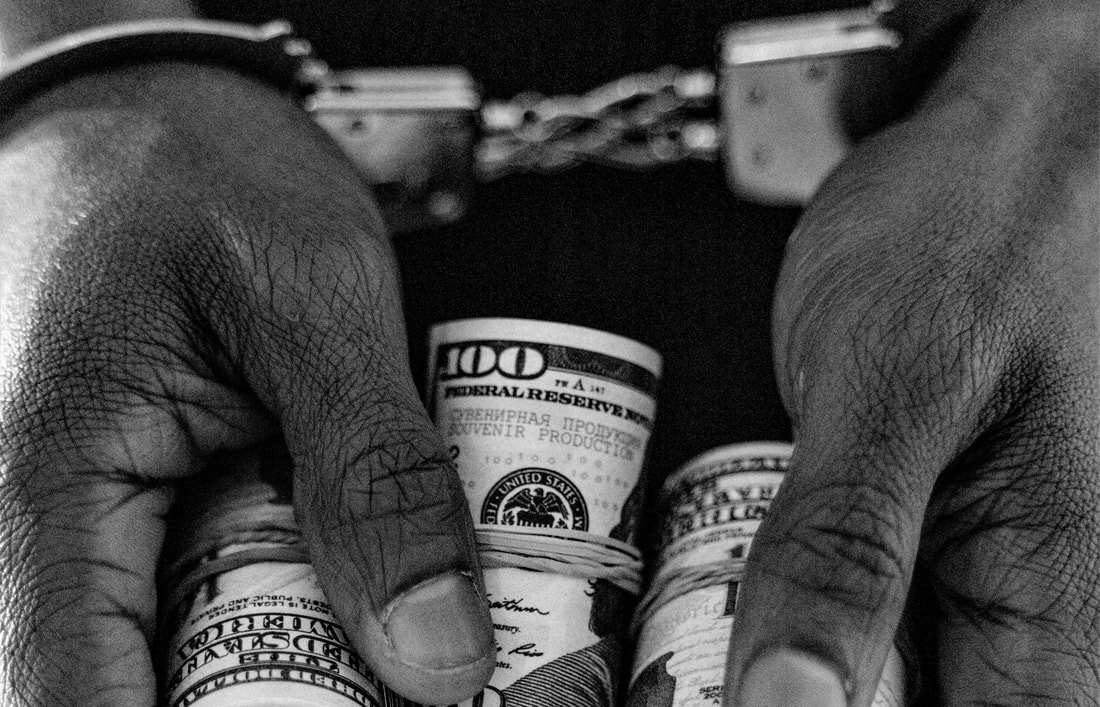
Wealth

31/10/2022

20 Comments


‘Money – it’s a hit. Don't give me that do goody good bullsh*t.’ (Pink Floyd)

‘When I die, if I leave ten pounds behind me, you and all humanity may bear witness against me that I have lived and died a thief and a robber.’ (John Wesley)

Now that’s extreme. In his lifetime, UK Christian preacher John Wesley is estimated to have earned around £30,000 (roughly equivalent to £1,000,000 today). When he died in 1791, 47 years after having written these astonishing words (above), he was found only to have a few coins left in his pocket. He had given everything away. Wesley believed that to follow Jesus meant intrinsically to use whatever resources God had given him to help others in need. He challenged fundamentally those who believed that material acquisition was a blessing from God to enjoy for their own benefit. As his own income increased, he stayed at the same simple baseline and gave even more away.

I find Wesley’s example incredibly humbling and challenging. I live in a society that is individual-, wealth- and future-orientated. An implicit cultural imperative is that we should each make as much money as we can; both so that we can improve our own quality of life today and prepare for the future, confident that we will have plenty to spend then as now. I once had a long journey home from working among the poor in Cambodia. An intrigued Indian Hindu businessman travelling next to me on the plane confessed in bemusement that he found my work for a Christian NGO shameful: ‘Shouldn’t you be earning as much money as possible to increase your own family’s wealth?’

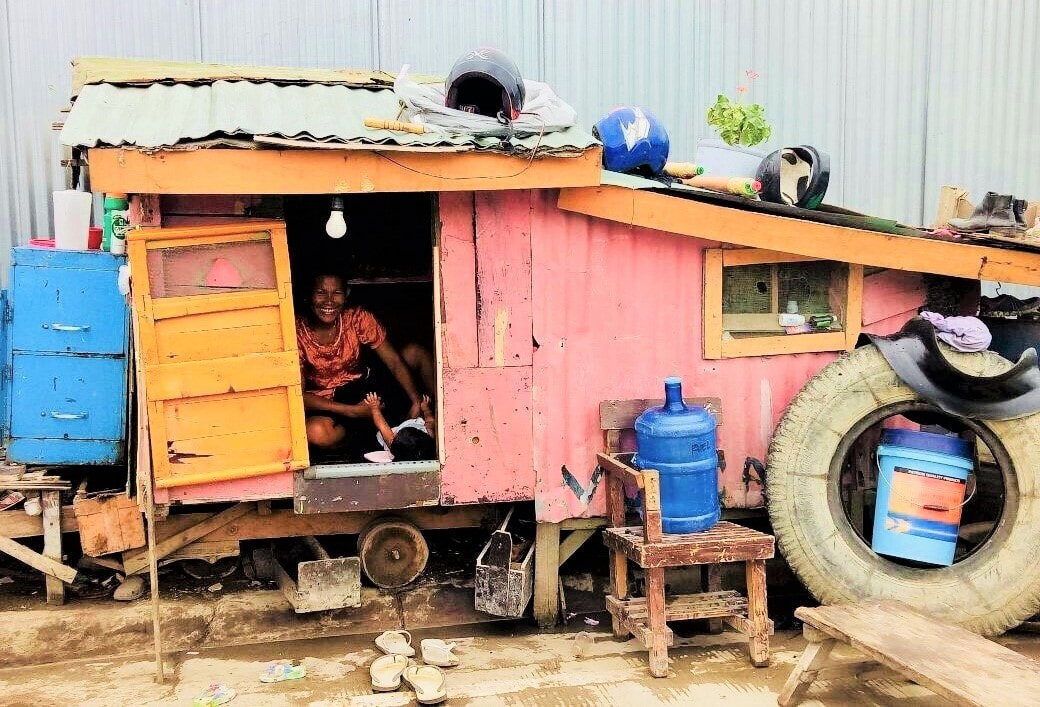
He had a point. To take care of one’s own family is, of course, an important, universal, human value. Yet, still, our worldviews collide. I find my life inspired by a different ethic, exemplified by Jasmin, a radical follower of Jesus among the poor in the Philippines: ‘Whatever status or power you have, use it for those who are vulnerable; whatever money you have, use it for the poor; whatever strength you have, use it for the weak; whatever hope you have, use to bring hope to those who live without hope. Speak up for justice and truth – whatever the cost. Pray.’ That isn’t about self-righteousness. It’s not a denial of the visceral tug of anxiety and security. It is about choice, decision and stance.

What beliefs, values and principles guide your life? What do they look like in practice?
20 Comments

Have you eaten?

5/3/2022

17 Comments

 
Picture

In my first encounters with the Philippines, I was surprised by how often people asked me about my meals. ‘Have you eaten?’ This included during conversations online. I learned, over time, that the question arises out of an economic context in which food is often scarce owing to high levels of poverty, and a cultural context in which the health and well-being of one’s neighbour is considered important. It means the question is literal and it calls for a literal response. If I answer ‘no’ while I’m there physically, I’m likely to be offered and given a meal; even if the person who’s asking is poor.

Rudo Kwaramba, a Zimbabwean colleague, explained a similar dynamic whilst working together on an assignment in Uganda. I had been invited there to help an NGO address a key challenge: that managers in rural community-based projects were, apparently, bad at addressing poor performance. Rudo reflected: ‘In wealthy countries, if you can’t earn an income or lose your job, your government provides you with financial support; if you become injured or unwell, your health system or insurance covers you. In poorer countries, people can only look to each other for support.’

It means that, in such contexts, to establish and maintain positive relationships with one’s extended family and neighbours is essential for survival. It also means that to support the health and wellbeing of one’s neighbours is critical too. There is a sense of radical interdependence, a pragmatic-ethical need, that drives cultural behaviour. Against that backdrop, we discovered that managers who were living and working in the same communities as their staff felt unwilling and unable to address poor performance – in case it damaged the network of relationships. It was the core issue for them.

This insight moved the culture-shift question in the work from a simplistic-transactional, ‘How to change the performance management system’, to a deeper-relational, ‘How can we hold honest conversations that don’t harm community?’. It proved transformational. As I focus back on South East Asia, I notice that as some countries have grown in wealth, they have experienced a corresponding shift towards individual-orientated cultures. It's as if: the richer I am, the less I need you. ‘Have you eaten?’ is often retained, yet as a simple greeting, not as a literal inquiry or as an invitation to a meal.

So, I’m curious: what have been your experiences of working cross-culturally? What have you learned?
17 Comments

    ​Nick Wright

    ​I'm a psychological coach, trainer and OD consultant. Curious to discover how can I help you? ​Get in touch!

    Picture
    Like what you read? Simply enter your email address below to receive regular blog updates!
    Subscribe to Blog
    Picture
    Picture
    Picture


    ​Archives

    December 2025
    November 2025
    October 2025
    September 2025
    August 2025
    July 2025
    June 2025
    May 2025
    April 2025
    March 2025
    February 2025
    January 2025
    December 2024
    November 2024
    October 2024
    September 2024
    August 2024
    July 2024
    June 2024
    May 2024
    April 2024
    March 2024
    February 2024
    January 2024
    December 2023
    November 2023
    October 2023
    September 2023
    August 2023
    July 2023
    June 2023
    May 2023
    April 2023
    March 2023
    February 2023
    January 2023
    December 2022
    November 2022
    October 2022
    September 2022
    August 2022
    July 2022
    May 2022
    April 2022
    March 2022
    February 2022
    January 2022
    December 2021
    October 2021
    September 2021
    August 2021
    July 2021
    June 2021
    May 2021
    April 2021
    March 2021
    February 2021
    January 2021
    December 2020
    November 2020
    October 2020
    September 2020
    August 2020
    July 2020
    June 2020
    May 2020
    April 2020
    March 2020
    February 2020
    January 2020
    December 2019
    November 2019
    October 2019
    August 2019
    July 2019
    June 2019
    May 2019
    April 2019
    March 2019
    February 2019
    January 2019
    December 2018
    November 2018
    October 2018
    September 2018
    August 2018
    July 2018
    June 2018
    May 2018
    March 2018
    February 2018
    January 2018
    December 2017
    November 2017
    October 2017
    September 2017
    August 2017
    July 2017
    June 2017
    May 2017
    April 2017
    March 2017
    January 2017
    December 2016
    November 2016
    October 2016
    September 2016
    August 2016
    July 2016
    June 2016
    May 2016
    April 2016
    March 2016
    February 2016
    January 2016
    December 2015
    October 2015
    September 2015
    July 2015
    June 2015
    May 2015
    April 2015
    February 2015
    January 2015
    December 2014
    November 2014
    August 2014
    July 2014
    May 2014
    April 2014
    March 2014
    February 2014
    December 2013
    November 2013
    August 2013
    July 2013
    June 2013
    May 2013
    April 2013
    March 2013
    February 2013
    January 2013
    December 2012
    November 2012
    October 2012
    July 2012
    June 2012
    May 2012
    April 2012
    March 2012
    February 2012
    January 2012
    December 2011
    November 2011
    October 2011
    September 2011
    August 2011
    July 2011
    June 2011
    May 2011
    April 2011
    March 2011
    February 2011

    Categories

    All
    Abc
    Ability
    Accountability
    Achievement
    Act
    Action
    Action Learning
    Active Listening
    Activism
    Adaptability
    Adaptive
    Advent
    Adventure
    Advice
    Advocacy
    Africa
    Age
    Agency
    Aggression
    Agile
    Agreement
    AI
    Aid
    Alientation
    Ambiguity
    Anchor
    Angle
    Anthropomorphism
    Anticipation
    Anxiety
    Appraisal
    Appreciation
    Appreciative
    Appreciative Inquiry
    Approach
    Argyris
    Armaments
    Art
    Artificial Intelligence
    Asia
    Aslan
    Assertiveness
    Assumption
    Assumptions
    Asylum
    Asylum Seekers
    Attachment
    Attention
    Attitude
    Attribution
    Audience
    Authenticity
    Authority
    Autonomy
    Avoidance
    Awareness
    Awe
    BANI
    Baptist
    Behaviour
    Being
    Belief
    Beliefs
    Belonging
    Bereavement
    Berlin Wall
    Bias
    Bible
    Blame
    Body Language
    Borders
    Boundaries
    Brainstorming
    Brand
    Bridges
    Burnout
    Business
    Cages
    Calling
    Capability
    Cards
    Care
    Career
    Categories
    Censorship
    Challenge
    Chance
    Change
    Chaos
    Character
    Charisma
    Charismatic
    Charity
    Child
    Children
    Choice
    Choose
    Christ
    Christian
    Christmas
    Church
    Clarity
    Client
    Climate
    Coach
    Coaching
    Co-active
    Coactive
    Cognition
    Cognitive
    Cognitive Behavioural
    Coincidence
    Collaboration
    Collaborative
    Commitment
    Communication
    Communism
    Community
    Compassion
    Competence
    Competencies
    Competency
    Complexity
    Concepts
    Confidence
    Confidentiality
    Conflict
    Confluence
    Confusion
    Congruence
    Conscience
    Consciousness
    Consequences
    Construct
    Constructivism
    Constructs
    Construe
    Consultancy
    Consulting
    Contact
    Contemplation
    Content
    Context
    Contracting
    Contribution
    Control
    Conversation
    Corruption
    Counselling
    Counterintiution
    Counterintuition
    Countertransference
    Courage
    Craziness
    Creativity
    Credibility
    Crisis
    Critical Consciousness
    Critical Reflection
    Critical Reflective Practice
    Critical Reflexivity
    Critical Thinking
    Critique
    Cross
    Cross Cultural
    Cross-cultural
    Cross Culture
    Cross-culture
    Culture
    Curiosity
    Customer Care
    Customers
    Customer Service
    Dad
    Danger
    Darkness
    Death
    Deception
    Decision
    Deconstruction
    Deep Fake
    Defence
    Defences
    Deferred Gratification
    Definition
    Delegation
    Delight
    Delusion
    Dementia
    Democracy
    Demographics
    Depression
    Depth
    Despair
    Determination
    Development
    Deviance
    Deviant
    Diagnosis
    Dictatorship
    Diet
    Dignity
    Dilemma
    Disability
    Disaster
    Discernment
    Discipline
    Disclosure
    Discovery
    Discretion
    Discrimination
    Disruptive
    Dissent
    Dissident
    Dissonance
    Distinctiveness
    Distortion
    Diversity
    Doomscrolling
    Drama
    Dream
    Dynamic
    Dynamic Complexity
    Dynamics
    Dysfunction
    Dysthymia
    Dystopia
    Earthquake
    Easter
    Ecology
    Economics
    Ecosystems
    Edge
    Edi
    Education
    Effectiveness
    Efficiency
    Ego State
    Election
    Eliciting
    Emergence
    Emotion
    Emotional
    Emotional Intelligence
    Empathy
    Empowering
    Empowerment
    Encounter
    Encouragement
    Energy
    Engagement
    Entrepreneur
    Environment
    Equality
    Eternity
    Ethics
    Ethiopia
    Europe
    Evaluation
    Evidence
    Evocative
    Evolution
    Existential
    Existentialism
    Expectation
    Expectations
    Experience
    Experiences
    Experiment
    Experimentation
    Expertise
    Exploration
    Explore
    Exposure
    Expression
    Extremism
    Facilitation
    Facilitator
    Faciltitation
    Factors
    Failure
    Faith
    Fake News
    Family
    Fantasy
    Far Right
    Father
    Fear
    Feedback
    Feeling
    Feminism
    Field Theory
    Fight Fight Freeze
    Fight-fight-freeze
    Fight Flight Freeze
    Figure
    Filter
    Fit
    Flashback
    Focus
    Focus Groups
    Food Bank
    Forgiveness
    Framework
    Freedom
    Freedom Of Expression
    Free Speech
    Freud
    Friends
    Fun
    Future
    Gaza
    Gaze
    Gender
    Geopolitical
    Geopolitics
    German
    Germany
    Gestalt
    Gift
    Global
    Goal
    Goals
    God
    Good Friday
    Gospel
    Government
    Grace
    Grief
    Grit
    Ground
    Group
    Groups
    Groupwork
    GROW
    Guidance
    Guilt
    Habit
    Hazard
    Healing
    Health
    Hear
    Heidegger
    Help
    Hermeneutics
    Hero
    Hierarchy
    History
    Holistic
    Holy Spirit
    Home
    Homeless
    Homelessness
    Honesty
    Hope
    Hopelessness
    Hubris
    Human
    Human Givens
    Humanitarian
    Humanity
    Human Resources
    Human Rights
    Humility
    Humour
    Hybrid
    Hypotheses
    Hypothesis
    Icon
    Idealising
    Ideas
    Ideation
    Identity
    Ideology
    Image
    Imagination
    Immersion
    Immigration
    Impact
    Impostor
    Improvisation
    Incarnation
    Inclusion
    Independence
    Influence
    Influences
    Influencing
    INGO
    Initiative
    Injustice
    Innovation
    Inquiry
    Insecurity
    Insight
    Inspiration
    Instinct
    Integrity
    Intention
    Intercultural
    Interdependence
    Interference
    International
    Interpretation
    Intersectionality
    Intimacy
    Introjection
    Introversion
    Intuition
    Invisible
    Invitation
    Iran
    Irrationality
    Israel
    Jargon
    Jesus
    Jolt
    Journey
    Joy
    Judaism
    Judgements
    Jungle
    Justice
    Keys
    Kindness
    Knowing
    Knowledge
    Labels
    Landslide
    Language
    Lateral Thinking
    Leader
    Leadership
    Leadership Team
    Leadership Teams
    Learner
    Learning
    Legacy
    Lent
    Lesson
    Liberal
    Life
    Light
    Linguistic
    Linguistics
    Listening
    Logic
    Loss
    Love
    Management
    Manager
    Manipulation
    Maps
    Marathon
    Marginalisation
    Marketing
    Martin Luther King
    Matrix
    Mbti
    Meaning
    Media
    Mediation
    Meditation
    Meetings
    Memory
    Mental Health
    Mentoring
    Merit
    Metaphor
    Metaphysic
    Metaphysics
    Migration
    Mindfulness
    Miracle
    Mirror
    Mirroring
    Misfit
    Mission
    Mitigation
    Mode
    Montessori
    Morality
    Mother Teresa
    Motivation
    Music
    Mystery
    Narrative
    Nationalism
    Nativity
    Nazis
    Need
    Negotiation
    Neo-Nazi
    Networking
    News
    New Year
    Norm
    Norms
    Noticing
    Online
    Operations
    Opportunity
    Oppression
    Options
    Organisation
    Organisation Develoment
    Organisation Development
    Orientation
    Origin
    Outcome
    Outcomes
    Pace
    Pain
    Palestinian
    Panic
    Paradigm
    Paradox
    Parent
    Partnership
    Passion
    Passivity
    Pastoral
    Pastoral Care
    Pattern Matching
    Patterns
    Peace
    People
    Perception
    Perfectionism
    Performance
    Perseverance
    Personal Constructs
    Personal Leadership
    Person Centred
    Perspective
    Persuasion
    Phenomenology
    Phenomenon
    Philippines
    Philosophy
    Physical
    Physicality
    Place
    Plan
    Plane
    Plans
    Platitude
    Plato
    Play
    Plot
    Poland
    Polarity
    Policy
    Politics
    Poor
    Positive
    Positive Psychology
    Posture
    Potential
    Potential#
    Poverty
    Power
    Powerlessness
    Practice
    Pragmatism
    Praxis
    Prayer
    Preference
    Preferences
    Prepare
    Presence
    Presentation
    Principles
    Priorities
    Priority
    Privilege
    Proactive
    Proactivity
    Problem Solving
    Procedure
    Process
    Prodigal
    Professional
    Profit
    Progressive
    Projection
    Projects
    Prompt
    Propaganda
    Protection
    Protest
    Providence
    Provocative
    Psychoanalysis
    Psychodynamic
    Psychodynamics
    Psychology
    Psychometrics
    Psychosocial
    Psychotherapy
    Purpose
    Pushback
    Quality
    Quest
    Question
    Questions
    Quietness
    Race
    Racism
    Radical
    Rainbow
    Rational
    Rationale
    Rationalisation
    Rationality
    Ratlonality
    Realisation
    Realities
    Reality
    Reason
    Reasoning
    Reconciiliation
    Reconciliation
    Recovery
    Recruitment
    Reflect
    Reflection
    Reflective Practice
    Reflexivity
    Reframing
    Refugee
    Refugees
    Relationship
    Relationships
    Release
    Relief
    Religion
    Representation
    Rescue
    Research
    Resilience
    Resistance
    Resonance
    Resourcefulness
    Respect
    Responsibility
    Responsive
    Responsiveness
    Retreat
    Revelation
    Reward
    Rhetoric
    Rich
    Rights
    Riot
    Risk
    Role
    Role Model
    Roman Catholic
    Rosabeth Moss-kanter
    Rules
    Russia
    Sabbath
    Sacred
    Safeguarding
    Safety
    Salvation
    Satire
    Satnav
    Saviour
    Scepticism
    Schemata
    School
    Science
    Secure Base
    Security
    See
    Selection
    Selective Attention
    Self
    Self Awareness
    Self-consciousness
    Self-deception
    Self-sacrifice
    Sense-checking
    Sense Making
    Sense-making
    Senses
    Sensitivity
    Serendipity
    Servant
    Shadow
    Shock
    Significance
    Silence
    Simplicity
    Sin
    Skills
    Skin Colour
    Snake
    Snow
    Social Change
    Social Construct
    Social Construction
    Social Constructionism
    Social Constructs
    Social Enterprise
    Social Entrepreneurship
    Social Justice
    Social Media
    Social Psychology
    Social Work
    Sociology
    Socrates
    Solution Focused
    Solutions
    Solutions Focus
    Solutions-focus
    Somalia
    Song
    South Sudan
    Space
    Speak
    Speech
    Speed
    Spirit
    Spiritual
    Spirituality
    Spirtuality
    Stance
    Status
    Stealth
    Stereotype
    Stereotypes
    Stereotyping
    St Francis
    Stimulus
    Storm
    Story
    Strategic
    Strategy
    Strengths
    Stress
    Stretch
    Structure
    Struggle
    Stuck
    Student
    Style
    Subconscious
    Subjectivity
    Success
    Sudan
    Suffering
    Supervision
    Support
    Survival
    Sustainability
    Symbol
    Symbolism
    Symbols
    Synergy
    Systems
    Systems Thinking
    TA
    Tactical
    Tactics
    Talent
    Teacher
    Teaching
    Team
    Team Meeting
    Teams
    Teamwork
    Teamworking
    Technology
    Teenage
    Tension
    Theology
    Theory
    Theory Of Change
    Therapy
    Thinking
    Thought
    Time
    Tolerance
    Touch
    Toys
    Traction
    Trade
    Trade Union
    Tradition
    Training
    Transactional Analysis
    Transference
    Transformation
    Transition
    Transitional Object
    Trauma
    Travel
    Trends
    Trust
    Truth
    Turbulence
    Type
    Typhoon
    Ubuntu
    Ukraine
    Uncertainty
    Unexpected
    United Nations
    University
    Use Of Self
    Valentine
    Vallues
    Value
    Valued
    Values
    Vicious Cycle
    Violence
    Virtuous Cycle
    Visibility
    Visible
    Vision
    Vocation
    Voice
    Voting
    VUCA
    Vulnerability
    Vulnerable
    Waiting
    Walls
    War
    Warning
    Wealth
    Weird
    Wellbeing
    Will
    Willingness
    Window
    Wisdom
    Witness
    Women
    Wonder
    Words
    World
    Worth
    Youth
    Zero-sum
    Zoom

    RSS Feed

Proudly powered by Weebly
  • Home
  • About
  • Services
  • Testimonials
  • Articles
    • Organisations and leadership
    • Learning and development
    • Coaching and counselling
  • Blog
  • e-Resources
  • News
  • Contact