 ‘It is not power that corrupts but fear. Fear of losing power corrupts those who wield it and fear of the scourge of power corrupts those who are subject to it.’ (Aung San Suu Kyi) I ran a 3-day workshop in the Philippines for students who were about to graduate from a university for the poor. As we talked about their role and career aspirations for the future, I invited them to do role-plays that would, I thought, enable them to prepare for interviews and increase their chances of success. They smiled, albeit kindly, at my naivety. In role play after role play, with typical Filipino creativity and playfulness, the students depicted scenarios in which getting a job had nothing to do with personal merit and everything to do with whom the applicant knows or is connected to, and what level of contribution for expenses (bribe) the applicant is willing and able to pay to those conducting the interviews and making the appointment decisions. I felt astonished and depressed. Endemic corruption saps the life and energy out of people and societies and deprives them of so much talent and potential. I was intrigued to explore this further so asked the students how much money they would need to pay to get a job. They responded that such forms of corruption are culturally-coded euphemistically so that, in effect, everyone knows what game is being played without anyone explicitly admitting it. For instance, if a student were to be invited to an interview at 2.00pm, it means they will need to pay 20k pesos. If at 4.00pm, then 40k pesos. If they don’t turn up with the required cash, or are not connected to a suitable sponsor, they will be offered a post-rationalisation (excuse) for their apparent failure. This encounter was certainly an eye-opener for me. We moved on to look at other ways in which corruption manifests itself in societies around the world; e.g. in payment of financial incentives (backhanders) to secure specific political policies, judicial outcomes or commercial contracts. Media manipulation, attacks on press freedom, silencing of political opponents, undermining of democratic structures and civil society, monopolisation of markets: all undermine social and economic accountability and opportunity. The biggest challenge when corruption becomes thoroughly pervasive is where and to whom to go to address it. Speaking truth to ourselves can be hard enough to endure. Speaking truth to power can lead to alienation…or to a bullet.
10 Comments
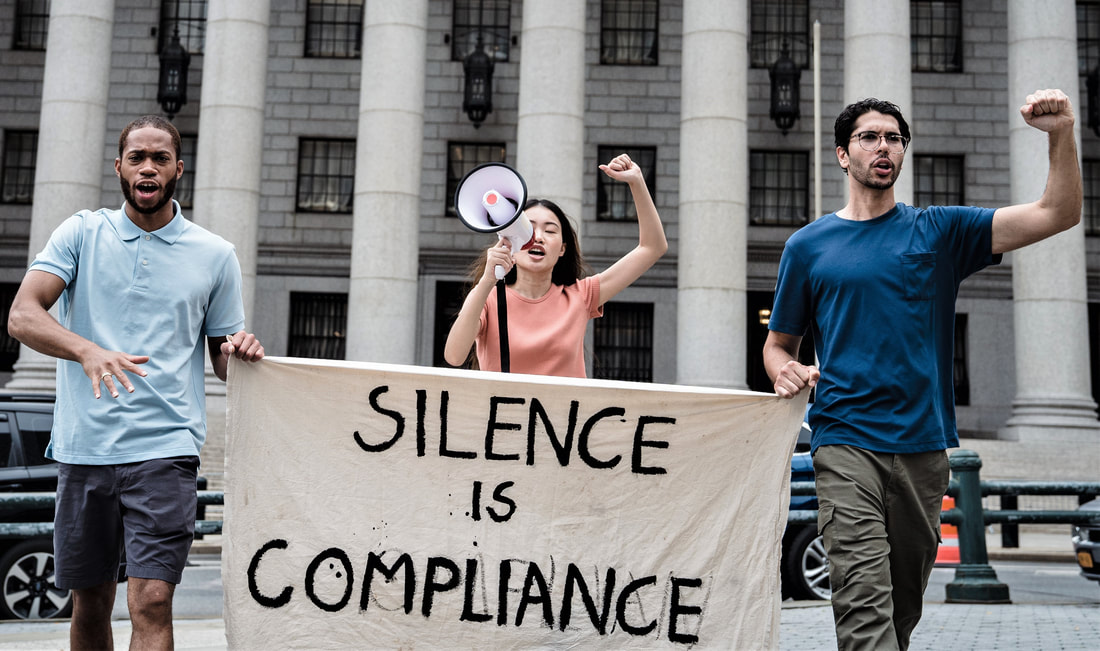 ‘I raise up my voice – not so that I can shout, but so that those without a voice can be heard.’ (Malala Yousafzai) I once had a secret meeting with the political wing of a revolutionary group from Central America, in a dark basement flat in London. But my story doesn’t start there. This was my moment. As I flicked through the pages of a UK newspaper, an article leapt out at me about the brutal civil war in El Salvador. I don’t think I’d heard of El Salvador before yet it reminded me of accounts I had read of horrific atrocities committed by the Nazis in WW2. I couldn’t change that terrible history but I could do something now. I quickly did some research then set to work straight away, creating flyers and posters and circulating and sticking them up anywhere I could think of, hoping to raise awareness and to spur others into action too. I talked incessantly to family, friends and colleagues about what was happening in El Salvador. Most responded with a bemused look: ‘Why get so wound up about a situation on the opposite side of the world and over which we have no control anyway?’ That didn’t deter me. It was my time to speak. I heard of a demonstration for El Salvador in London so I went there with a friend, both wearing our anti-war combat jackets. On arrival, we were approached by the organisers and invited to carry a banner. To our surprise, they asked us to march at the very front, directly behind a row of children who were carrying a banner too. Some 20,000 people assembled behind us. We raised our voices in safety – while human rights activists in El Salvador were having their throats cut and their bodies dumped onto the streets. Driven increasingly by vicarious trauma, I joined the El Salvador Committee for Human Rights, a team of 3 activists based in a small room, armed only with a manual typewriter. I had the privilege of volunteering alongside a humble legend, Mike Gatehouse, who had previously been captured and held by the military in Chile during the violent coup that had overthrown its democratically-elected government. My role now was to hitch-hike around the UK, encouraging and resourcing local activist groups to amplify their voice. As I look back, I realise that I didn’t have sufficient personal resilience to handle the stress, and I came close to burnout. My efforts were driven more by pain, empathy and instinct than by strategy and I’ve learned, since, the critical value of supervision. Yet Greenpeace’s profound slogan expressed our motivations too: ‘The optimism of the action is better than the pessimism of the thought.’ There are situations in which we have to act, not because we have any guarantee of success, but because somebody has to speak. [See also: Revolution; Protest; Words; Smoke; Nika; I did try] 'Machine Gun Preacher', powerful film. The cinema was almost empty but the drama that unfolded on screen immediately filled the room. I felt traumatised, moved, challenged, inspired. The emotional turmoil was provoked by the images, voices, stories played out in the film. It challenged my comfortable existence, my fluctuating passion, my feint-hearted commitment. It confronted me with a raw Christianity based on instinctive action, not theological beliefs or stances. It disputed reliance on peaceful means to overcome systematic, brutal violence.
It rekindled a flame I felt as a new Christian. The desire to scream, punch, kick against violence and injustice in the world. I was involved in human rights work, facing and feeling the trauma, the unending pain, of people suffering abuse and oppression in Central America. I became ‘moderate’ in order to cope. The passion, anger and despair became all consuming. It exhausted and damaged me. My friends found me obsessed by the cause. I lost touch with those around me. Our normal, everyday lives felt pallid, collusive, meaningless, unreal. I burned with ferocious passion, stoked the flames higher and higher, but eventually burned out. It was a crash and burn of a painful kind. I started to experience physical shakes, couldn’t think straight, felt continual trauma as if bleeding inside. It was a very dark and sobering period. I cut off, switched off. I worked at a safe distance, didn’t think too hard. I forgot how it is to feel, to really feel, to feel so strongly and passionately that it drives me to determined action, to radical action, to give my life to bring about change. I felt safer, calmer, self-protected. And herein lies the challenge that Machine Gun Preacher speaks to so powerfully. How to face injustice squarely, stand alongside those in pain, feel empathy that spurs into action, maintain perspective, accept realistic limits yet value our own distinctive contribution. It’s something about hearing God’s call: what he is calling us to and what he isn’t. It’s about staring hard in the face of overwhelming injustice and yet knowing our own boundaries, his boundaries, in order to focus well on what he has called us to do, and to trust the rest to him. |
Nick WrightI'm a psychological coach, trainer and OD consultant. Curious to discover how can I help you? Get in touch! 
Like what you read? Simply enter your email address below to receive regular blog updates!


|
 RSS Feed