|
‘Rather than give instructions as declarations, we can offer invitations that increase agency.’ (David A. Treleaven) Leading today’s workshop with 15 trauma-informed practice (TIP) professionals in the UK was an inspiring experience. Focusing on leading and influencing change, we looked at how to role model TIP principles when seeking to embed it in organisational practice. The 5 core TIP principles we focused on are: safety, choice, collaboration, empowerment and trust. In my experience, if we try to superimpose TIP onto staff, teams or users of services in a way that lacks congruence with these principles, it can lead to scepticism, cynicism or resistance. This may be a particular and inadvertent risk if we are fired up with the TIP vision and, in our enthusiasm, forget that others may be in a very different starting place to our own. A more effective approach can be to engage, where possible, in authentic dialogue with key stakeholders. For instance, ‘If we were to introduce TIP in this service… (a) what would that mean for you and, in light of that (b) what would you need?’ It invites participation, helps ensure others feel heard and understood and offers the potential to co-create optimal solutions.
0 Comments
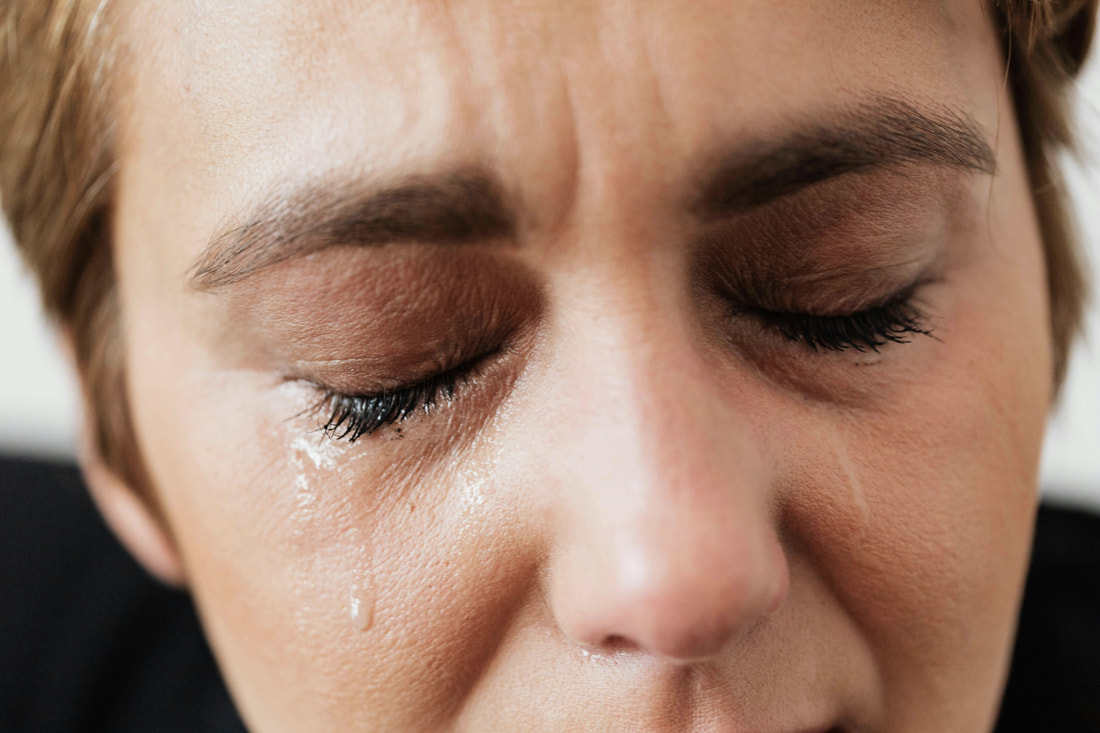
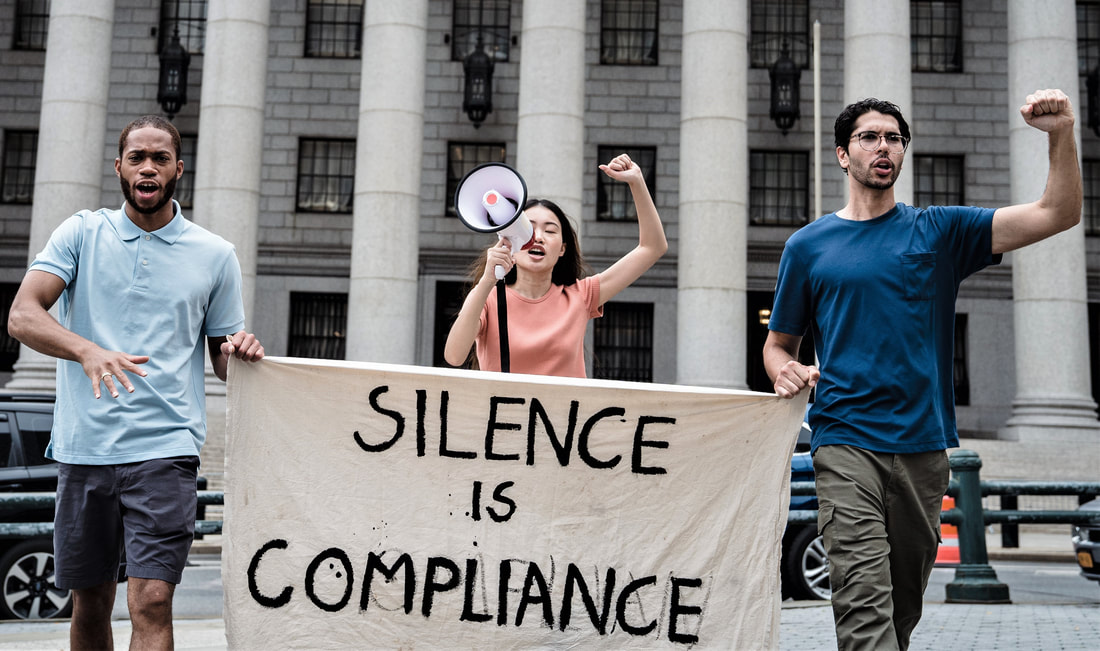
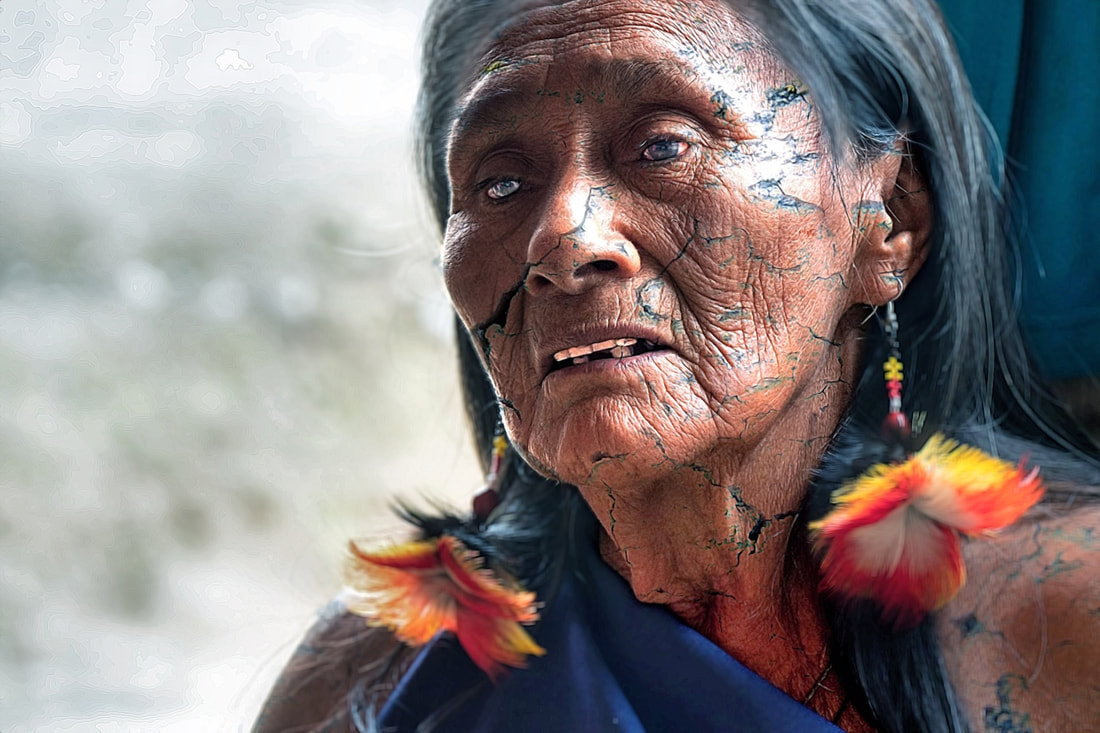
‘Not every grasp is fear; some are gentle acts of faith.’ (Iyanla Vanzant) Today, I ran a training workshop in Leading & Influencing Change for leaders and managers of organisations providing trauma-informed services for people dealing with emotional, social or mental health difficulties, learning disabilities, complex needs or domestic abuse. As always when working with such passionate and experienced professionals, I learned as much from the participants as I was able to share with them from my own insights and experiences. One service manager prompted deep reflections on the notion of ‘being held’ and of holding others. There’s a very great difference between the experience of, say, being held in a supportive way such as being hugged gently, when invited, to ease anxiety or offer safety; and of being held forcefully, uninvited, as when finding oneself restrained or constrained by another against one’s will. The former can feel like Bowlby’s secure base and the latter like a violation. Using ‘being held’ as a metaphor to explore relationships with team members at work, the manager shared how actions can be misunderstood. For instance, the manager who ‘holds’ a team member by overseeing their work (e.g. in the safeguarding arena) could be experienced as micro-managing, whereas her intention is to ‘support you in holding the risk.’ The relational skill is to hold with freedom of consent, clarity of intention and agreement on practice. Are you leading people through change and transition? Curious to discover how I can help you? Get in touch! ‘Bad things do happen in the world like war, natural disasters and disease. But out of those situations always arise stories of ordinary people doing extraordinary things.’ (Daryn Kagan) A recent qualitative research study in Peru in the aftermath of El Niño (2025) could have equally applied to life and communities in places like the Philippines. In terms of psychosocial impacts of ‘natural’ disasters and their intersecting contributory causes, the pattern is all too painfully familiar. People and communities in various parts of the Philippines this week are living with the physical, psychological and emotional aftershocks of shattering earthquakes, compounded by the damaging effects of devastating typhoons. I hesitate to use the word natural. Although we wouldn’t attribute the underlying causes of earthquakes to human activity, we couldn’t say the same of violent tropical storms where human-impacted climate change is an increasingly significant factor. A disaster occurs when hazard meets vulnerability. The poor are often the most vulnerable to the causes and impacts of hazards, including the ability to avoid, mitigate or recover from them – and poverty, albeit a complex phenomenon itself, is far from a ‘natural’ state. The research report I alluded to above identifies a number of interrelated issues that impact on psychosocial health: personal memories and lived experience of previous disasters; chronic and acute effects of the disaster (‘It’s not a now problem; it’s an always problem’); attributing blame and responsibilities; coping and resilience (including faith and relational dimensions); psychosocial distress (including personal and vicarious trauma); perceived (un)fairness in aid distribution; systemic corruption and distrust. Against this complex and, in some ways, overwhelming backdrop, I’m still inspired and find hope in the faith and actions of those people who transcend self-interest to stand alongside those in need. Jasmin lacks the material and political resources to address the macro issues, yet persistently steps out of her comfort zone directly into disaster zones equipped only with a spiritual presence (a ‘sacred encounter’) – Divine love – that, in its own unique way, offers deep psychosocial healing and hope – and the strength to go on. ‘When all of our idols are taken away, all our securities and defence mechanisms, we find out who we really are. We’re so little, so poor, so empty and a shock to ourselves. Then we find out who we really are and who God is for us.’ (Aaron Lines) Have you noticed that, when under pressure or stress, some people project their anxieties or frustrations outwards – blaming others for what they’re experiencing – whereas others tend to introject instead – taking too much responsibility onto themselves for whatever is happening? These are examples of aggressive and passive responses. The former (‘I’m OK, you’re not OK’ – ‘It’s all about you’) is a common example of a psychological defence mechanism, a way by which someone may aim to protect themself if, perhaps, they are feeling insecure or under threat. As a behaviour, it could well be experienced by others as unfair, an avoidance of taking personal responsibility, or bullying. The latter (‘I’m not OK, you’re OK’ – ‘It’s all about me’) is often a learned behaviour from early childhood, a way of making sense of a world of experience that has resulted in cognitive distortions. It too can be a defence mechanism, an attempt to protect oneself from, say, a painful, traumatic belief that a 'caregiver' was or is neglectful or abusive. If these are habitual responses, it can take awareness, effort and practice to develop a different way of being in relationships. Awareness often entails an openness to reflect and invite honest feedback; effort, a determination to work on changing oneself; practice, trying more assertive behaviours. It’s hard on your own. A coach alongside can help. Curious to discover how I can help you? Get in touch. ‘Grief is not a disorder, a disease or a sign of weakness. It is an emotional, physical and spiritual necessity, the price you pay for love. The only cure for grief is to grieve.’ (Earl Grollman) Ambushed by grief. A graphic book title and a profound way to convey the experience of the experience. Grief can, at times, take us completely by surprise, impacting us suddenly and as if out of nowhere; leaving us breathless, broken and bleeding. My most traumatic grief experience was at age 18. I still re-experience it, like living in the vice-like grip of a terrible nightmare that stubbornly, agonisingly and tormentingly won’t let go. One of the best descriptions of grief I’ve ever read is a beautiful and painful personal expression of this phenomenon that, in the midst of such agonies, offers a picture of hope. It resonates with much of my own personal experience too. Only in more recent years have we begun to discover, perhaps to rediscover and to understand, the somatic dimensions and consequences of traumatic grief. The body certainly does keep the score. On Easter Saturday (a day that marks the existential time gap between Jesus’ death and his resurrection) this year, I visited a Christian community where one of its leaders shared a deeply evocative short video clip by Massive Attack. It captured and expressed feelings of denial, betrayal, pain, abandonment and death in such a way that left me stunned and speechless. We prayed for all who feel trapped in a perpetual state of dysthymia. ‘I raise up my voice – not so that I can shout, but so that those without a voice can be heard.’ (Malala Yousafzai) I once had a secret meeting with the political wing of a revolutionary group from Central America, in a dark basement flat in London. But my story doesn’t start there. This was my moment. As I flicked through the pages of a UK newspaper, an article leapt out at me about the brutal civil war in El Salvador. I don’t think I’d heard of El Salvador before yet it reminded me of accounts I had read of horrific atrocities committed by the Nazis in WW2. I couldn’t change that terrible history but I could do something now. I quickly did some research then set to work straight away, creating flyers and posters and circulating and sticking them up anywhere I could think of, hoping to raise awareness and to spur others into action too. I talked incessantly to family, friends and colleagues about what was happening in El Salvador. Most responded with a bemused look: ‘Why get so wound up about a situation on the opposite side of the world and over which we have no control anyway?’ That didn’t deter me. It was my time to speak. I heard of a demonstration for El Salvador in London so I went there with a friend, both wearing our anti-war combat jackets. On arrival, we were approached by the organisers and invited to carry a banner. To our surprise, they asked us to march at the very front, directly behind a row of children who were carrying a banner too. Some 20,000 people assembled behind us. We raised our voices in safety – while human rights activists in El Salvador were having their throats cut and their bodies dumped onto the streets. Driven increasingly by vicarious trauma, I joined the El Salvador Committee for Human Rights, a team of 3 activists based in a small room, armed only with a manual typewriter. I had the privilege of volunteering alongside a humble legend, Mike Gatehouse, who had previously been captured and held by the military in Chile during the violent coup that had overthrown its democratically-elected government. My role now was to hitch-hike around the UK, encouraging and resourcing local activist groups to amplify their voice. As I look back, I realise that I didn’t have sufficient personal resilience to handle the stress, and I came close to burnout. My efforts were driven more by pain, empathy and instinct than by strategy and I’ve learned, since, the critical value of supervision. Yet Greenpeace’s profound slogan expressed our motivations too: ‘The optimism of the action is better than the pessimism of the thought.’ There are situations in which we have to act, not because we have any guarantee of success, but because somebody has to speak. [See also: Revolution; Protest; Words; Smoke; Nika; I did try] 'The reality is that you will grieve forever. You will not 'get over' the loss of a loved one; you will learn to live with it.' (Kubler-Ross & Kessler) At 15, I was fatally wounded. At 18, I died. That’s how it felt and, at times, it still feels now. There are some scars that never heal. A trauma of unwelcomed loss is being forced, harshly, to let go of an imagined future, a hoped-for dream. This tearing experience can leave our hearts, our bodies, bleeding. I felt betrayed and shattered and spent day after day, year after year, pleading with God to take my life. I slid into a heavy, dark dysthemia. Nothing could bring healing, happiness or hope. It's fertile ground for addiction, to search for anything that will make us feel alive, provide even momentary relief. We may immerse ourselves in whatever distracts and enables us to avoid having to face again, all too wearily, those severe memories and tortured feelings. My own torment was that searing-painful images would surface over and over in my dreams, as if trying to reconcile the suffering at some deep subconscious level, yet leave me waking the next day in suicidal mood. I wish there was a simple answer, a miracle cure. I live in a culture that holds out delusional promises and expectations of a pain-free, pleasure-filled possibility of a life. I live in a world where hurt and damaged people, more and more, seek solace and escape in drugs or other diversions. I find my spiritual hope in Jesus who (to me surprisingly, yet in a strange way reassuringly) carries the scars of crucifixion after his resurrection. Whatever I may go through now, this will not end in death. Over the years I have learned, and am still learning, how to live with my own scars rather than to attempt to bury, hide or erase them. I’m still, at times, ambushed by grief. It takes me by surprise and leaves me temporarily reeling. I’ve learned to be thankful and, gradually, to allow people and relationships to drift away rather than to cling so hard. I’ve learned to discern how pain triggered from the past can reveal someone or something important that I’m not noticing here and now. How do you deal with your scars? How do you help others to do so too? (Nick is a change leadership consultant and trainer for trauma-informed practice agency, Rock Pool) |
Nick WrightI'm a psychological coach, trainer and OD consultant. Curious to discover how can I help you? Get in touch! Like what you read? Simply enter your email address below to receive regular blog updates!
|
RSS Feed